Prime Minister Sanae Takaichi said U.S. President Donald Trump raised concern that Japan’s weak yen was hurting American trade, underscoring how exchange-rate policy has become a live issue in the broader Tokyo-Washington relationship and a potential constraint on Japan’s room to maneuver.
Japan yen pressure rises after Trump-Takaichi talks
The comments matter because they suggest Washington is not treating yen weakness as a bilateral sideshow but as a trade problem that could influence tariff, security and economic talks. For investors, that keeps the yen, Japanese rates and export-sensitive equities at the center of the policy debate, with the risk that any move to defend the currency could collide with Tokyo’s growth agenda.
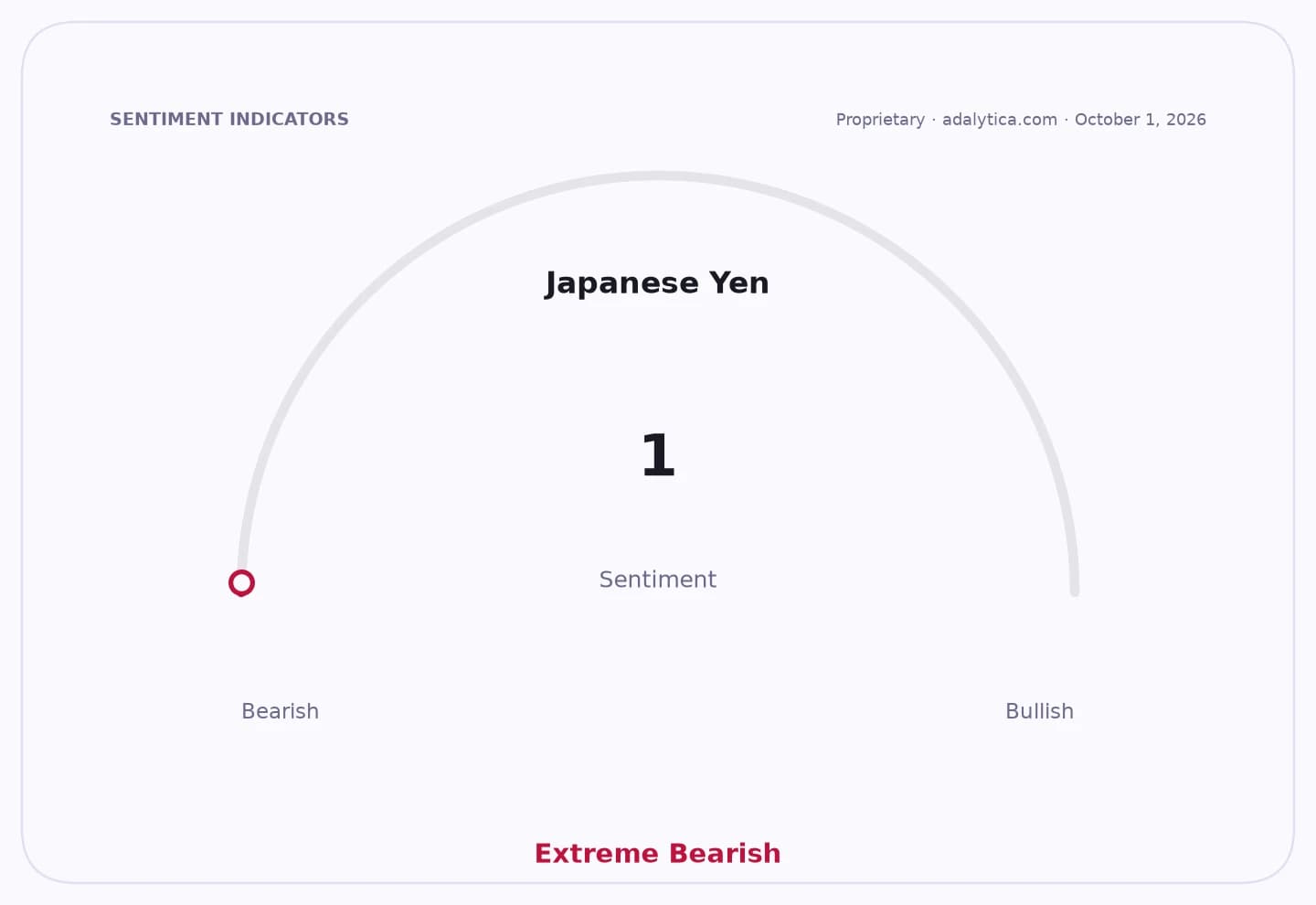
Sentiment IndicatorsⓘProprietary · adalytica.com · October 3, 2026
This is a snapshot — live sentiment, awareness and momentum for 130+ markets update continuously in the dashboard.Open AlphaPulse
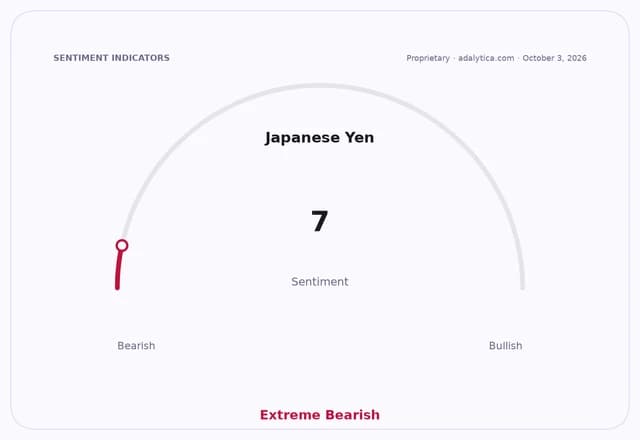
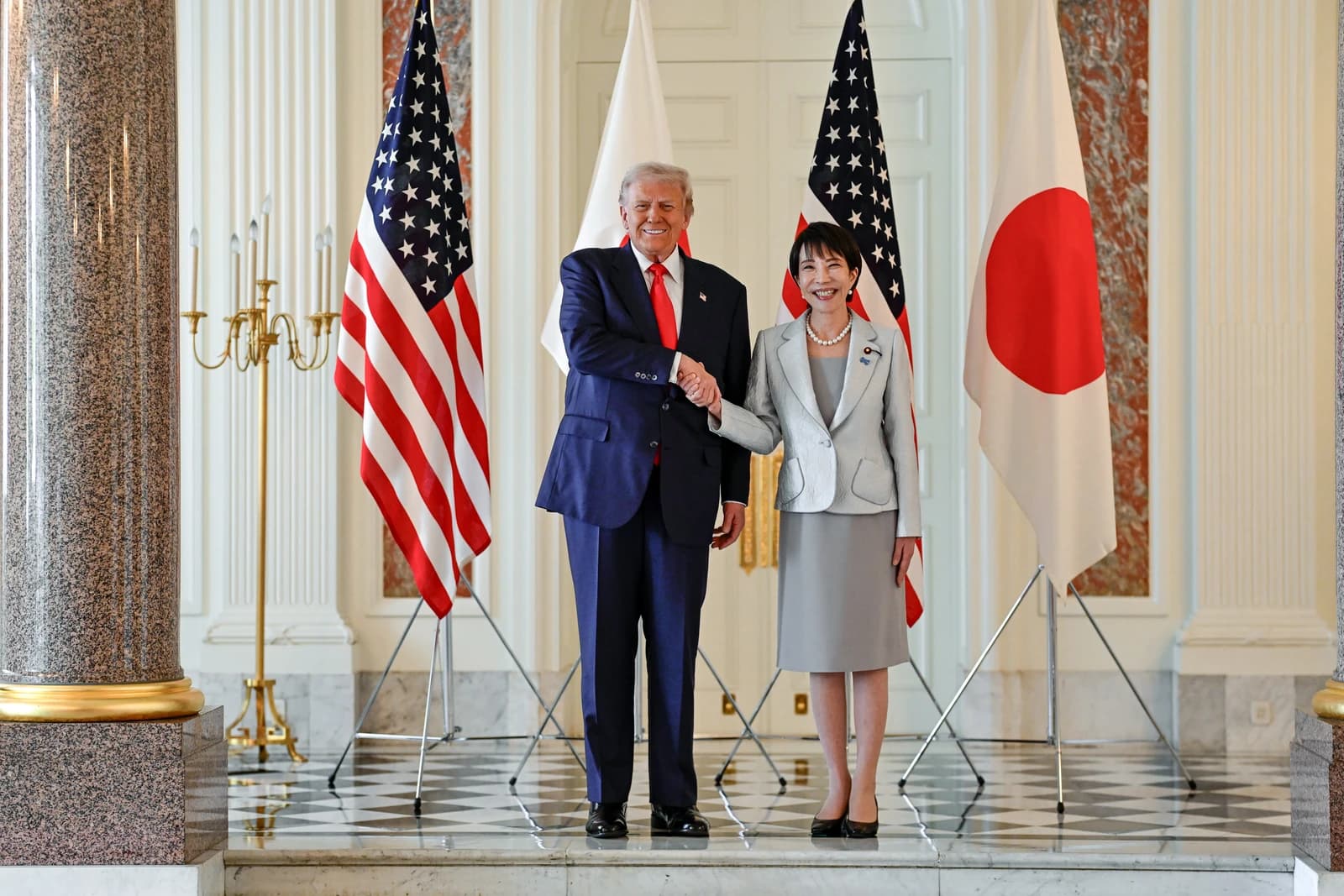
Takaichi said in an interview with broadcaster NTV that at her meeting with Trump in New York last month, “they spoke of the difficulties American trade is facing due to the weak yen,” adding that she replied that, as a rule of thumb, an undervalued yen is a problem. She also said Treasury Secretary Scott Bessent had not made requests about Japan’s policy direction in talks with Finance Minister Satsuki Katayama.
That careful framing reflects a familiar tension in Japan’s economic policy. A weaker currency supports exporters by lifting the value of overseas sales in yen terms, but it also raises import costs, squeezes household purchasing power and can add to inflation at a time when policymakers are trying to restore real wage growth. For Washington, the concern is different: a soft yen can make Japanese goods more competitive in the U.S. market and worsen the bilateral trade balance.
The issue has already prompted direct intervention. Tokyo and Washington previously acted together in currency markets after the yen slid to around ¥164 per dollar, their first joint intervention in 28 years, a step Trump described at the time as a sign of friendship. Bessent has since been unusually explicit, repeatedly arguing that the Bank of Japan should raise rates to help the yen find an “appropriate” level.
That pressure helps explain why Takaichi is trying to separate the currency question from her broader economic program. She said her government would pursue “a strong economy and sustainable government finances” through “bold investments,” and argued that stronger competitiveness and higher potential growth would ultimately deepen confidence in the yen. In other words, Tokyo is signaling it wants a stronger currency through productivity and growth, not through a direct confrontation over exchange-rate targets.
For investors, the near-term read is that policy risk remains skewed toward tighter Japanese monetary settings or at least more explicit coordination with Washington. The yen has been volatile, trading near 158 to the dollar in recent sessions, and its weakness has already become a market driver for Japanese equities. Exporters can benefit from translation gains while the currency is falling, but that advantage can fade quickly if the exchange rate stabilizes or reverses.
The FX backdrop also matters for rates. Japanese government borrowing costs have been under pressure as markets weigh whether the Bank of Japan will be forced to respond to a softer yen with faster normalization. That is a direct threat to rate-sensitive assets and a possible headwind for long-duration trades, even as domestic cyclicals and exporters may continue to find support from a weak currency.
The political calculus is just as important. Takaichi needs to show that Japan is not being pushed into policy by Washington, while also avoiding the impression that Tokyo is indifferent to a currency move that is hurting U.S. trade. The result is a diplomatic balancing act: keep the White House engaged, preserve room for BOJ policy independence and avoid a yen slide that could undermine household sentiment at home.
The next catalyst will be whether the U.S. keeps pressing Japan to do more through interest-rate normalization or whether Tokyo opts for another round of market intervention if the yen weakens further. Either way, the message from the Trump-Takaichi meeting is that currency policy is back in the center of bilateral economics, and investors should treat the yen not as a background macro variable but as a key policy instrument with cross-asset consequences.
| Entity | Gains | Losses |
|---|---|---|
| Japanese exporters | ▲Stronger overseas earnings in yen | ▼Risk of U.S. pressure |
| Japanese households | ▲Possible import-price relief if yen firms | ▼Pain from weak purchasing power |
| U.S. trade advocates | ▲Stronger case against yen undervaluation | ▼Less price competitiveness for U.S. firms |
| BOJ hawks / yen bulls | ▲Support for higher rates and firmer currency | ▼Exporters and equity bulls |