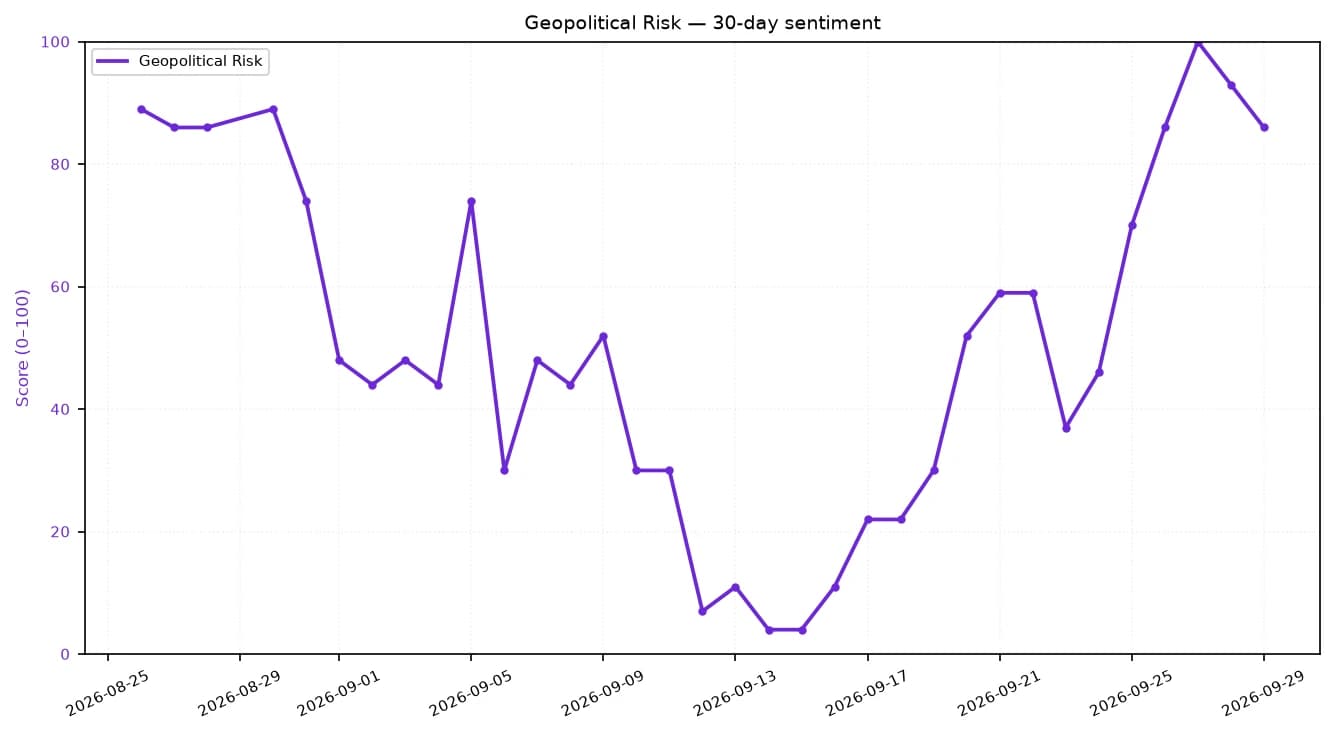
An Iranian adviser’s warning that if Iran cannot have flights, then no one else in the region will have flights either underscores how quickly Middle East tensions can translate into a real earnings and fuel-cost shock for global airlines.
JETS, UAL, DAL Risk From Middle East Tensions
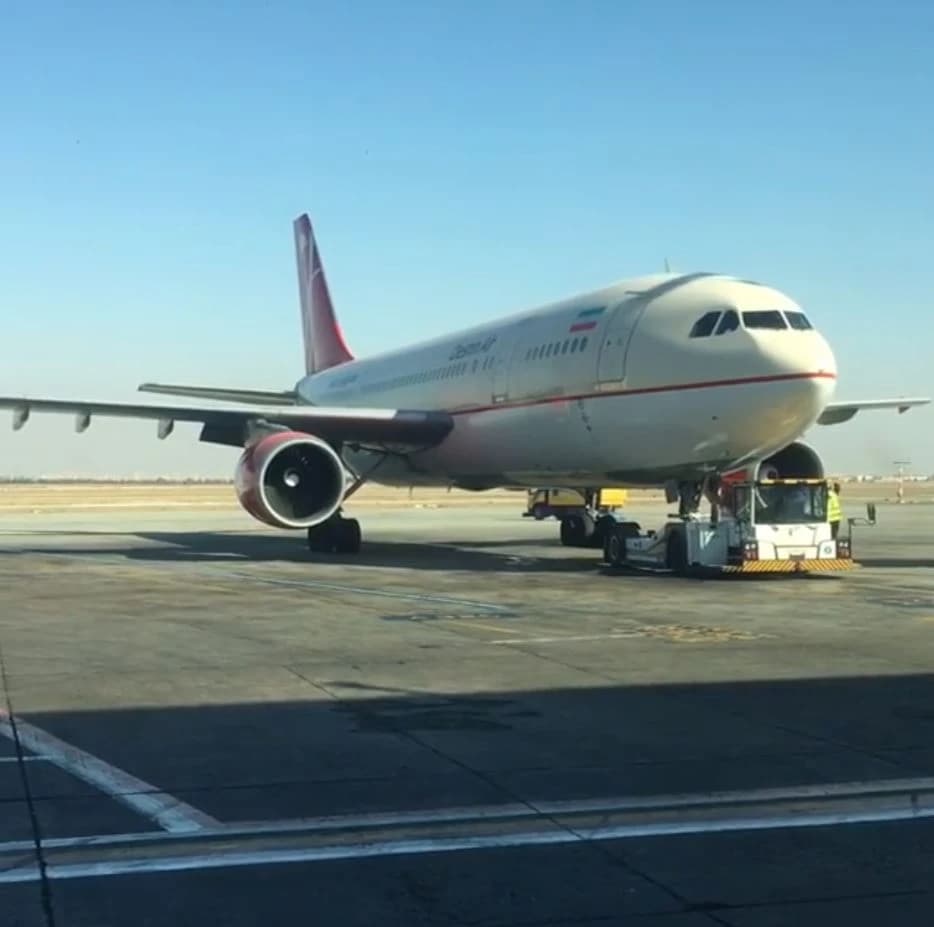
That matters because aviation is one of the most economically exposed sectors to regional escalation: it hits route networks, raises insurance and security costs, forces longer flight paths, and can lift jet fuel prices just as carriers are trying to protect margins. For investors, the risk is not abstract. Airlines are highly leveraged to fuel, demand and operational reliability, so even short-lived disruptions can erase weeks of fare strength.
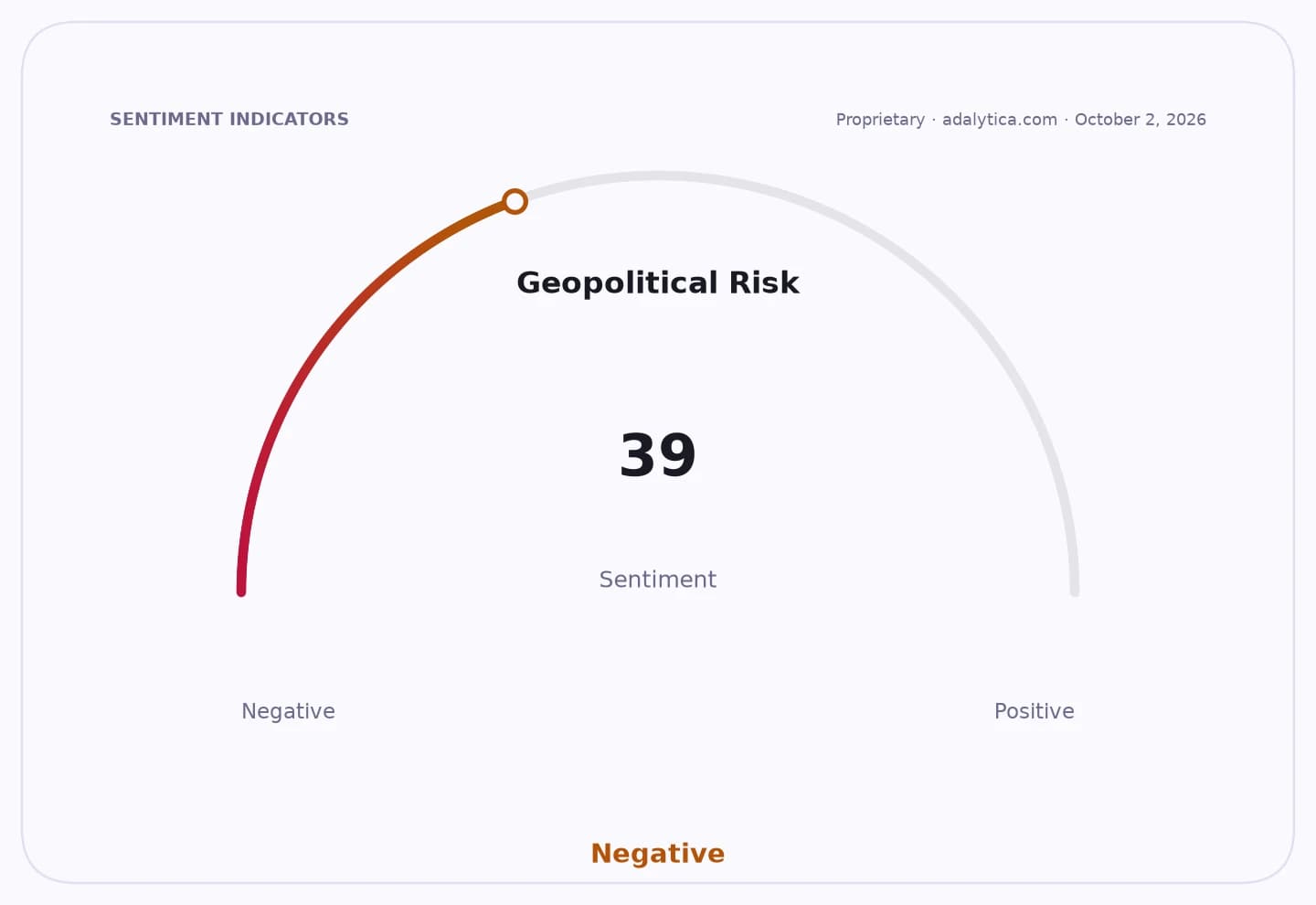
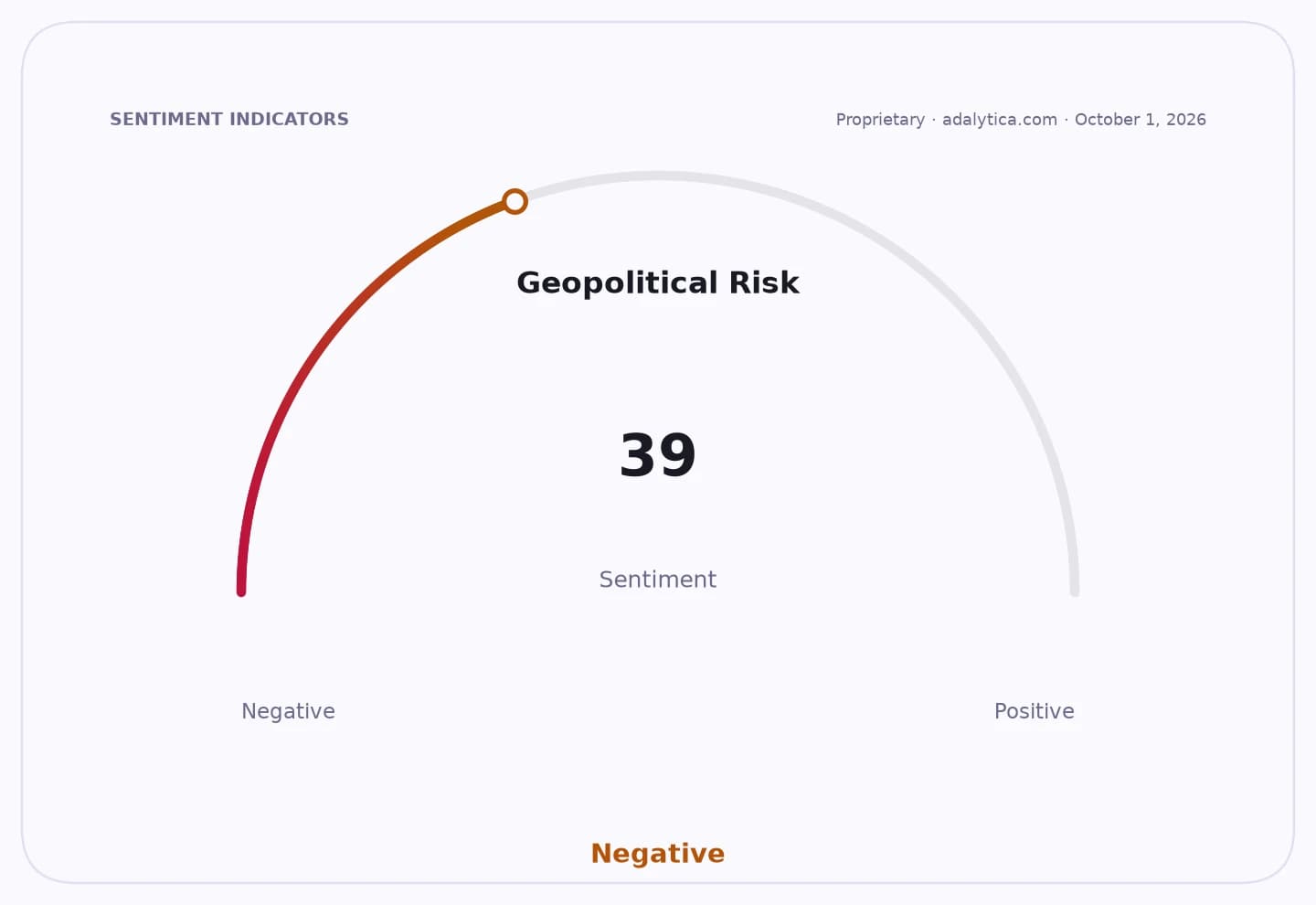
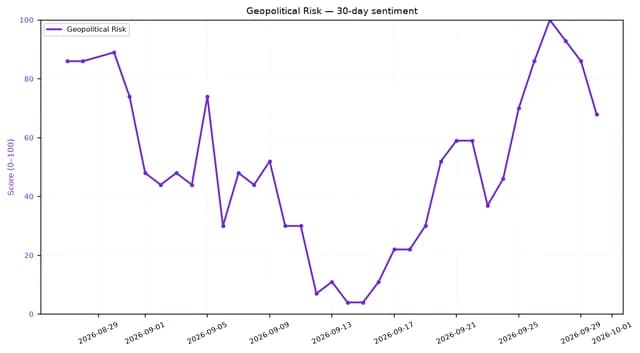
Sentiment IndicatorsⓘProprietary · adalytica.com · October 1, 2026
This is a snapshot — live sentiment, awareness and momentum for 130+ markets update continuously in the dashboard.Open AlphaPulse
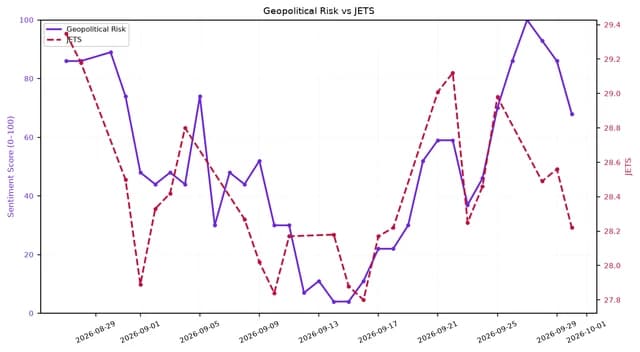
The warning lands at a sensitive moment for the sector. The U.S. Global Jets ETF, JETS, has recovered from a sharp spring selloff and was last trading around $28.22, above its 200-day moving average near $28.54 and close to its 50-day average near $29.82, but momentum has cooled with the relative strength index in the mid-50s and the MACD below its signal line. United Airlines has also pulled back from a strong summer run, last at $110.95 versus a 50-day moving average around $116.02, while Delta ended the latest session at $83.46, roughly in line with its 50-day average near $84.03.
That technical backdrop matters because airline stocks are not pricing a full-blown regional shutdown, but they are no longer cheap enough to ignore geopolitical risk. The market has already been forced to absorb the reality that Middle East conflict can spill into fuel, routing and booking patterns, and investors should expect carriers with heavier international exposure to trade with a higher risk premium whenever tensions escalate. United, Delta and the broader JETS basket remain the most direct liquid vehicles for that view.
The bigger story is that airlines sit at the end of the geopolitical supply chain. A threat to regional flight access can ripple far beyond the Middle East itself, affecting Asian and European connections, cargo schedules and business travel. It also feeds directly into oil market psychology. Adalytica’s WTI trade signals show oil sentiment in “Greed,” a reminder that energy markets are already sensitive to headline risk even before any physical disruption materializes.
For investors, the right takeaway is not to panic-sell the sector, but to respect the asymmetry. Airline equities can still rally on strong travel demand and disciplined capacity, yet they remain among the first assets to reprice when conflict threatens airspace or fuel costs. If regional tensions worsen, the beneficiaries are likely to be oil producers, defense names and companies with domestic demand exposure, while the losers are airlines with long-haul international networks and thin margin cushions.
The thesis is straightforward: the market underestimates how fast Middle East rhetoric can become airline P&L risk. If you want exposure, stay selective, keep position sizes smaller than normal and favor carriers with stronger balance sheets and less reliance on disrupted routes. For everyone else, JETS, UAL and DAL remain a live geopolitical hedge-and-headwind trade, not a set-it-and-forget-it holding.
| Entity | Gains | Losses |
|---|---|---|
| Oil producers | ▲Higher crude prices | ▼None |
| Defense stocks | ▲More security spending | ▼Airline sentiment |
| UAL/JETS | ▲Rebound if tensions ease | ▼Route and fuel shocks |
| DAL | ▲Domestic strength may cushion | ▼International disruption |