Regional peace is now an economic imperative, as 80 countries, including Gulf Arab states and major Western powers, warned that Iran’s actions in the Strait of Hormuz and Yemen’s Houthi attacks are threatening international shipping, maritime security and global trade.
Pakistan calls for peace in Gulf shipping lanes
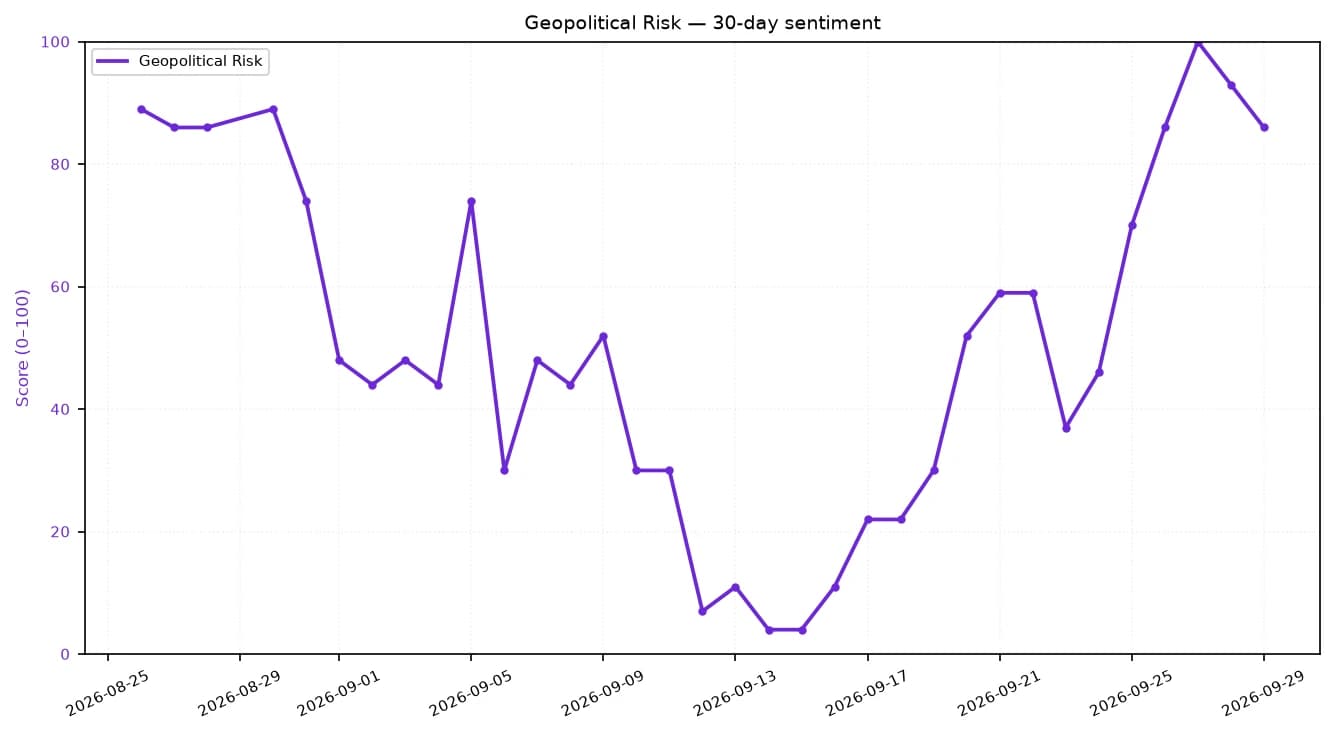
That is the market-moving backdrop behind Pakistan Prime Minister Shehbaz Sharif’s call for peace in the region in talks with Iranian President Masoud Pezeshkian. In a part of the world where geopolitics and commerce are inseparable, even a limited escalation around Hormuz or Bab el-Mandeb can ripple straight through energy prices, freight rates, insurance costs and investor risk appetite.
Sentiment IndicatorsⓘProprietary · adalytica.com · September 30, 2026
This is a snapshot — live sentiment, awareness and momentum for 130+ markets update continuously in the dashboard.Open AlphaPulse
The joint statement at the United Nations matters because it hardens the diplomatic line against disruptions in two of the world’s most sensitive maritime chokepoints. The Strait of Hormuz carries a large share of globally traded crude and refined products, while the Red Sea route through Bab el-Mandeb is critical for Asia-Europe trade. Any sustained threat there raises the cost of doing business across the region, from tankers and shipping lines to manufacturers and consumers.
For investors, the message is simple: peace is not just a political goal, it is a capital allocation theme. A stable Gulf supports lower oil volatility, steadier transport flows and a better backdrop for emerging-market assets tied to trade, infrastructure and tourism. The flip side is equally important. Escalation tends to favor energy producers, defense contractors, cyber-security names and selected freight and insurance plays, while pressuring airlines, import-heavy consumer companies and broader risk assets.
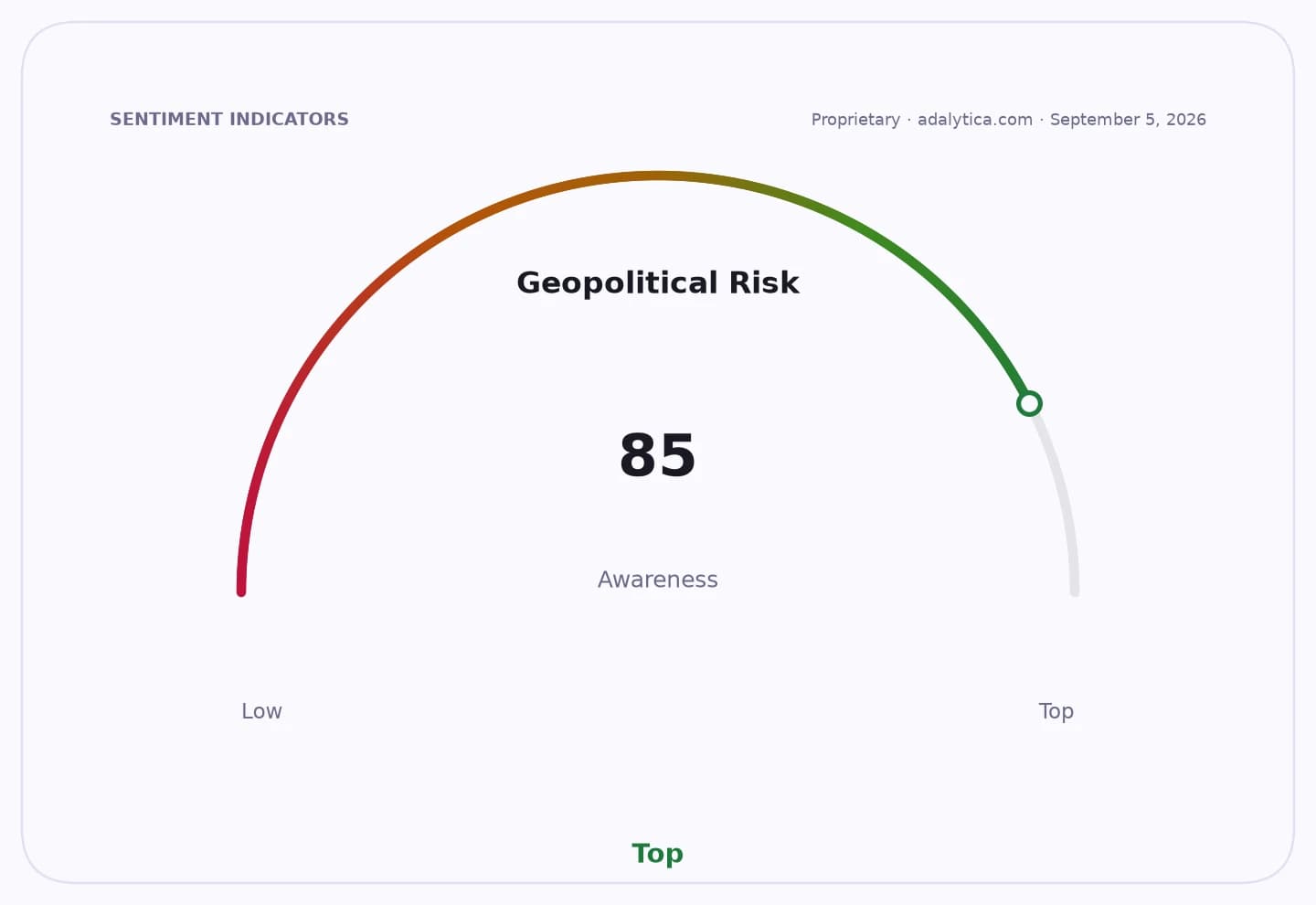
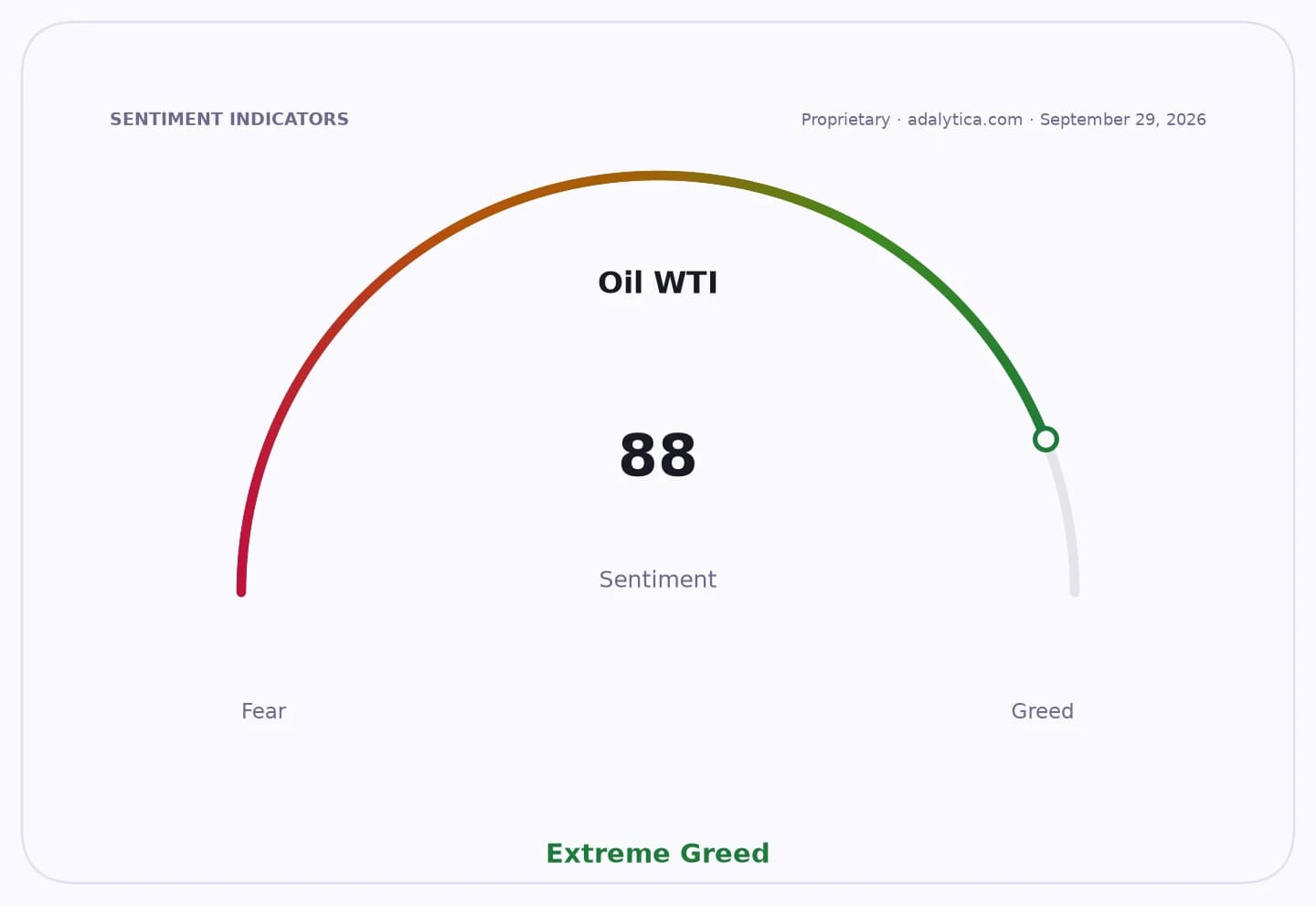
Adalytica.com’s Global Stability Sentiment gauge reflects that tension, showing extreme greed on headline geopolitics even as awareness remains in extreme fear territory. That gap often marks a market that is pricing calm faster than the underlying risk has disappeared.
The investable takeaway is to treat Gulf de-escalation as a tailwind for global growth assets, but not to ignore the asymmetric upside in sectors that profit when security deteriorates. The market underestimates how quickly a regional peace dividend can unlock trade and investment — and how fast it can reverse if the Hormuz or Red Sea lanes deteriorate again.
| Entity | Gains | Losses |
|---|---|---|
| Gulf trade and shipping | ▲Lower route risk | ▼— |
| Oil consumers and importers | ▲Cheaper transport costs | ▼Less hedging leverage |
| Energy producers and defense names | ▲Risk premium demand | ▼Lower geopolitical bid |
| Airlines and global manufacturers | ▲Better supply-chain visibility | ▼Higher costs if tensions rise |