U.S. employers added 275,000 jobs in the latest month, reinforcing the view that the economy remains resilient even as higher rates, trade tensions and softer sentiment threaten to slow growth later this year.
Robust Jobs Data Pushes Out Fed Rate-Cut Timing
The report matters because payroll gains at that pace keep consumer income supported, reduce the odds of an imminent recession and give the Federal Reserve less reason to rush into rate cuts. A labor market that is still creating jobs at a healthy clip also helps explain why household spending has held up better than many forecasters expected.
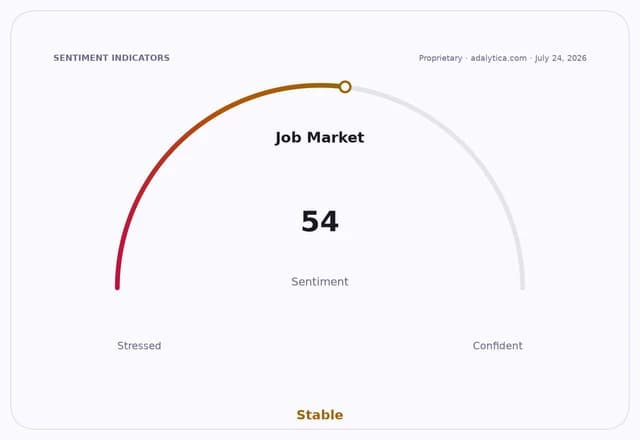
Sentiment IndicatorsⓘProprietary · adalytica.com · July 24, 2026
This is a snapshot — live sentiment, awareness and momentum for 130+ markets update continuously in the dashboard.Open AlphaPulse
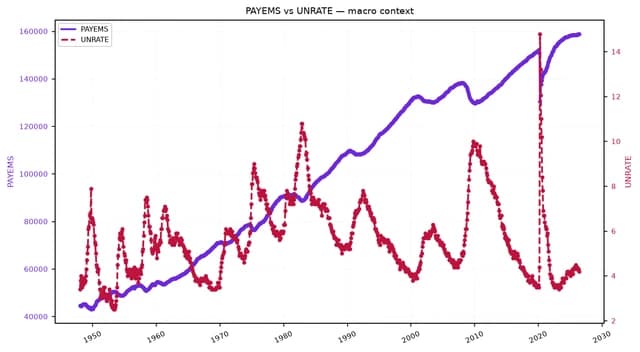
The unemployment rate sits at 4.2%, near levels that still point to a relatively tight labor market, while nonfarm payroll sentiment tracked by Adalytica is showing “Greed” at 77, with the 7-day trend sharply higher. That combination suggests investors are still positioned for a soft landing rather than a rapid downturn, even if near-term market conviction has weakened.
Job openings remain elevated at 7.59 million, well above pre-pandemic norms, signaling that demand for workers is cooling only gradually. The data point to a labor market that is no longer overheating, but is far from cracking.
That resilience has broader market implications. Strong hiring tends to support cyclically sensitive sectors, consumer stocks and credit quality, but it can also keep Treasury yields elevated and delay policy easing that rate-sensitive assets have been counting on.
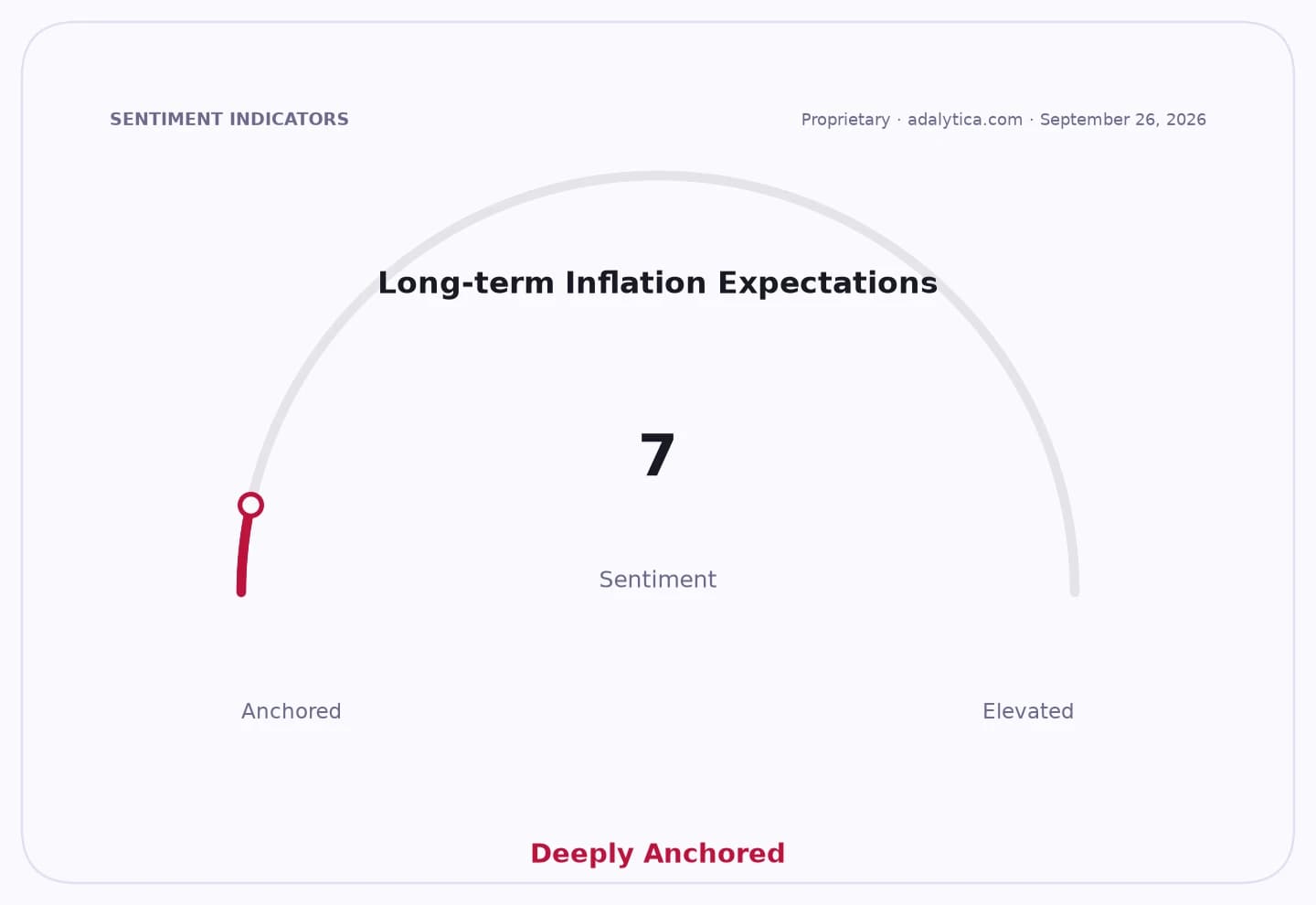
Investor reaction will likely hinge on whether this strength spills into wages and inflation expectations, or whether it proves to be a lagging indicator before growth slows. With tariffs adding a fresh layer of uncertainty to trade and prices, the next jobs report and upcoming inflation data will be key tests of whether the Fed can still engineer a soft landing.
| Entity | Gains | Losses |
|---|---|---|
| Workers | ▲Better job security | ▼Less urgency for rate cuts |
| Employers | ▲Easier hiring conditions than a downturn | ▼Wage and cost pressures |
| Consumer-facing stocks | ▲Steadier spending support | ▼Higher-for-longer rates risk |
| Fed doves | ▲Evidence of a soft landing | ▼Less scope for quick easing |