The big opportunity in banking AI is not simply choosing the right model — it’s building the surrounding infrastructure, controls and customer workflows that turn a chatbot into a durable business.
JPMorgan, Bank of America, Wells Fargo on AI Banking
That matters because banks are racing to fold AI into everything from customer service to wealth management and internal operations, but the winners will be the institutions that can trust the output, verify the customer, protect the data and connect the tool to profitable products. Anthropic’s push to develop a financial assistant that can eventually manage bank accounts underscores how quickly AI is moving from experiment to utility, while also highlighting the real hurdle: banks do not buy software for novelty, they buy it for compliance, scale and recurring revenue.
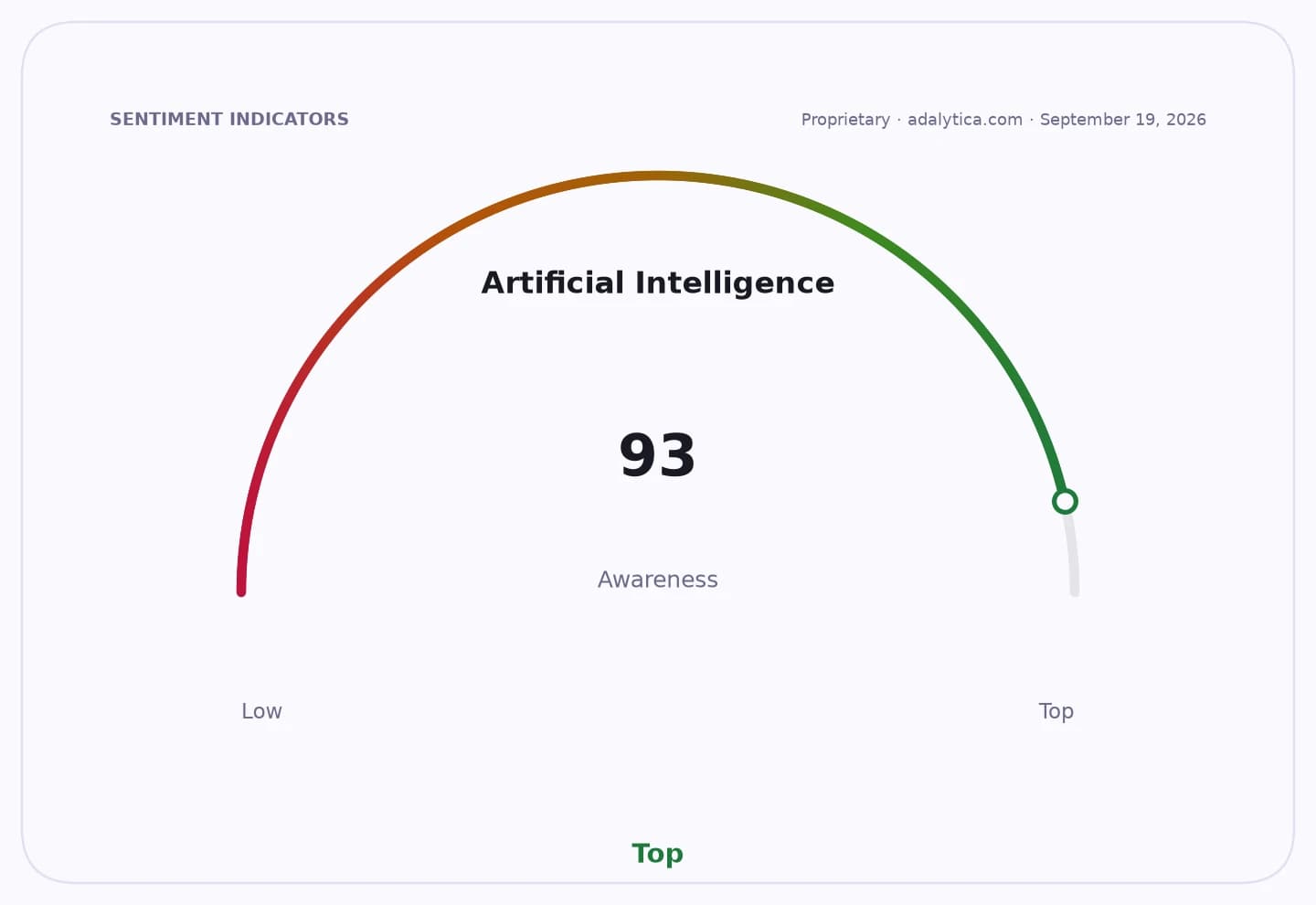
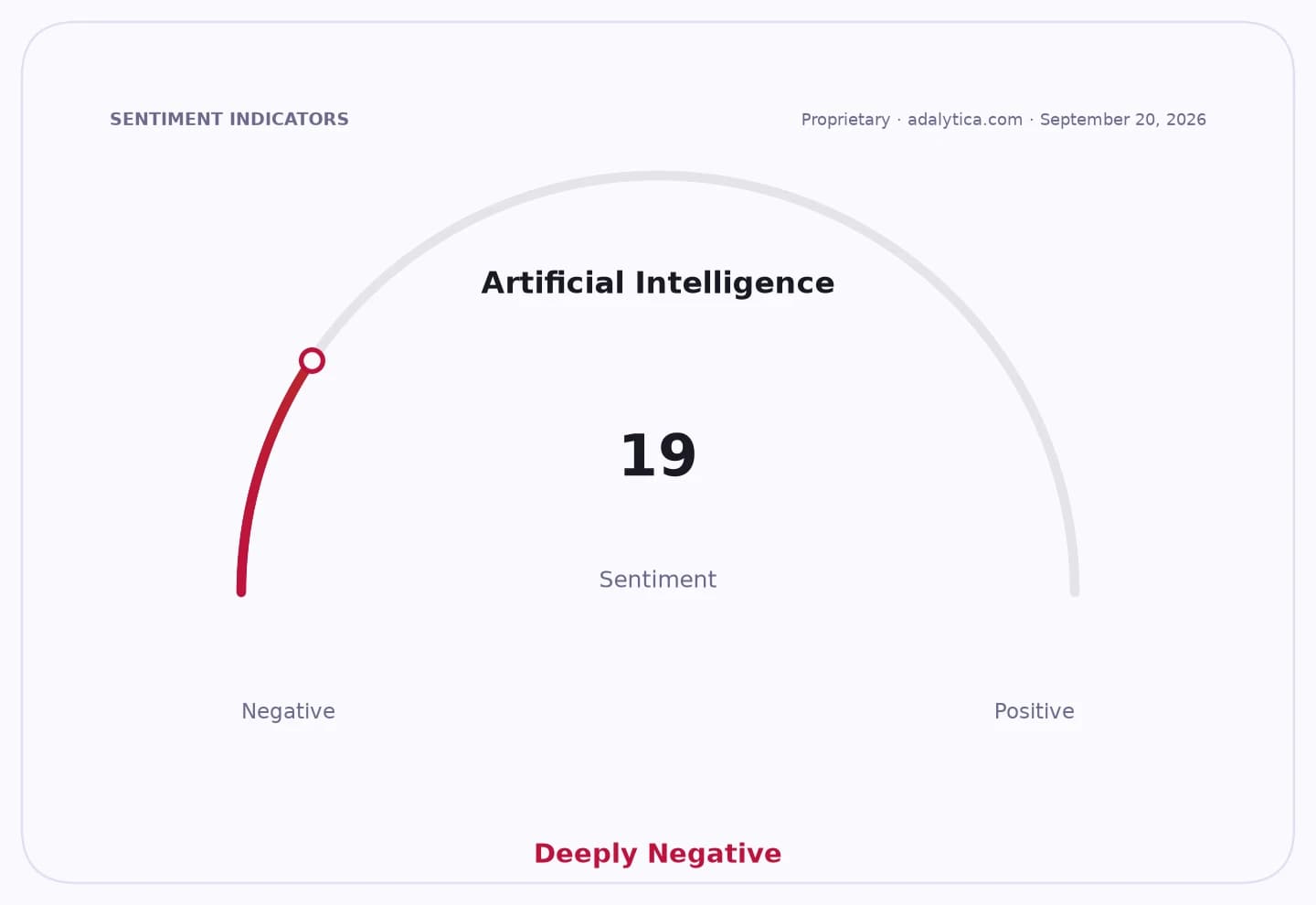
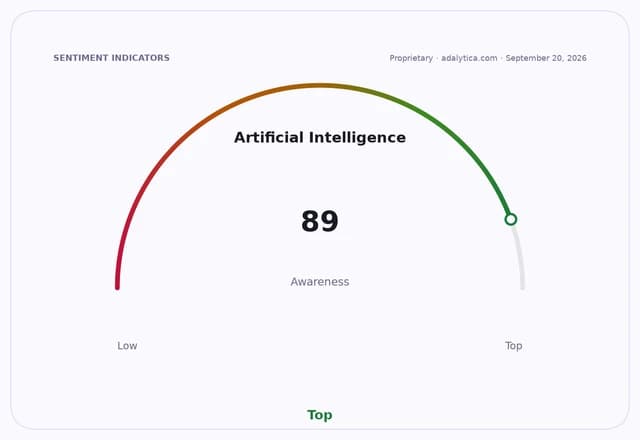
Sentiment IndicatorsⓘProprietary · adalytica.com · September 20, 2026
This is a snapshot — live sentiment, awareness and momentum for 130+ markets update continuously in the dashboard.Open AlphaPulse
For investors, that means the story is less about a single AI vendor and more about which banks can turn artificial intelligence into higher fee income, lower costs and better customer retention. JPMorgan, Bank of America and Wells Fargo already sit on huge client bases and digital distribution networks, which gives them a powerful advantage if they can layer AI on top of existing accounts, payments and advisory relationships.
JPMorgan’s latest filings show how the economics can scale when technology is tied to core banking. The bank reported banking and payments revenue of $21.6 billion, up 20%, while investment banking revenue rose 42% to $7 billion, helped by stronger fees and gains on equity investments. That kind of breadth matters because AI is most valuable when it reaches across a platform, not when it sits in a standalone app. In other words, the bank that can use AI to deepen lending, payments, underwriting and advice can compound returns more effectively than one merely renting access to a model.
Bank of America and Wells Fargo are also well positioned to benefit because they already serve tens of millions of retail and business customers. Bank of America says it serves more than 69 million consumer and small business clients, supported by roughly 3,500 financial centers and 15,000 ATMs, while Wells Fargo continues to lean on a large consumer and corporate franchise. Those distribution advantages matter in AI because the most profitable use cases tend to be embedded inside day-to-day banking, not isolated in a one-off interface.
The market is starting to price in that shift, even if the stocks have been choppy. JPMorgan’s shares are near $349, well above both its 50-day and 200-day moving averages, though its recent RSI reading has cooled from overbought levels, suggesting the stock has paused after a strong run. Bank of America has slipped back toward $57 after trading above $64 earlier in the summer, while Wells Fargo has held in the mid-$80s, just under its recent averages. For long-term investors, the key point is not short-term momentum. It is whether these banks can convert AI spending into operating leverage and stickier relationships.
That is where the narrative gets interesting. AI in banking is not a race to show who has the flashiest assistant. It is a race to build the rails around the assistant: identity verification, data governance, model oversight, workflow integration and clear lines to revenue. The banks that do that well can use AI to handle routine tasks, support bankers and advisors, and make digital channels feel more personal without sacrificing control. The banks that don’t will simply become customers of somebody else’s platform.
There are risks, of course. Banking is one of the least forgiving industries for errors, and AI’s tendency to hallucinate or misroute information can create regulatory and reputational headaches. Cost discipline also matters, because if AI spending rises faster than the savings or new revenue it produces, the payoff gets delayed. Still, the strategic direction is clear: AI will become a core operating layer in banking, and the most valuable franchises will be the ones that integrate it into their existing ecosystems rather than chasing it as a separate product.
For investors with a multi-year horizon, that makes the big U.S. banks worth watching closely. The best AI investment in banking may not be the platform provider at all — it may be the institution that owns the customer, the balance sheet and the workflow. That is the kind of advantage that compounds for years, not quarters, and it deserves a place on your watchlist.
| Entity | Gains | Losses |
|---|---|---|
| JPMorgan | ▲Cross-sell and fee growth | ▼Standalone AI vendors |
| Bank of America | ▲Retail engagement and efficiency | ▼Banks without scale |
| Wells Fargo | ▲Workflow automation | ▼Manual operating models |
| Anthropic | ▲Platform adoption | ▼Complacent incumbents |