JPMorgan Chase is moving JPM Coin onto the Ethereum network, a sign the biggest U.S. bank is pushing deeper into blockchain-based payments as tokenization shifts from pilot projects to mainstream financial plumbing.
JPMorgan Moves JPM Coin to Ethereum

The move matters because it ties one of Wall Street’s largest balance sheets to the public blockchain ecosystem, potentially widening the addressable market for tokenized cash and settlement tools. For banks, the appeal is faster transfer speeds, lower operating friction and a path to 24/7 settlement; for investors, it underscores that digital-asset infrastructure is becoming a strategic battleground rather than a niche crypto experiment.
Sentiment IndicatorsⓘProprietary · adalytica.com · October 23, 2026
This is a snapshot — live sentiment, awareness and momentum for 130+ markets update continuously in the dashboard.Open AlphaPulse
Ethereum remains a volatile asset, with ETH trading around $2,405.73 on Friday, down from $2,470.77 on Wednesday and below its 50-day moving average near $2,548.85. The token’s relative strength index at 36.4 points to subdued momentum, while MACD remains negative, suggesting the market has yet to price in a broad institutional re-rating even as adoption headlines build.
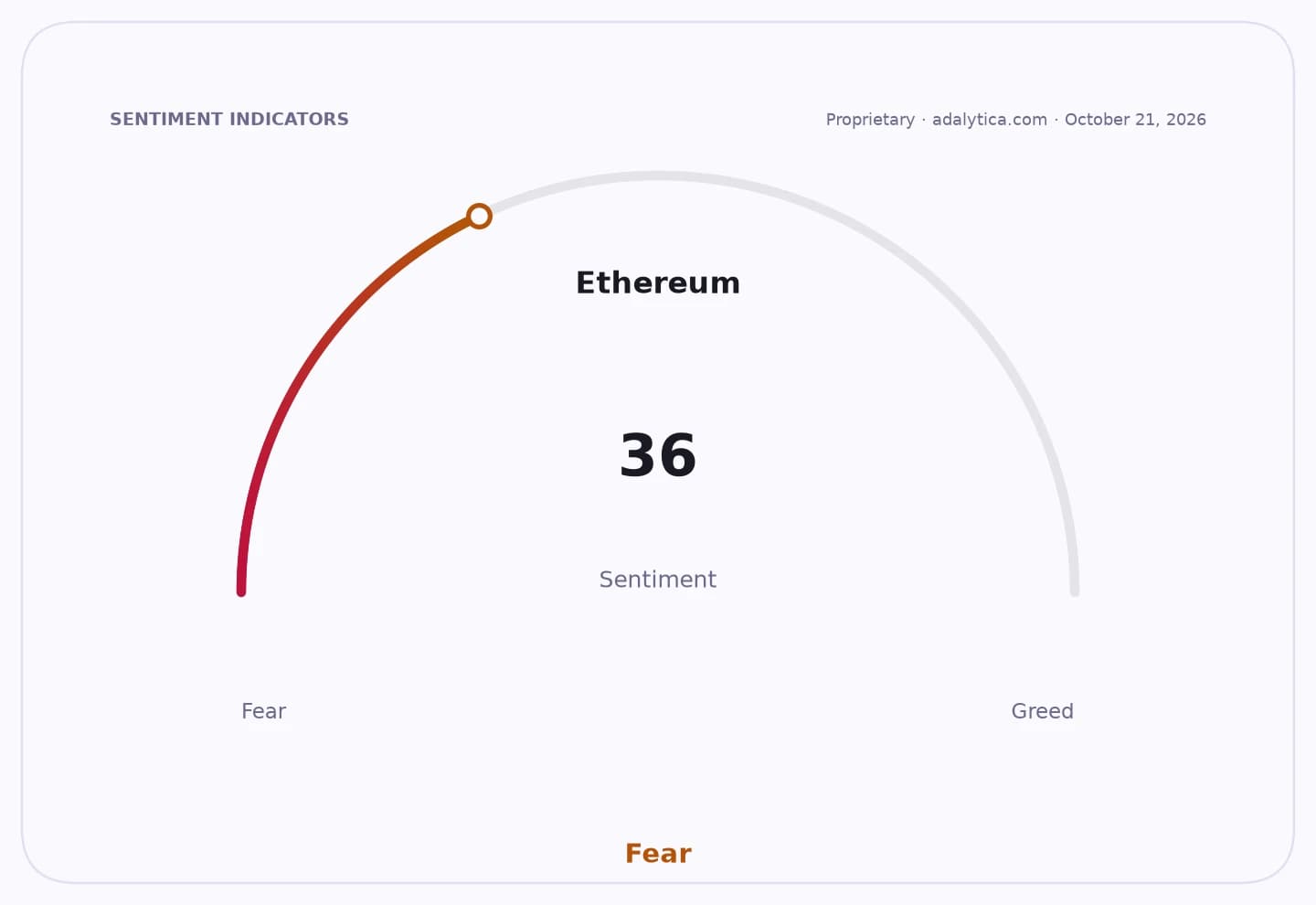
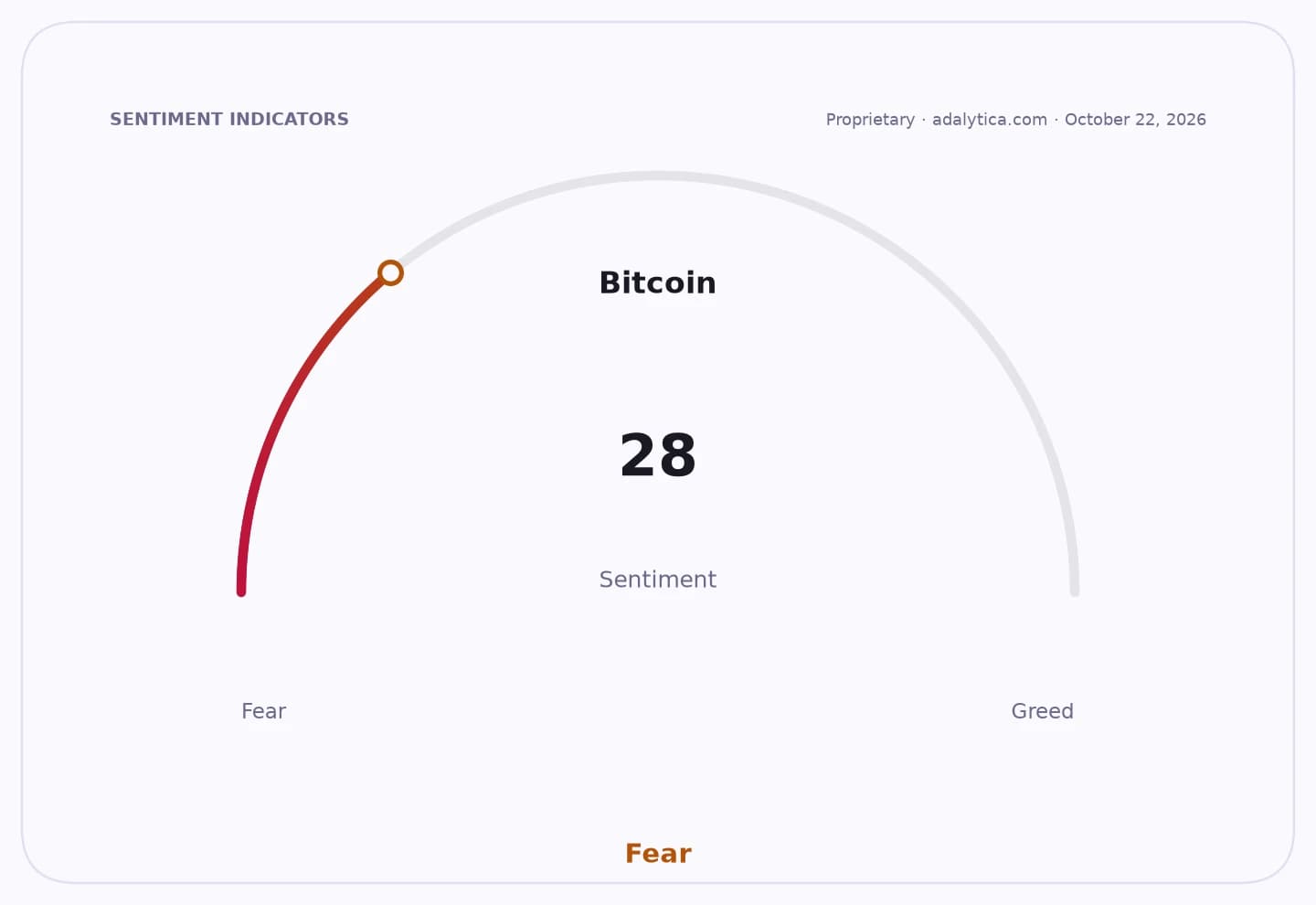
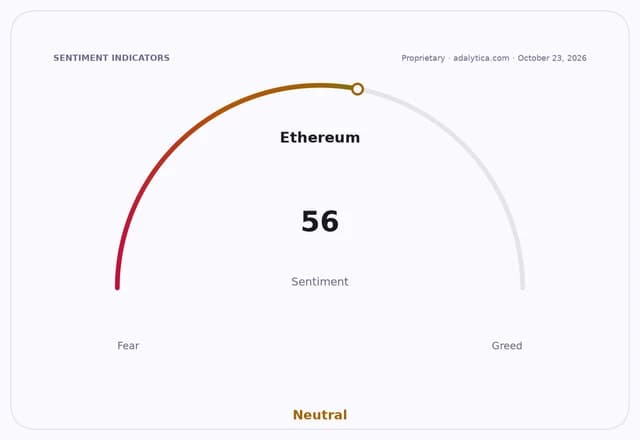
The timing also lands as broader crypto sentiment stays mixed. Adalytica’s Ethereum Fear & Greed Index sits at 56, or neutral, with awareness still in “extreme fear,” indicating rising interest without full market conviction. Bitcoin sentiment is also neutral at 32, leaving tokenization headlines to do much of the heavy lifting for the sector’s next leg.
Ethereum — 30-day sentimentadalytica.com
Explore this data interactively — full history, time series and cross-market comparisons.Open AlphaPulse
For JPMorgan, the blockchain push fits a broader strategy of using crypto rails while keeping control over client-facing infrastructure. The bank, which reported third-quarter net income of $15.3 billion on Oct. 13, has been one of the most active large financial institutions exploring tokenized deposits, settlement and digital asset infrastructure.
The development also comes as Europe’s regulatory backdrop improves, with Börse Stuttgart recently securing an EU blockchain trading license, adding pressure on global banks and exchanges to move faster. That raises the stakes for incumbent financial firms competing to own the infrastructure layer behind tokenized money, securities and collateral.
For investors, the key question is whether JPM Coin’s Ethereum expansion becomes a template for broader bank adoption or stays a controlled experiment. If tokenized settlement gains traction, it could boost demand for blockchain infrastructure, but it also intensifies competition among banks, exchanges and fintechs for the same payments and custody flows.
The next catalysts are likely to be JPMorgan disclosures on the rollout’s scale, client use cases and whether other major banks follow onto public blockchain networks.
| Entity | Gains | Losses |
|---|---|---|
| JPMorgan Chase | ▲Faster tokenized payments | ▼Legacy settlement friction |
| Ethereum | ▲More institutional usage | ▼Skepticism over adoption pace |
| Crypto infrastructure providers | ▲Higher demand | ▼Closed banking rails |
| Competing banks and exchanges | ▲Industry validation | ▼First-mover advantage for JPMorgan |