Kazakhstan is preparing a new mortgage framework that could cut the upfront payment to 10% in 2027, a move that would widen access to home financing but only if the government can secure fresh funding and control the risk of another overloaded subsidy program.
Kazakhstan plans 10% mortgage down payment in 2027
The biggest economic implication is simple: lower entry barriers could unlock demand in a housing market where affordability is already strained, while also increasing pressure on public and quasi-public lenders to bankroll that demand. Officials from the Industry and Construction Ministry and Otbasy Bank are working on the model now, but they have disclosed no interest rate, borrower criteria or application date — a reminder that the proposal is still a concept, not a launched policy.
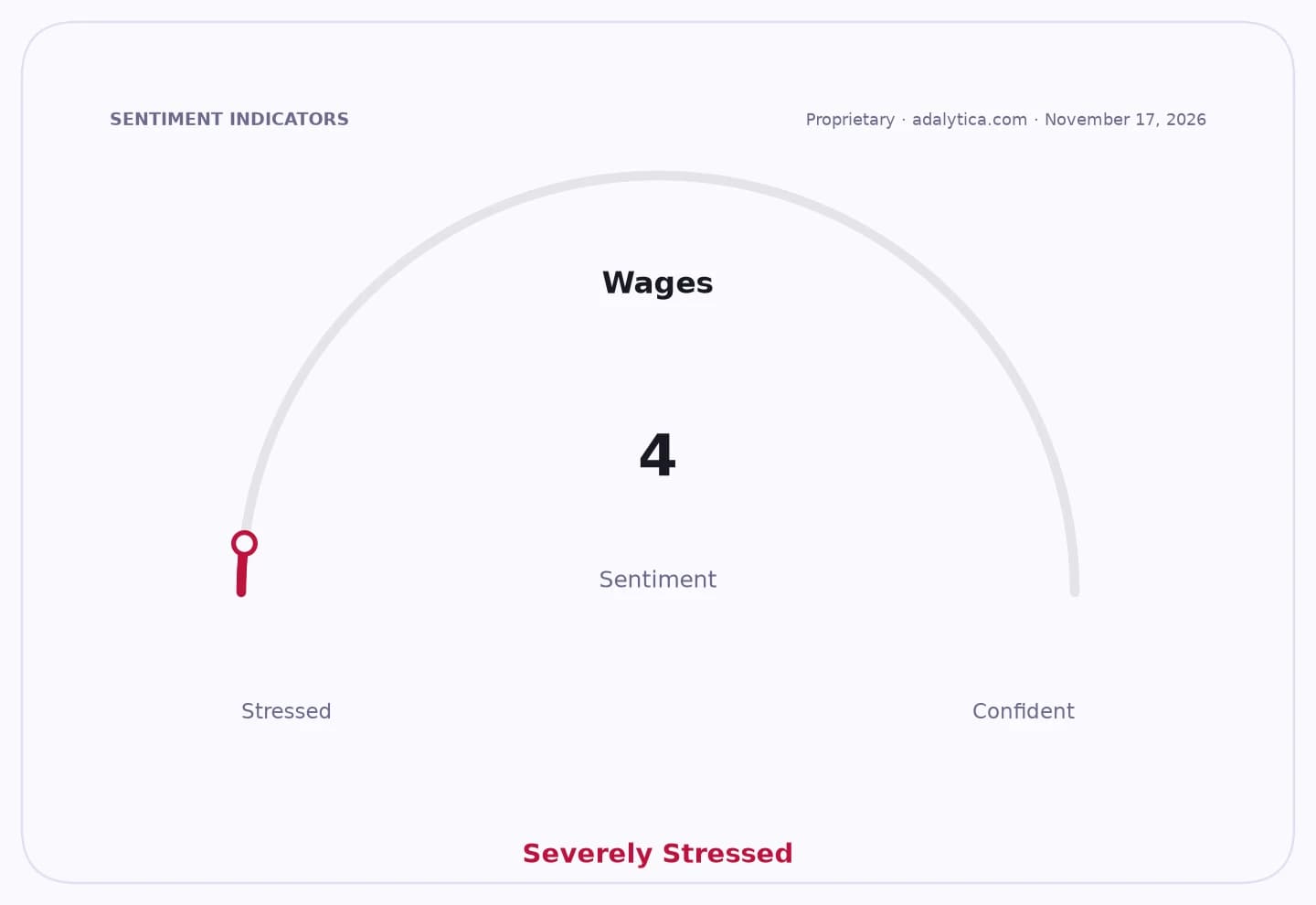
Sentiment Indicators
That caution matters because Kazakhstan has already seen how quickly demand can overwhelm capped mortgage programs. On Nov. 3, Otbasy Bank reopened applications for its women-focused Umay mortgage and received 850 requests worth 20 billion tenge in a single day, forcing the bank to stop taking new applications after the limit was exhausted. The first tranche had also run out within seven hours. Umay requires a 20% down payment in major cities and 15% in the regions, so a 10% product would be materially looser and likely even more popular.
For investors, the key question is not whether demand exists — it clearly does — but whether the funding stack can support it. That makes state-linked lenders, mortgage originators and builders the likely first-order beneficiaries if the plan advances, while households could gain access to ownership sooner and with less savings. The trade-off is that cheaper entry can inflate competition for limited housing stock unless supply expands alongside credit.
The policy also lands against a broader global affordability squeeze. Mortgage stress is worsening in multiple markets as interest rates and housing costs bite, and the U.S. housing sector has already been forced to adjust to elevated borrowing costs. Against that backdrop, Kazakhstan’s move looks less like a standalone social program than a bid to keep housing finance flowing in a market where demand is clearly there but affordability is the bottleneck.
The investable angle is to watch for the next signal from Otbasy Bank and the Industrial and Construction Ministry in 2027. If the government delivers funding and launches a 10% down-payment product, the biggest winners will be the lenders that can scale originations and the developers that can turn pent-up demand into sales.
| Entity | Gains | Losses |
|---|---|---|
| Otbasy Bank | ▲Loan demand growth | ▼Funding pressure |
| Kazakhstan homebuyers | ▲Lower entry barrier | ▼Higher leverage risk |
| Homebuilders | ▲More sales volume | ▼Supply bottlenecks |
| Existing subsidy pools | ▲Broader policy reach | ▼Faster depletion |