Kazakhstan’s shortage of welders, electricians and other blue-collar workers is turning into a technology problem as much as a labor one, with employers now looking for tradespeople who can work alongside AI, digital controls and automated equipment.
Kazakhstan labor shortage shifts to AI-skilled trades
That shift matters for the economy because the country’s factories, construction sites, farms and power networks are already struggling to match vacancies with the right skills, even though unemployment remains below 5%. The bigger issue is not a lack of workers, but a mismatch between what employers need and what young graduates can do on modern production lines.
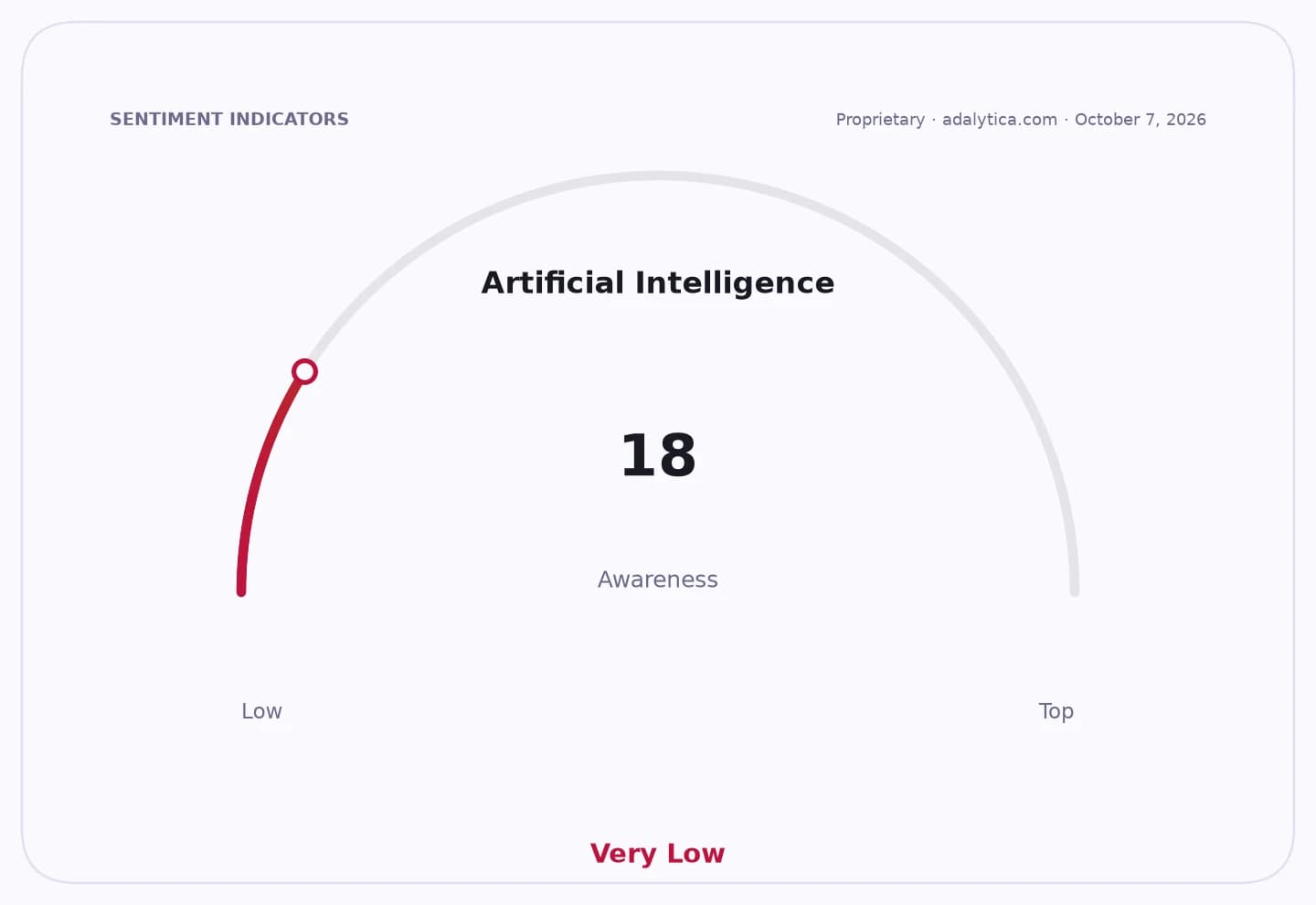
Sentiment IndicatorsⓘProprietary · adalytica.com · October 7, 2026
This is a snapshot — live sentiment, awareness and momentum for 130+ markets update continuously in the dashboard.Open AlphaPulse
Bobir Razhametov, founder and chief executive of Tanu.AI, said Kazakhstan’s labor turnover hit 22.7% in 2025, the highest in years, and that more than 1 million people changed jobs over the past year. He said the labor ministry expects the economy to need nearly 3 million workers by 2035, including 1.8 million in working professions alone.
That demand is already showing up in hiring. Razhametov said 432,000 vacancies for working professions have been posted on the country’s electronic labor exchange since the start of the year, with many still open. Shortages are most acute for welders of specific grades, electricians, repair mechanics, CNC machine operators, equipment technicians, concrete workers and heavy machinery operators.
For investors, the message is that industrial automation is not eliminating demand for labor so much as rewriting the wage premium for technical skills. In Rockwell Automation’s language, the pitch is now about “digital transformation” on the shop floor: workers who can read data, use interfaces and troubleshoot machines will be more valuable than those who only have manual dexterity.
That is why AI is moving into trades training. In welding, VR simulators are being used to measure angle, speed and distance in real time and grade the seam. On factories and utility networks, machine-vision systems can inspect welds as they are made, while collaborative robots handle repetitive joins and leave complex work to people.
In energy, the change is already more operational. Razhametov cited a pilot by the energy ministry in which drones and AI inspected 618 power poles in two days and found about 6,800 defects with 98% recognition accuracy, replacing field crews that once climbed poles with binoculars. The result is fewer blind inspections, lower safety risk and faster repairs without shutting lines down.
The economic logic is straightforward: if Kazakhstan buys new equipment but fails to train workers to use it, the gear will sit underused. Colleges and vocational schools are therefore being pushed to teach digital tools, automation systems and AI applications inside the trade itself, not as a separate subject.
That also explains why the country’s new standards for more than 600 trades, due by the end of 2026, will include digital skills and AI tools. The World Economic Forum has estimated that 39% of key worker skills could change or become obsolete by 2030, and Razhametov said the declining list includes hand dexterity, endurance and precision — the traits that once defined manual labor.
Still, the human role is not going away. Safety sign-off, fault diagnosis in the field, work at height or in freezing conditions and other nonstandard jobs still require experience, judgment and accountability that algorithms do not carry.
For employers, the immediate risk is a deeper labor bottleneck unless vocational training catches up. For workers, the upside is higher pay for those who can combine manual skills with data literacy and machine troubleshooting. The next test is whether schools, companies and the state can retrain enough people before more of the skilled-labor gap turns into a drag on output.
| Entity | Gains | Losses |
|---|---|---|
| AI-skilled trades workers | ▲Higher pay potential | ▼Old manual-only roles |
| Employers/industries | ▲Better productivity, safer inspections | ▼Vacancy pressure, retraining costs |
| Colleges/vocational schools | ▲Bigger role in training | ▼Outdated curricula |
| Young jobseekers | ▲Clearer tech-enabled career paths | ▼Traditional trade stereotypes |