Kazakhstan has written off 248.3 billion tenge in mortgage debt over 11 years, underscoring how far the government has gone to keep distressed homeowners out of default and out of foreclosure.
Kazakhstan Writes Off 248.3 Billion Tenge in Mortgage Debt
The debt relief matters because mortgage stress is not just a household problem: it can ripple through bank balance sheets, housing liquidity and consumer spending. By converting problem loans into lower-cost obligations and forgiving accumulated interest, fees and penalties, the program has helped stabilize a segment of the financial system that was hit hard by currency swings and weaker property prices.
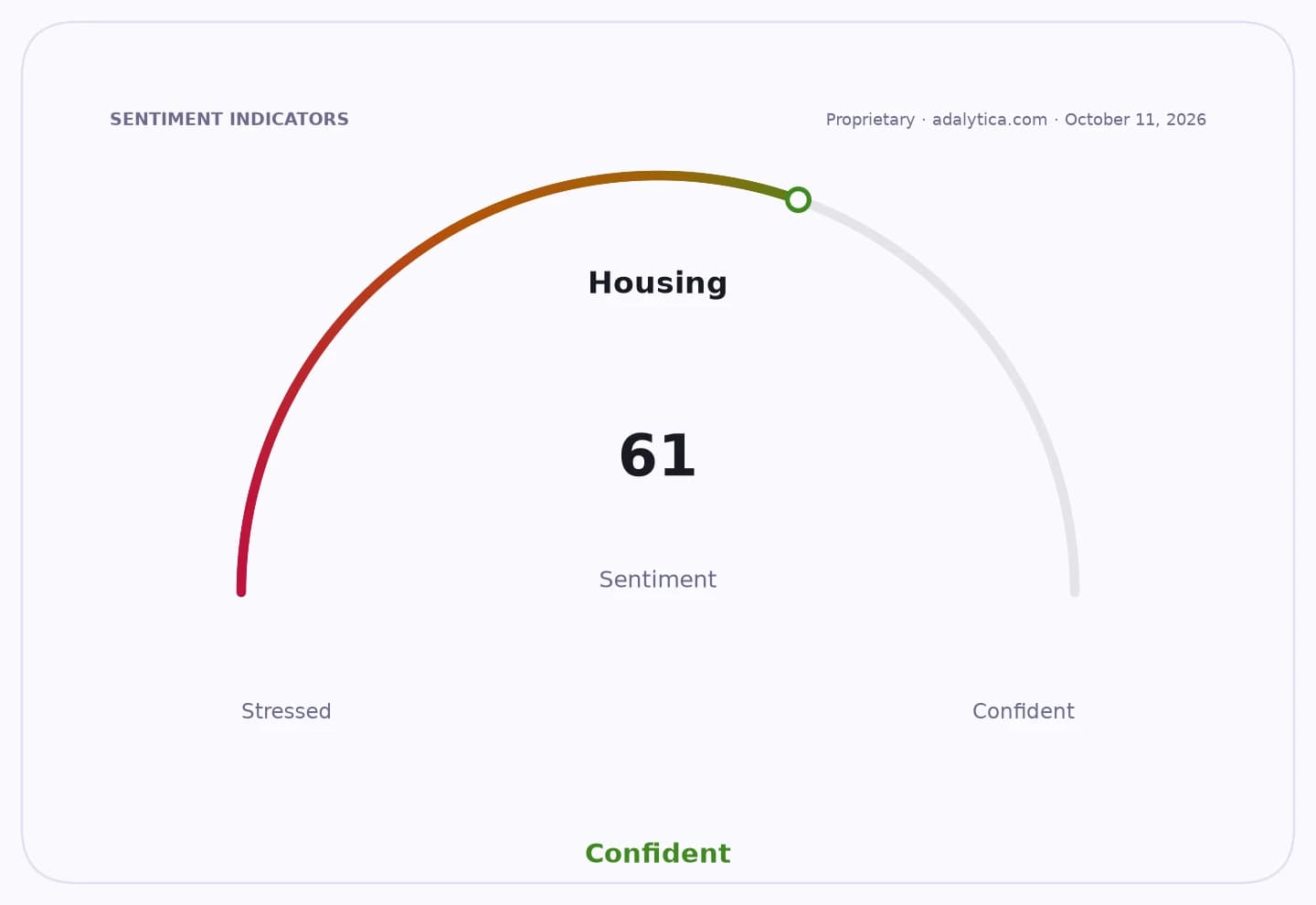
Sentiment IndicatorsⓘProprietary · adalytica.com · October 14, 2026
This is a snapshot — live sentiment, awareness and momentum for 130+ markets update continuously in the dashboard.Open AlphaPulse
The figures, disclosed by the head of the Agency for Regulation and Development of the Financial Market, Madina Abylkassymova, show the state-backed refinancing scheme has supported about 60,000 borrowers since 2015, with total aid reaching 678.2 billion tenge. Of that, 101.2 billion tenge went to additional support for 10,600 socially vulnerable borrowers, while 395 homes that had been taken onto banks’ books were returned to their former owners.
The program was originally designed for Kazakhs who struggled with housing loans after exchange-rate shocks made foreign-currency mortgages harder to service. Loans were refinanced at rates capped at 3% a year, while banks wrote off accrued interest, commissions and late-payment penalties.
For investors, the key point is that Kazakhstan is still actively managing credit risk in housing rather than allowing a wave of forced sales to cleanse the market. That reduces immediate pressure on lenders, but it also shows how persistent legacy mortgage problems remain and how much regulatory intervention the sector still requires.
Authorities have also tightened mortgage rules over the years, banning foreign-currency loans for borrowers without matching income and imposing limits on debt growth during prolonged delinquency. Even so, banks say about 1,500 socially vulnerable borrowers still need help, which is why officials extended the extra support period to Sept. 1, 2027, and widened refinancing eligibility.
The remaining pool of troubled borrowers suggests the issue is not fully resolved. For Kazakhstan’s banks, the next test is whether the extended program contains defaults without encouraging new lending distortions in a market that is still being reshaped by post-crisis regulation.
| Entity | Gains | Losses |
|---|---|---|
| Kazakhstan homeowners | ▲Lower debt burden | ▼Accrued penalties erased |
| Kazakh banks | ▲Fewer foreclosures | ▼Forgone interest and fees |
| Government regulators | ▲Financial stability | ▼Fiscal support commitments |
| Distressed borrowers | ▲Refinancing access | ▼Continued scrutiny on eligibility |