Kazakhstan and Singapore have opened a new twice-weekly air connection through China, a small but economically meaningful step that expands travel links between Central Asia and Southeast Asia and adds another route option at a time when airlines are rebuilding cross-border traffic.
Kazakhstan-Singapore Air Link Opens via China

The service, which began Oct. 20, runs from Shymkent to Singapore via Sanya on China’s Hainan island, with a total journey of nearly 11 hours including a 90-minute technical stop. For Kazakhstan, the route is aimed at deepening business, tourism and people-to-people ties with Singapore, while also creating a new corridor through China for passengers and transit traffic.
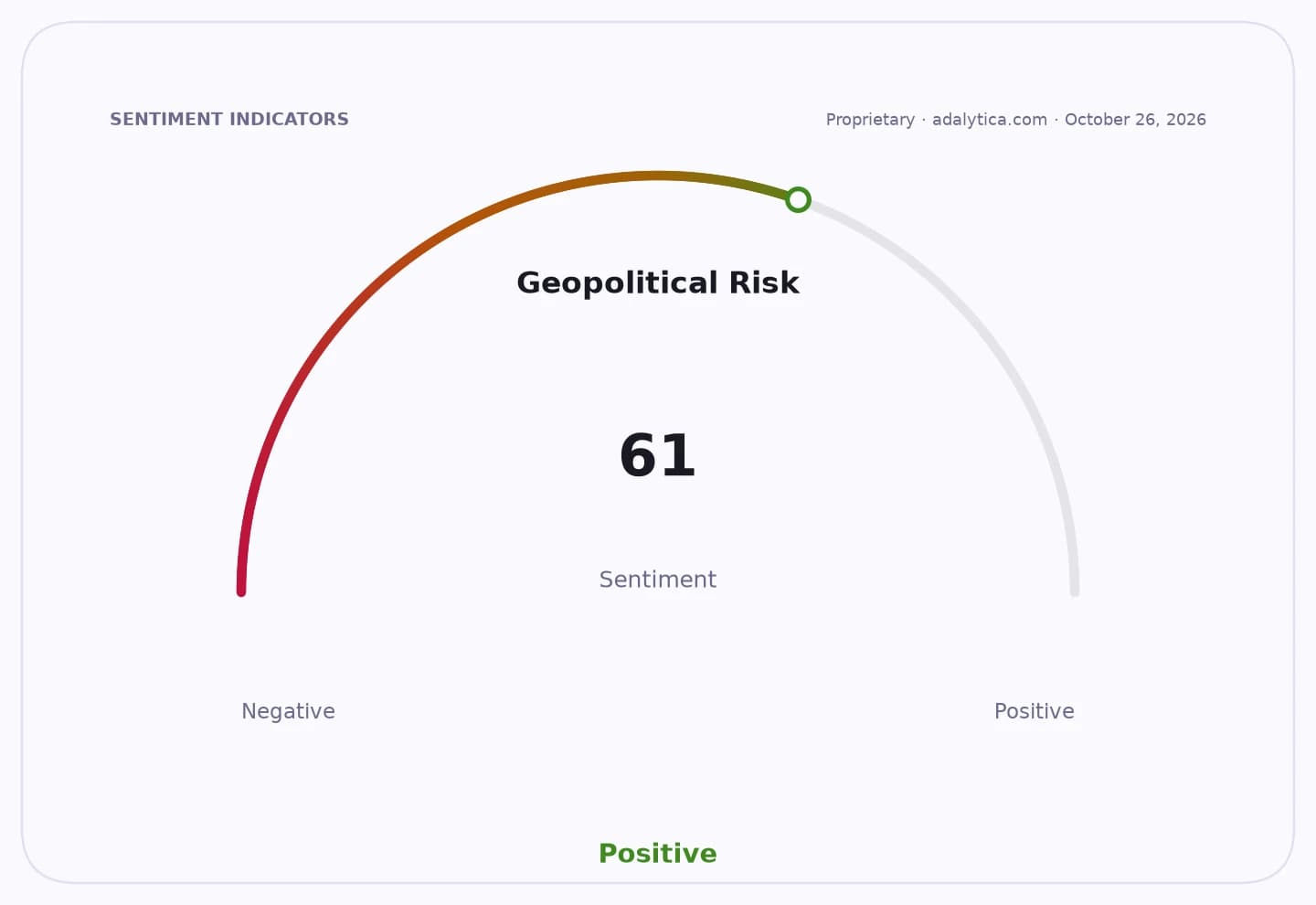
Sentiment Indicators
The launch matters because air links are often the first hard infrastructure supporting trade, investment and services flows. Singapore is a major finance and logistics hub, and Kazakhstan wants to position itself as a bridge between Central Asia and Asia’s wealthier markets. More direct connectivity can support corporate travel, conference traffic, tourism and potential commercial ties in sectors where time-sensitive access matters.
It also adds incremental capacity in a market where route economics remain sensitive to demand, fuel costs and geopolitical disruption. The detour through Sanya underscores how airlines are using fifth-country stops and intermediate hubs to make thinner long-haul routes workable, especially where direct non-stop demand may not yet justify larger aircraft or daily service.
The backdrop for aviation remains uneven. Air traffic systems have been hit by security scares and operational glitches in Europe and Asia in recent weeks, reinforcing the value of resilient routing and reliable infrastructure. Broader airline demand, meanwhile, has held up across premium and international segments, giving carriers an incentive to test secondary city pairs and niche interregional links.
For investors, the immediate significance is less about a single route than about the broader recovery in international aviation connectivity and the potential for more traffic between emerging markets. If the service fills up, it could support frequency increases, broader network development and stronger links between Chinese transit hubs and central and southeastern Asian markets.
| Entity | Gains | Losses |
|---|---|---|
| Kazakhstan | ▲More inbound travel links | ▼Less isolation from Asia hubs |
| Singapore | ▲Better access to Central Asia | ▼No direct downside if demand is thin |
| Airlines on the route | ▲Incremental passenger traffic | ▼Higher complexity from stopover routing |
| Competing hubs | ▲Potentially lower transfer share | ▼Lost traffic to Shymkent-Sanya-Singapore |