Public debt can begin to constrain economic growth once it climbs above about 62% of GDP, according to new research from the Kenya Bankers Association, a warning that lands at a time when governments from Washington to parts of Africa are already being forced to spend more on servicing borrowings and less on development.
Kenya Bankers Association debt threshold study
That threshold matters because it frames the point at which debt stops being a tool for supporting expansion and starts becoming a drag on it. When a larger share of tax revenue goes to interest payments, governments have less room for infrastructure, health care, education and other spending that lifts long-term productivity. The result is slower growth, tighter fiscal policy and a weaker environment for businesses that depend on public investment and steady consumer demand.
Sentiment IndicatorsⓘProprietary · adalytica.com · October 1, 2026
This is a snapshot — live sentiment, awareness and momentum for 130+ markets update continuously in the dashboard.Open AlphaPulse
The KBA study comes against a backdrop of rising global borrowing costs and persistent debt stress in emerging markets. Recent reports have pointed to worsening debt burdens in countries such as Malawi, while other regions and sovereigns are also pressing against uncomfortable debt levels. Even in larger economies, higher yields have made refinancing more expensive, forcing policymakers to balance growth support against debt sustainability.
For investors, the message is straightforward: debt levels are not just a government problem, they are an asset-price problem. Heavily indebted countries can face currency pressure, higher risk premiums and less policy flexibility, all of which can hurt local bonds, banks and companies tied to domestic demand. In developed markets, the same arithmetic can keep long-term borrowing costs elevated, which tends to weigh on rate-sensitive assets and raises the bar for equities that rely on cheap capital.
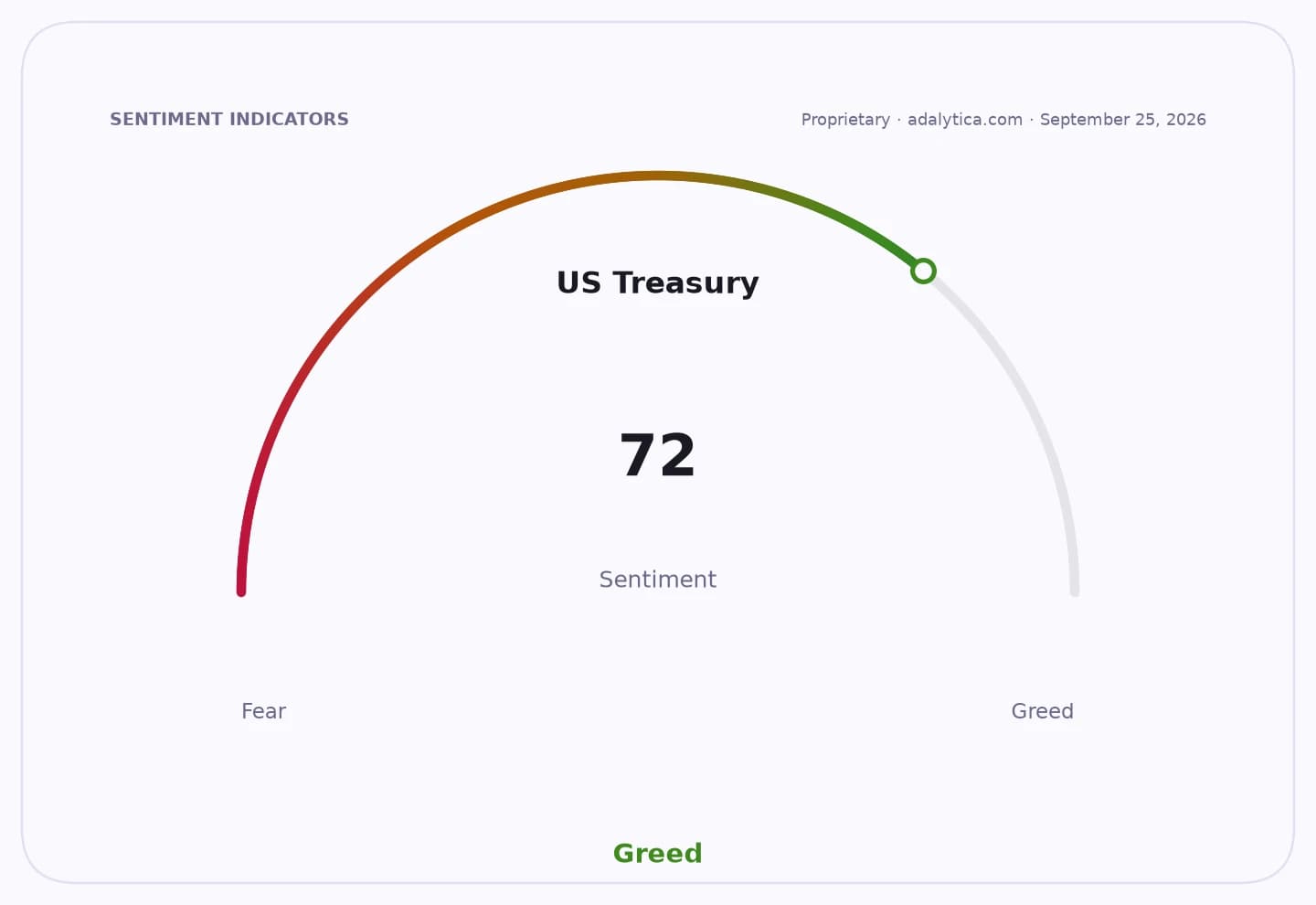
The timing is notable for bond investors in particular. U.S. Treasury prices have been volatile as yields hover around the 5% area, and the 10-year benchmark has stayed well above levels seen during the pandemic era. Standard technical indicators on the iShares 20+ Year Treasury Bond ETF, TLT, show the fund trading below both its 50-day and 200-day moving averages, with RSI readings pointing to oversold conditions, while Adalytica’s trade-signal snapshot for Treasuries shows neutral sentiment but extreme awareness, underscoring how closely investors are watching the debt-and-rates backdrop.
For equity investors, the broader implication is that fiscal discipline is becoming a competitive advantage. Countries that can keep borrowing within sustainable limits are more likely to preserve growth, protect their currencies and avoid crowding out private investment. Those that cannot may find themselves locked into a cycle of high interest costs, weak expansion and recurring refinancing risk.
The KBA research does not mean every economy above 62% of GDP is headed for crisis. The composition of debt, the maturity profile, interest rates and the strength of institutions all matter. But it does reinforce a simple long-term investing lesson: debt only helps until it doesn’t. When borrowing rises faster than growth, future returns on capital tend to fall, and markets eventually price that in.
For investors with a multi-year horizon, the takeaway is to favor economies and companies with strong balance sheets, durable cash flow and room to invest without leaning too heavily on debt. That remains the better path for compounding over the next decade.
| Entity | Gains | Losses |
|---|---|---|
| Low-debt governments | ▲More fiscal room | ▼Less refinancing pressure |
| Highly indebted governments | ▲Short-term spending support | ▼Higher interest burden |
| Bond investors | ▲Higher caution premium | ▼More default/fiscal risk |
| Equity investors | ▲Firms with strong balance sheets | ▼Rate-sensitive, debt-heavy sectors |