A fresh diplomatic rupture over Kosovo is a reminder that the Balkans can still move markets when rhetoric turns from tense to combustible, and investors are underestimating how fast that can spill into European risk assets.
Kosovo Tensions Raise Balkans Risk Premium
Kosovo’s permanent ban on Serbian minister Snežana Paunović after comments widely condemned as glorifying ethnic cleansing is more than a bilateral quarrel. It is a stress test for the fragile US- and EU-backed architecture meant to keep Serbia-Kosovo relations from sliding backward, and it raises the political premium on any renewed strategic dialogue between Washington and Belgrade. When trust collapses, the region’s investment case weakens: accession progress gets harder, cross-border capital stays cautious, and the kind of country-risk discount that global investors apply to the Western Balkans widens again.
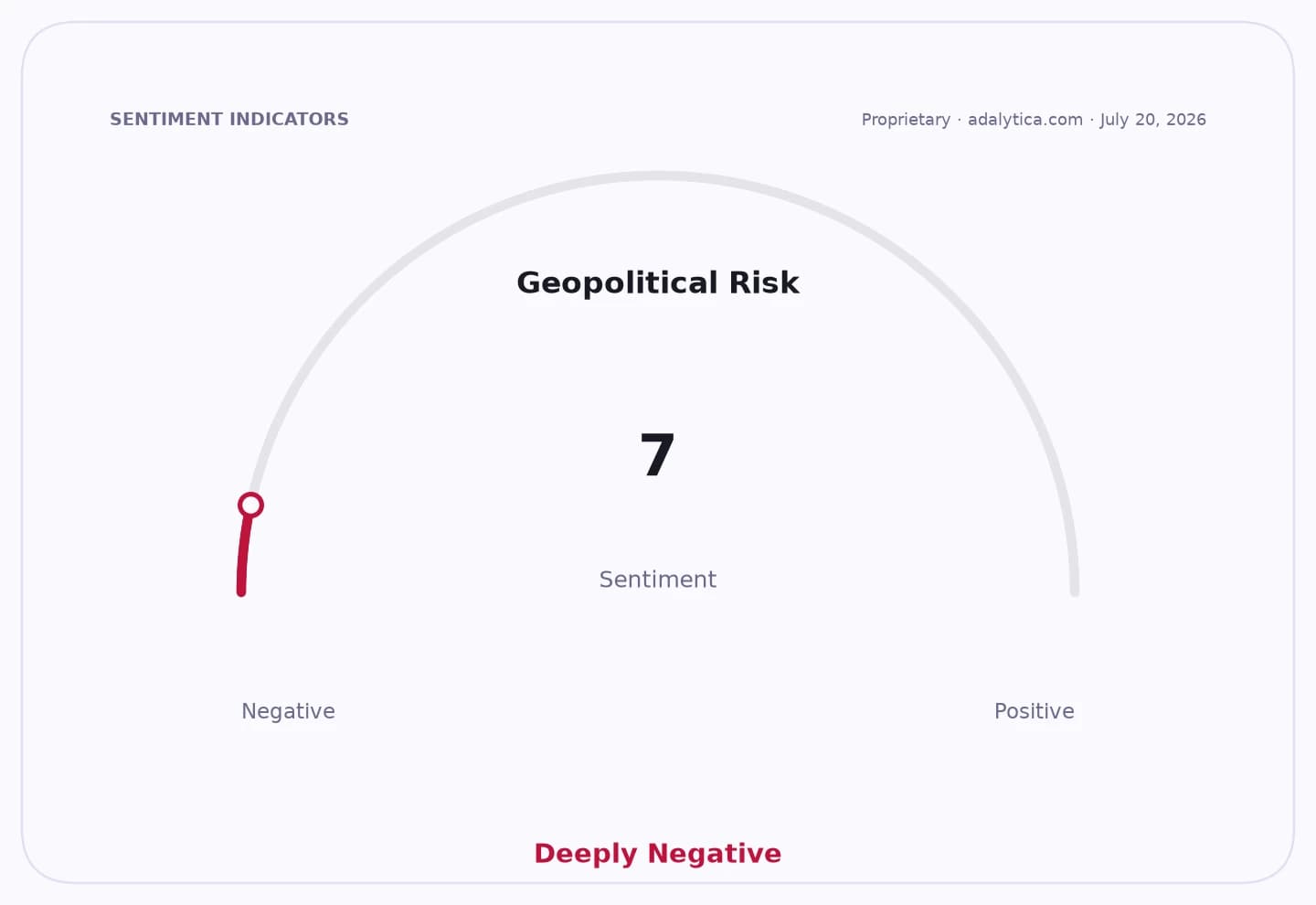
Sentiment IndicatorsⓘProprietary · adalytica.com · July 20, 2026
This is a snapshot — live sentiment, awareness and momentum for 130+ markets update continuously in the dashboard.Open AlphaPulse
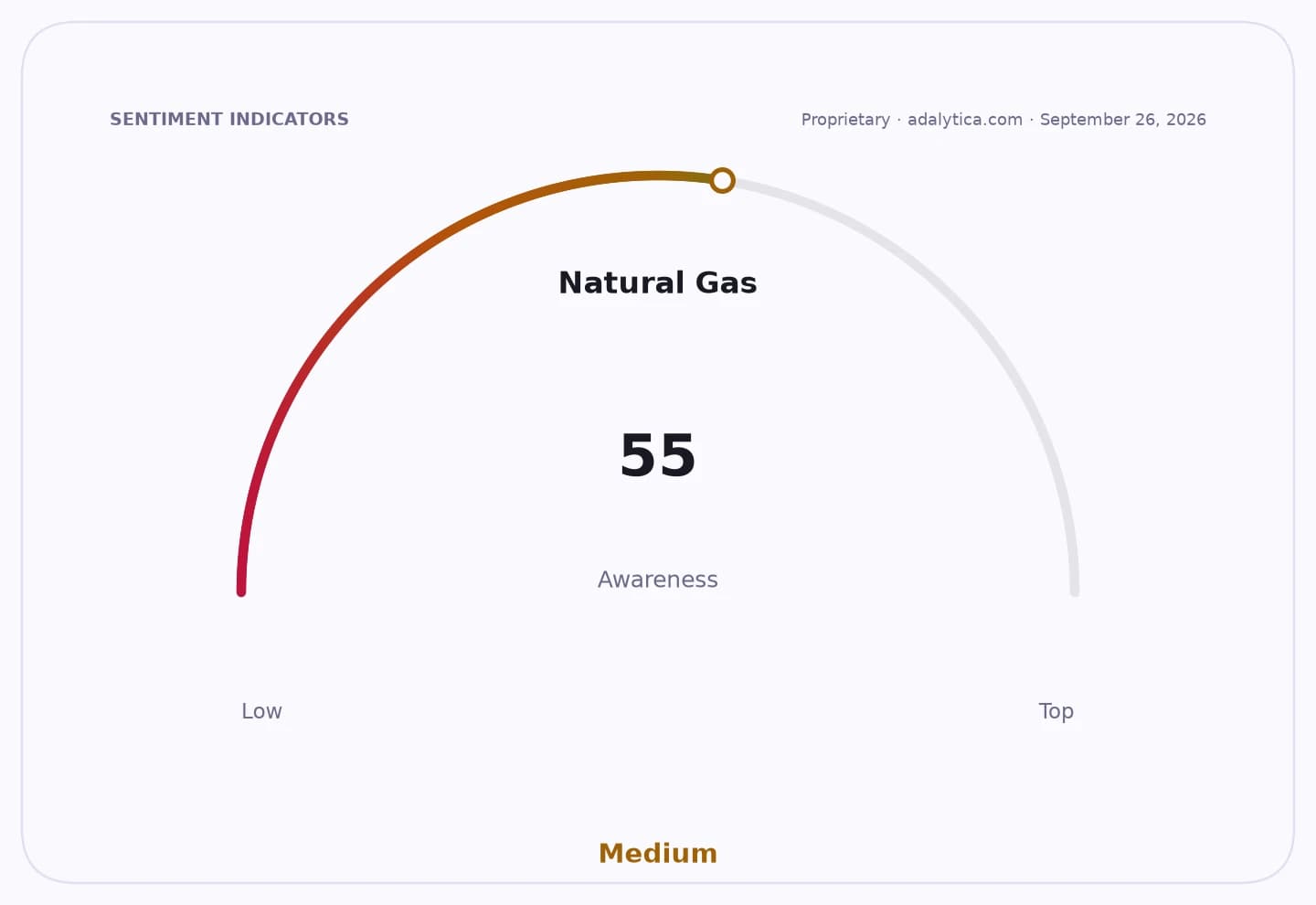
That matters economically because the Balkans are not a sideshow for Europe. They sit on key transport corridors, energy routes and supply chains linking the EU with southeastern Europe. A deterioration in Serbia-Kosovo relations can chill foreign direct investment, delay infrastructure deals and complicate the policy path for Serbia, which still needs access to Western capital and political goodwill. It also keeps a lid on any hopes that Kosovo can normalize trade and institutional ties quickly enough to unlock a more durable growth premium.
For investors, the immediate takeaway is not to chase headline risk blindly, but to recognize where the asymmetry sits. The market usually discounts geopolitical flare-ups in the region until they affect financing conditions, bank flows or accession timelines. That is when the move becomes investable. Country risk is still the transmission channel: if tensions rise, local equities, banks and FX proxies tend to feel it first, while defense, security and infrastructure names tied to European resilience can gain relative support.
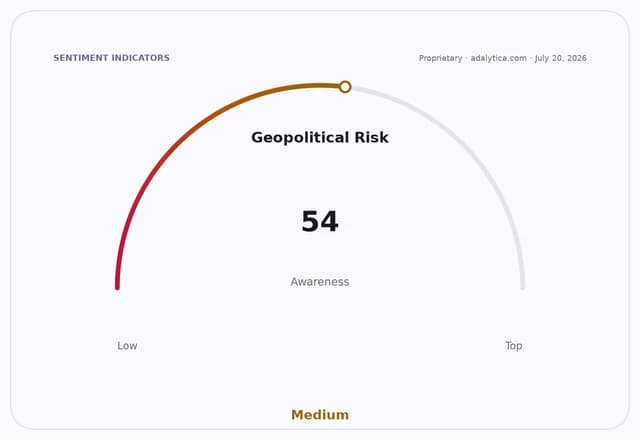
Geopolitical Risk — 30-day sentimentadalytica.com
Explore this data interactively — full history, time series and cross-market comparisons.Open AlphaPulse
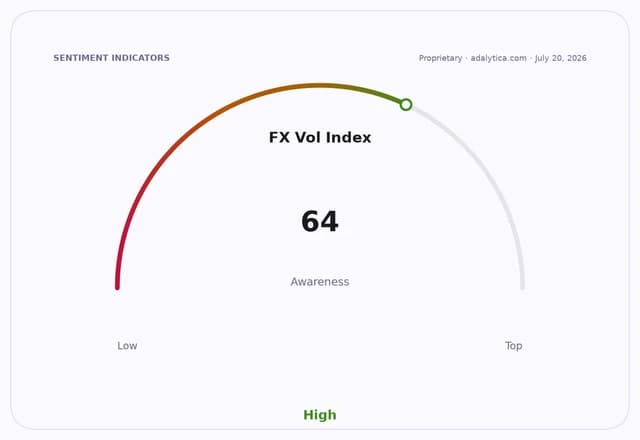
That lens helps explain the nervousness showing up across broader emerging-market proxies. The iShares MSCI Emerging Markets ETF, EEM, has slipped to 63.29 from 67.14 in early May, while Brazil’s EWZ has also lost momentum after a strong run, with its latest close at 35.23 versus 39.00 in February. Those moves are not about Kosovo alone, but they do reflect a market that is quicker to de-risk when geopolitical noise rises and global stability sentiment collapses. Adalytica’s Global Stability Sentiment gauge has plunged to 7, marked “Extreme Fear,” underscoring how little room there is for Balkan flare-ups to be ignored.
The strategic question now is whether the US-Serbia dialogue can be insulated from the Kosovo shock. If Washington keeps pushing engagement while demanding restraint and credible commitments from Belgrade, the region may avoid a deeper repricing. If not, the market will eventually treat the Western Balkans as a more persistent source of European tail risk.
For investors, the best play is to stay selective: favor companies and funds that benefit from Europe’s long-cycle security, infrastructure and supply-chain buildout, and avoid assuming the Balkans’ political risk premium is disappearing. In this region, the real opportunity is often in what the market is not pricing yet — and right now, that is the cost of a dialogue failure.
| Entity | Gains | Losses |
|---|---|---|
| Kosovo hawks and Western diplomats | ▲leverage in talks | ▼policy flexibility |
| Serbian hardliners | ▲domestic nationalist cover | ▼diplomatic credibility |
| European stability plays | ▲higher resilience demand | ▼none directly |
| Balkan risk assets | ▲selective buying on de-escalation | ▼wider risk premium on escalation |