The labor market is still producing jobs, but the balance of power is shifting toward employers as unofficial offers and job “transfers” become harder to land.
Labor Market Cooling Hits Job Mobility
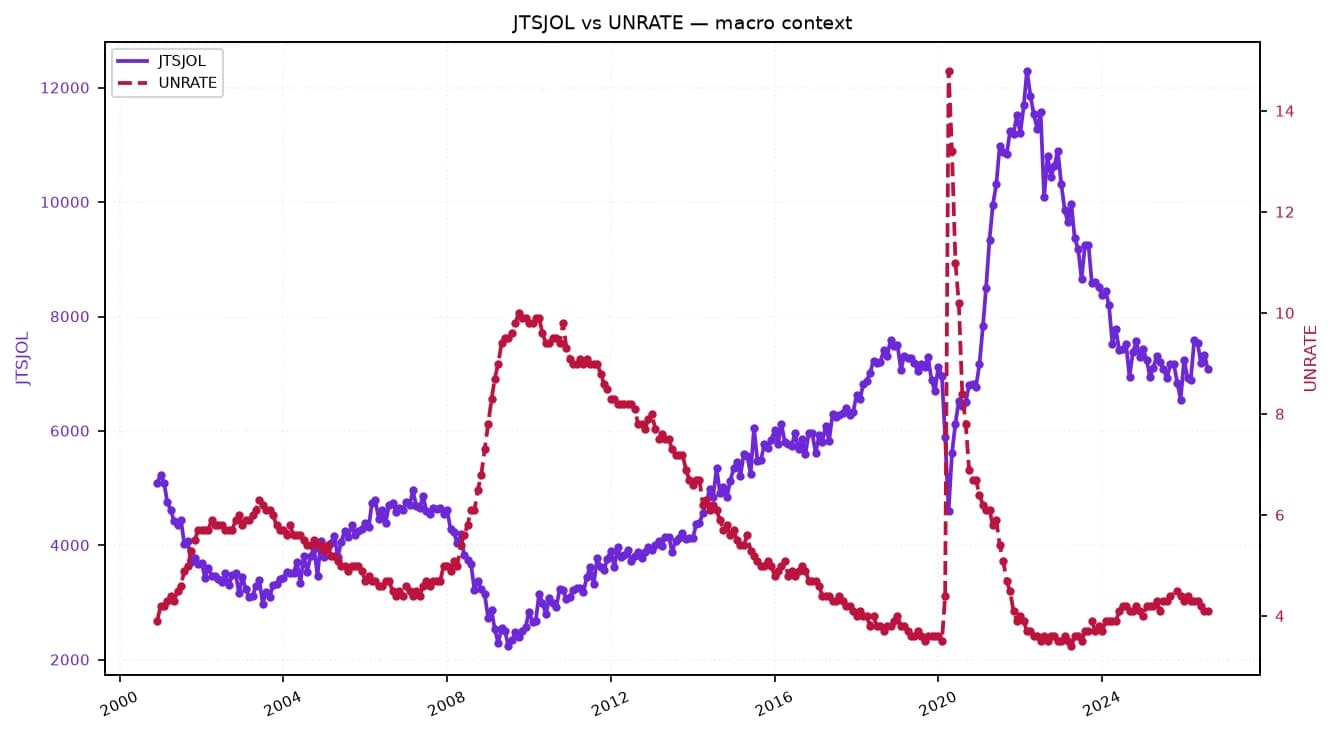
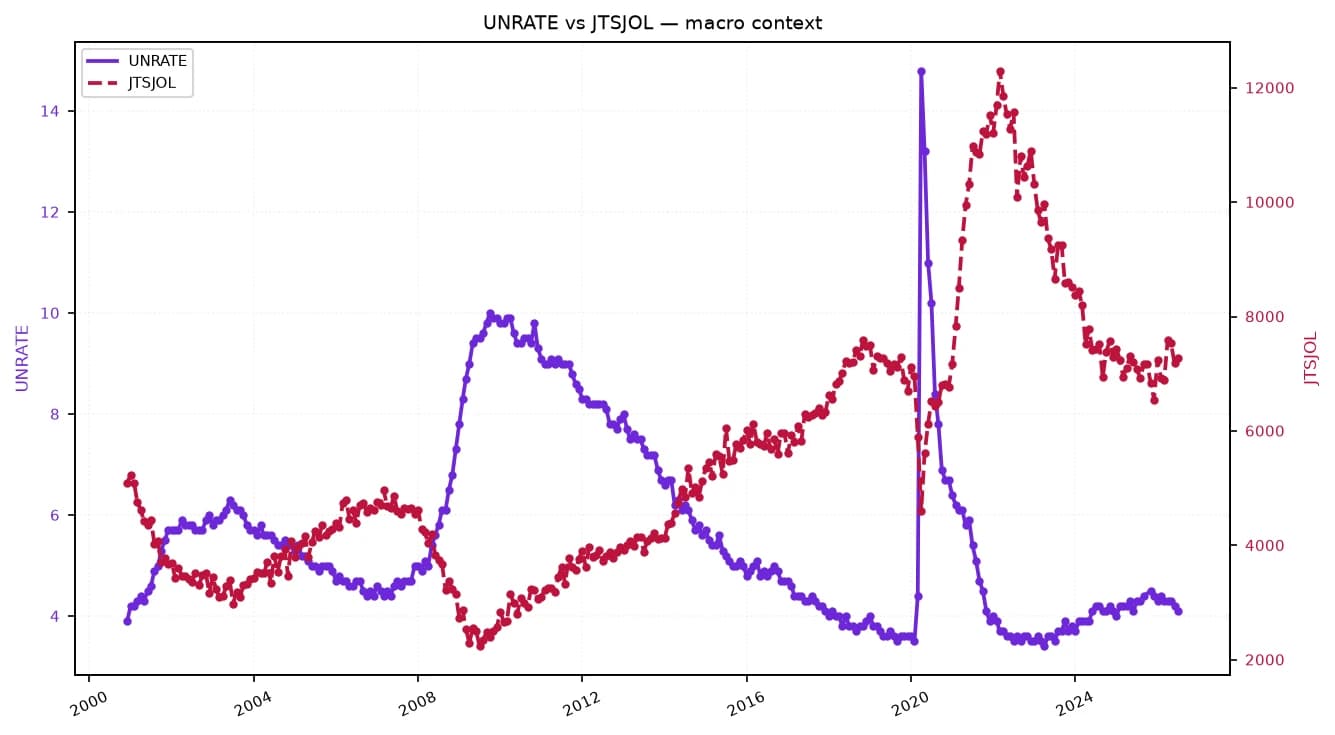
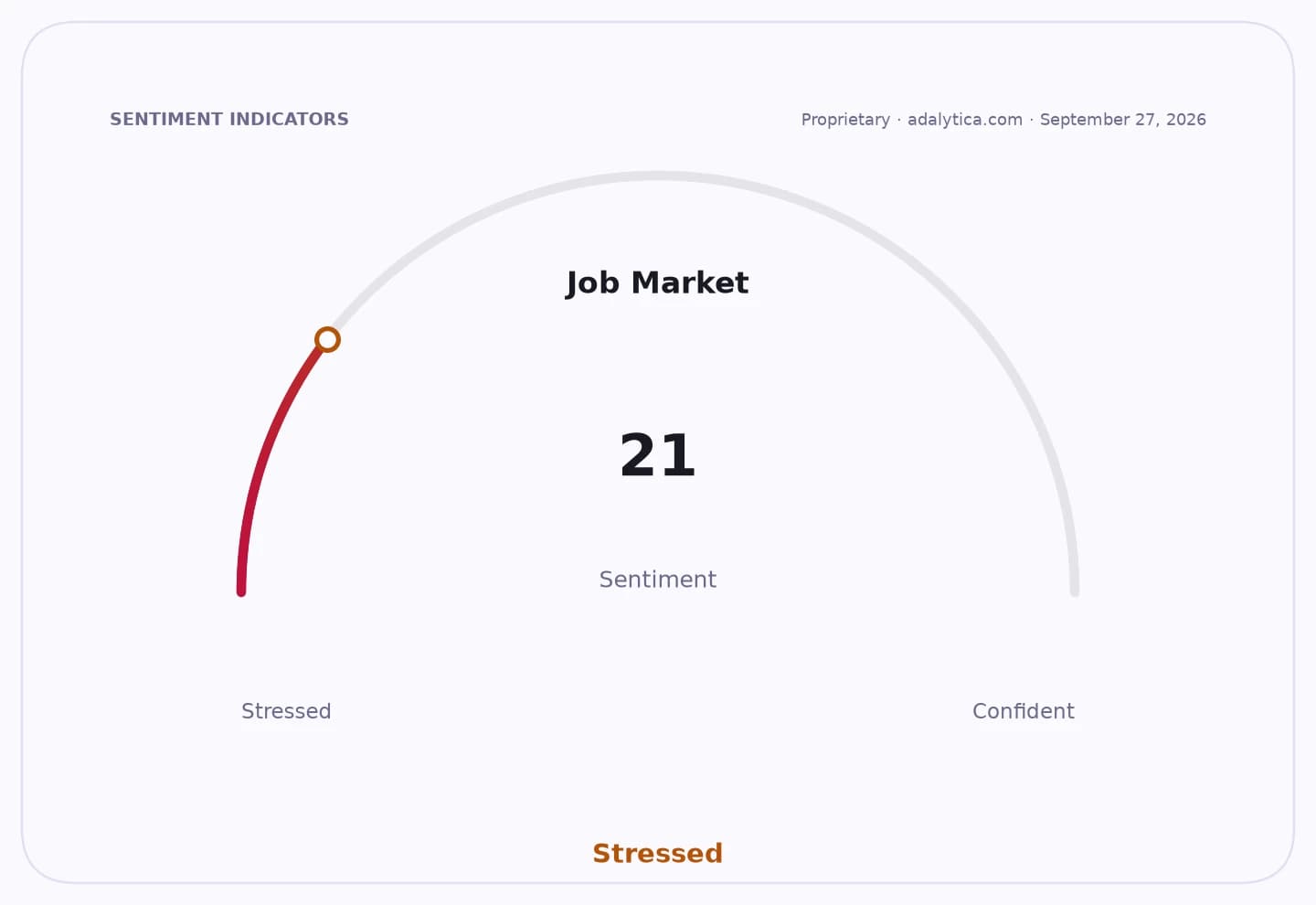
That matters because the cooling is happening even before a clear recession signal appears in the headline data. Nonfarm payrolls are still forecast to rise by 41,500 in the latest monthly reading, while the unemployment rate is projected to hold near 4.1% to 4.2%. Yet sentiment around jobs has collapsed: Adalytica’s Job Market Sentiment gauge shows “Extreme Fear” at 14, after a 21-point drop in a day and a 27-point decline over 30 days. The disconnect suggests hiring is slowing in the channels that matter most to workers looking to move up, not necessarily in the aggregate payroll count.
For workers, the key change is less about layoffs than about mobility. When unofficial job offers thin out, it usually means employers are taking a harder line on replacement hiring, backfilling and internal transfers. That makes wage gains harder to secure through job switching, a major driver of pay growth during the post-pandemic labor scramble. It also indicates that companies are becoming more selective about whom they hire and how aggressively they poach talent, even if the overall employment backdrop remains stable.
The effect is showing up in staffing and workforce-solutions names that are closely tied to labor demand. ManpowerGroup has said client demand depends on the overall strength of the labor market and that employers remain measured in their workforce decisions. That is consistent with the stock’s recent volatility and with a broader pattern of muted hiring enthusiasm. ADP, whose business is tied to payroll processing and employer HR spending, has also flagged that competition for skilled employees remains intense, but its shares have slipped back from summer highs, with the stock recently trading below its 50-day moving average after a sharp run-up.
Korn Ferry sits closer to the executive-search end of the market and is more exposed to companies’ willingness to make senior hires and internal moves. Its stock has also lost momentum, reflecting a market that appears increasingly skeptical that the labor cycle will return to the frenetic, employee-favored conditions of 2021-2023. In technical terms, several of these names have retreated from levels that had pushed them above longer-term moving averages earlier this summer, underscoring how quickly investor enthusiasm can fade when hiring momentum softens.
The macro backdrop is not yet consistent with outright labor-market stress. Payrolls are still growing, unemployment remains low by historical standards and the economy has avoided a broad hiring freeze. But that is exactly why the slower pace of unofficial offers and transfers matters: it is a leading indicator of labor-market normalization, not collapse. Employers can still add workers, but workers are finding fewer shortcuts to better jobs.
For investors, the implication is twofold. First, staffing and HR-services firms are likely to face a more mixed environment: stable employment volumes but less churn-driven demand for recruitment, placement and internal mobility services. Second, if softer labor mobility persists, it could help cool wage pressure over time, which would support margins in sectors where labor costs have been sticky. The next test will be whether payroll growth and unemployment continue to hold up while job-switching, transfer activity and offer volumes keep sliding — or whether the slowdown in mobility is the first sign that the labor market is losing altitude more broadly.
| Entity | Gains | Losses |
|---|---|---|
| Employers | ▲Easier retention | ▼Worker bargaining power |
| Job seekers | ▲Stability in current roles | ▼Fewer unofficial offers |
| Staffing firms | ▲Steady baseline hiring | ▼Less churn-driven demand |
| Investors in wage-sensitive sectors | ▲Lower pay pressure | ▼Faster labor-cost growth |