Lebanon’s 2027 budget is shaping up as a test of how far a state can lean on consumers, importers and wage earners before the economy starts to buckle under the weight of financing itself.
Lebanon 2027 Budget Relies on VAT and Import Taxes
The most important new development is not that the draft budget appears close to balance. It is that Beirut is trying to fund government operations largely through taxes on spending, trade and salaries, while giving far less weight to wealth, corporate profits and broader direct taxation. That matters because a country still living with high inflation, weak growth and a fragile recovery is effectively asking the broad public to carry the treasury, one purchase at a time.
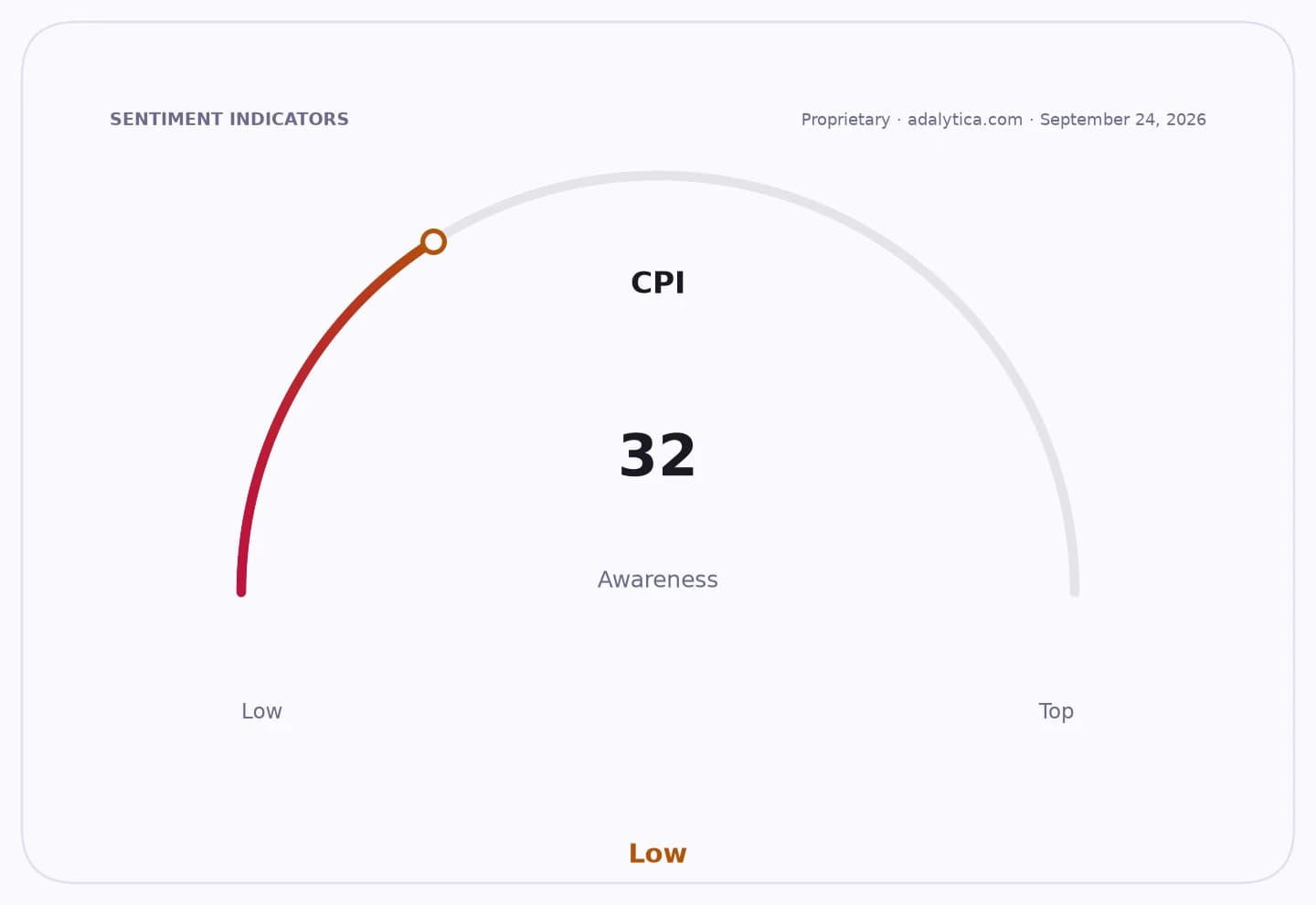
Sentiment IndicatorsⓘProprietary · adalytica.com · September 19, 2026
This is a snapshot — live sentiment, awareness and momentum for 130+ markets update continuously in the dashboard.Open AlphaPulse
Under the draft, Lebanon expects 528.223 trillion pounds of tax revenue, versus 86.722 trillion pounds from non-tax revenue, meaning taxes would account for about 86% of total income. The biggest single source is domestic taxes on goods and services at 321.426 trillion pounds, with value-added tax alone projected at 205.667 trillion pounds, up from 185.688 trillion in the 2026 budget and well above the 179.249 trillion collected in 2025.
That is why the budget matters economically. VAT is easy to collect and broad-based, but in Lebanon it lands on an economy that is still trying to recover from crisis. The World Bank has said inflation reached 14.6% in 2025 and poverty remains elevated, while security shocks have interrupted the recovery. In that setting, a heavier reliance on consumption taxes means households — especially lower- and middle-income ones — end up financing the state through everyday spending.
The draft also shows how limited Lebanon’s direct tax base remains. Revenue from income, profits and capital gains is estimated at 79.604 trillion pounds. Of that, taxes on profits are set at 39.758 trillion pounds, payroll taxes at 33.495 trillion pounds, taxes on movable capital at just 2.195 trillion pounds and taxes on bank interest at 2.274 trillion pounds. In other words, the state is still collecting more easily from salaries and consumption than from accumulated wealth.
That is the key investor takeaway too: a tax structure built around spending and imports can raise cash quickly, but it can also suppress demand, squeeze margins and amplify volatility in an economy that relies heavily on imports. Lebanon expects 66.944 trillion pounds from taxes on trade and international transactions, including 45.193 trillion pounds from import duties. Those costs do not stop at the border; they flow through to prices, wages and business profitability.
The draft does contain one politically significant move: a proposal to quadruple taxes on holding and offshore companies. On paper, that looks like a broadening of the tax net. In practice, its fiscal impact may be modest relative to the size of the budget, which makes the change more important as a signal than as a revenue engine. It tells investors and local businesses that the government wants to revisit preferential treatment for certain corporate structures.
But the deeper issue is credibility. Lebanon’s economy still has a large cash component, and the International Monetary Fund has argued that tax reform needs to be more efficient, more comprehensive and better integrated with broader fiscal reform. Simply raising rates on compliant taxpayers will not solve the problem if the informal economy remains outside the system.
That is why the 2027 budget should be read as a structural story, not just a bookkeeping exercise. A near-balanced budget may look disciplined, but if the price of that discipline is heavier pressure on households, importers and formal businesses, the result could be weaker growth and a smaller tax base in the years ahead. For long-term investors, the important question is whether Lebanon is building a sustainable revenue system or merely tapping the easiest pockets in the economy.
If lawmakers want a durable fiscal footing, the answer will have to be broader tax reform, stronger enforcement and better data sharing across tax, customs and property records. Until then, the country’s fiscal balance may improve on paper even as the real economy absorbs the cost. That makes Lebanon’s 2027 budget worth watching closely, especially for investors weighing exposure to domestic demand, banking cleanup and import-dependent businesses.
| Entity | Gains | Losses |
|---|---|---|
| Lebanese Treasury | ▲More reliable cash collection | ▼Political backlash from taxpayers |
| Households | ▲None | ▼Higher cost of living |
| Importers and retailers | ▲Clearer tax rules | ▼Margin pressure from duties and VAT |
| Formal businesses | ▲Leveler tax treatment if enforced evenly | ▼Higher compliance burden |