A Lebanese security warning about gangs selling copper as gold underscores how economic stress and high precious-metal prices are widening the market for fraud, leaving households, jewellers and investors more exposed to counterfeit and mislabelled bullion.
Lebanon warns on fake gold sales
Internal Security Forces said their public relations chief, Brigadier General Joseph Msallem, warned in a social-media video that gangs have been moving fake gold and plated “ounces” that are sealed to prevent buyers from checking them, and said the force had already broken up more than one such gang. He urged consumers to buy only from known institutions or trusted jewellery shops and to demand invoices for every purchase.
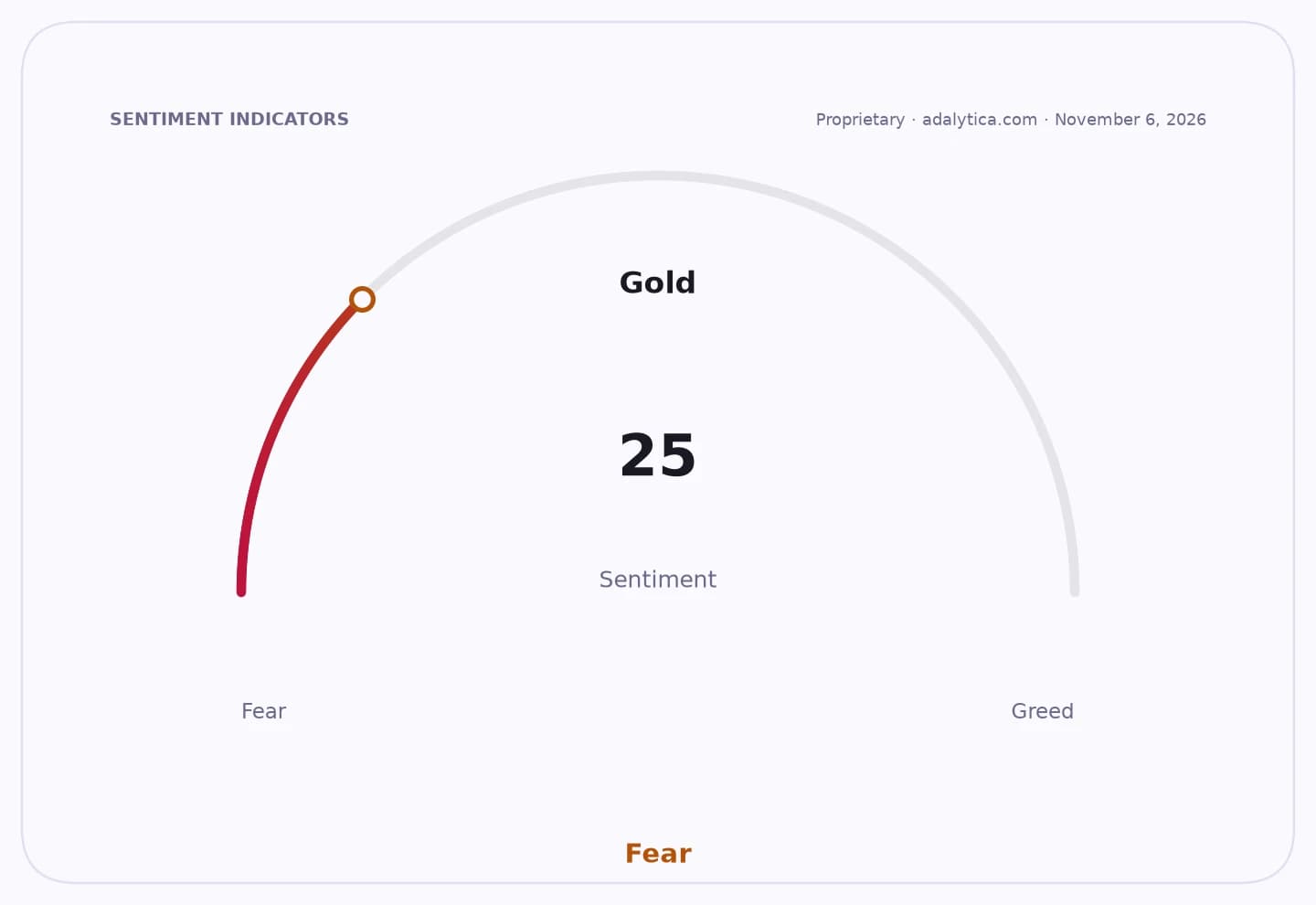
Sentiment Indicators
The warning matters because gold has become both a store of value and a speculative target in economies where confidence in local currency and formal savings channels is weak. When buyers are paying near-market prices for metal they cannot easily test, the line between savings instrument and scam narrows fast. That is especially dangerous in Lebanon, where households have long used jewellery and bullion as a hedge against currency weakness and banking-system stress.
For investors, the immediate effect is not on gold prices themselves but on trust in the physical market. A rise in counterfeit activity can push buyers toward larger, branded dealers and exchange-traded products such as bullion-backed funds, while making informal cash markets harder to value. It also reinforces the premium that credible supply chains command when fraud risk rises.
The backdrop is a wider fraud crackdown. Authorities in the region have recently reported arrests tied to cooperative, cyber and retail scams, suggesting that organized fraud networks are adapting quickly to whichever asset class or household vulnerability offers the easiest profit. Gold is a natural target because it is liquid, portable and difficult to authenticate without expertise.
The market angle is straightforward: the more the price of gold serves as a social reference point, the more criminals can exploit it. That leaves consumers carrying the most risk, while legitimate jewelers and bullion dealers may benefit from a flight to quality. If enforcement tightens and buyers become more cautious, the informal trade in precious metals could shrink further, but the underlying incentive for counterfeiters will remain as long as demand for gold stays strong.
| Entity | Gains | Losses |
|---|---|---|
| Trusted jewellery shops | ▲More customer trust | ▼Less room for informal sellers |
| Bullion-backed funds | ▲Safer alternative demand | ▼Less uptake from physical buyers |
| Fraud gangs | ▲Short-term illicit profits | ▼Higher arrest risk |
| Household buyers | ▲Better protection if vigilant | ▼Losses from counterfeit gold |