Libya’s public-sector October salaries remain delayed for about 2.5 million workers as disputes over a proposed unified wage schedule push the rollout toward 2027, underscoring how wage reform is colliding with fragile public finances.
Libya delays October public-sector salaries

The delay matters because salaries are one of the state’s largest and most politically sensitive spending items, and any hitch in payroll hits household consumption quickly in an economy heavily dependent on oil revenue. For employees, the immediate question is not just whether pay rises under the new plan, but when October money will actually land in accounts.
Sentiment Indicators

The Finance Ministry had paused work on October payrolls while waiting on approval of the unified schedule, then resumed using the existing September payment mechanism after lawmakers in Sabha failed to reach agreement on the proposal. Local reports now say the draft law has been sent to parliament for review, with implementation targeted for early 2027 rather than this year.
The government has tried to clarify the proposal by publishing salary bands that would start at 1,000 dinars for the first grade and rise to as much as 4,912 dinars for the top grade, alongside proposed bonuses for doctors, teachers, security staff and other categories. But those figures are only part of a draft, not a binding pay scale.
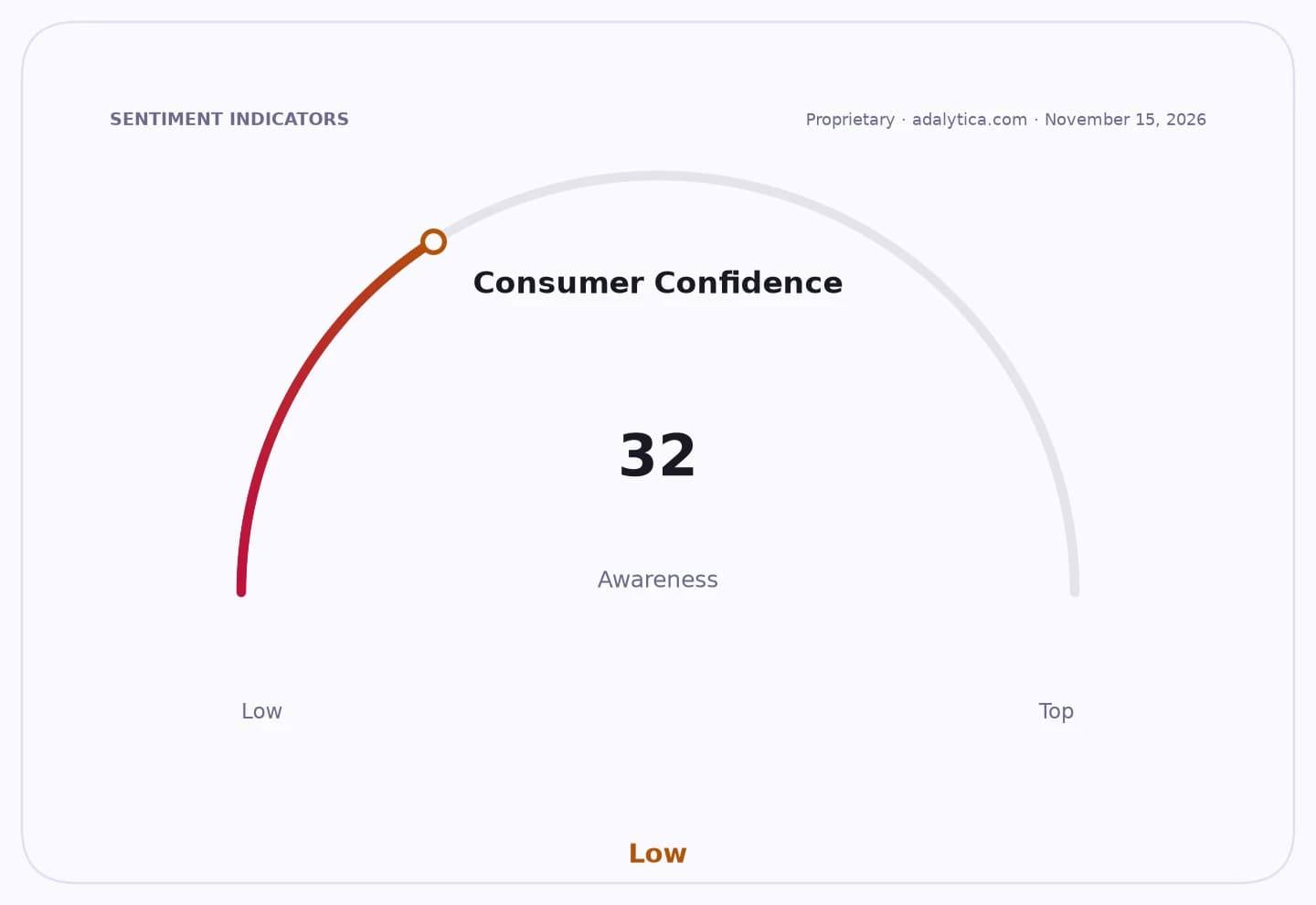
Consumer Confidence
The fiscal burden is already large. Libya spent about 60.6 billion dinars on wages in the first nine months of 2026, or roughly 6.7 billion dinars a month, according to the report cited by local media. That leaves policymakers trying to balance higher and fairer pay against the state’s cash flow and its reliance on volatile oil income.
For investors and creditors watching Libya’s public finances, the episode is a reminder that payroll reform is not just an administrative issue but a test of budget discipline and political coordination. Any prolonged delay in settling salaries or expanding the pay bill could add pressure to liquidity, strain the banking system and complicate efforts to stabilize state spending.
The next catalyst is whether lawmakers and the finance ministry can settle the unified schedule details without further postponing payroll processing, and whether October salaries are finally released under the old mechanism before the broader reform lands in 2027.
| Entity | Gains | Losses |
|---|---|---|
| Libyan public employees | ▲Potential higher unified pay | ▼Delayed October salaries |
| Finance Ministry | ▲More time to refine proposal | ▼Payroll pressure and scrutiny |
| Parliament and state institutions | ▲Room to review cost impacts | ▼Risk of political blame |
| Household consumers | ▲Possible future wage gains | ▼Near-term cash-flow squeeze |