A former Central Bank of Libya official has put a hard number on a debate that could shape government spending for years: the proposed minimum salary of 825 dinars is nowhere near enough, and the floor should be closer to 2,000 dinars.
Libya wage floor proposed at 2,000 dinars

That matters because Libya’s wage bill is not just a social issue; it is a fiscal one. Any meaningful rise in the minimum wage would ripple through the state’s already heavy public payroll, where officials have long warned that staffing is bloated and inefficient. Raising pay without trimming the excess would deepen budget pressures, while doing nothing would leave public workers losing purchasing power as prices keep climbing.
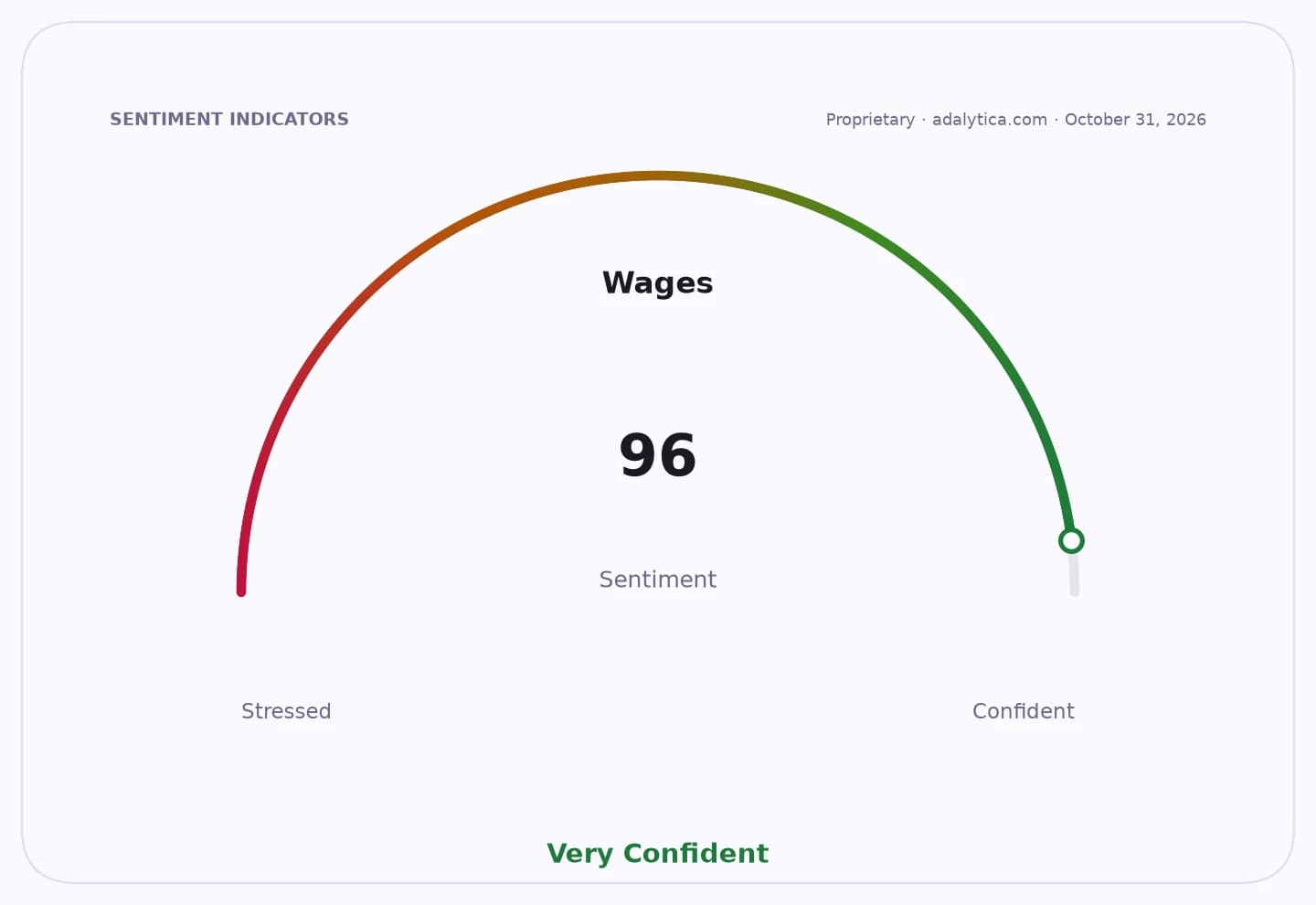
Sentiment Indicators
Former central bank board member Muaatzz Ghith argued the real problem is bigger than a single pay scale. He said wage reform has to start with restructuring the public sector, reviewing how many people the state actually needs and tackling the administrative overload that has inflated the government payroll. In other words, Libya cannot fix salaries in isolation if the machinery of the state remains oversized.
His 2,000-dinar benchmark also highlights how far wages have fallen behind basic living costs. The gap between nominal pay and everyday expenses has widened as the dinar’s buying power weakens and essential goods and services become more expensive. For households, that means the current proposal risks being symbolic rather than useful. For the government, it means any wage decision will have to be financed, justified and made compatible with inflation and exchange-rate stability.
That is why the argument over a unified salary table has become politically sensitive. Supporters see it as a way to reduce disparities between sectors and protect workers’ rights. Critics worry it could lock in higher fixed costs without solving the structural problems that keep public finances brittle. Ghith is also calling for any increase to be linked to inflation, which would help preserve real incomes instead of letting pay packets erode every time prices move higher.
He wants a reform plan lasting 10 to 15 years, not a rushed adjustment. That may sound ambitious, but it is the only kind of timeline that would let Libya address wages, education, fiscal policy and the wider economy together. For investors, the takeaway is straightforward: wage reform in Libya is really a test of whether the state can modernize spending without triggering more inflation or adding to fiscal strain. If policymakers choose a credible, phased approach, the result could support household demand and stability. If they go for a quick fix, the cost could be paid in higher deficits and weaker purchasing power.
| Entity | Gains | Losses |
|---|---|---|
| Public workers | ▲Higher real pay | ▼Wage erosion |
| Government budget | ▲Long-term reform | ▼Higher payroll costs |
| State employers | ▲Clearer wage rules | ▼Larger staffing burden |
| Households | ▲Better purchasing power | ▼Inflation pressure |