Libya’s 16% inflation rate in September has sharpened the economic crisis for households and raised the stakes for a new policy debate in Tripoli, where lawmakers are under pressure to tackle a deteriorating standard of living and a weakening dinar.
Libya inflation hits 16% as dinar weakens
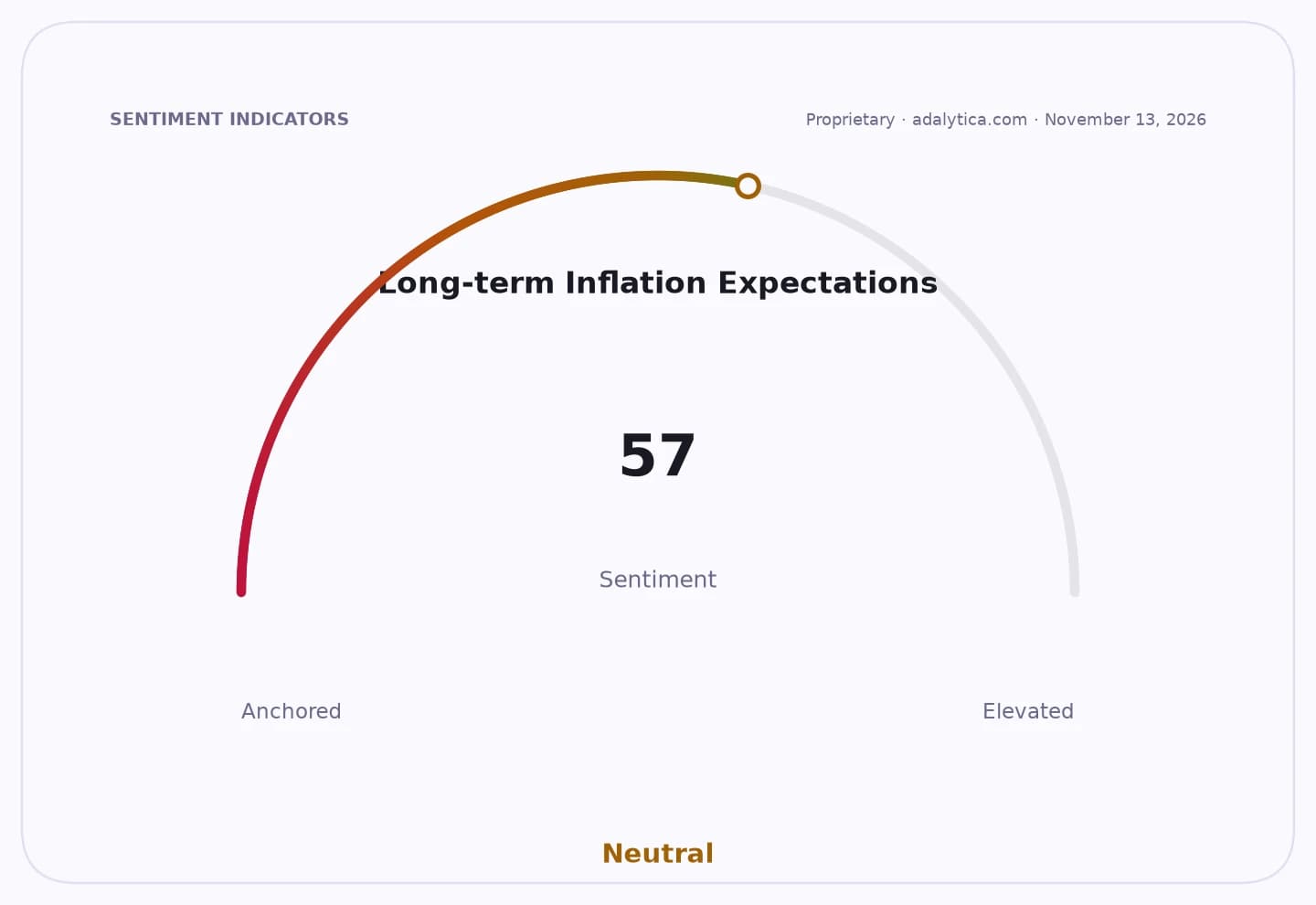
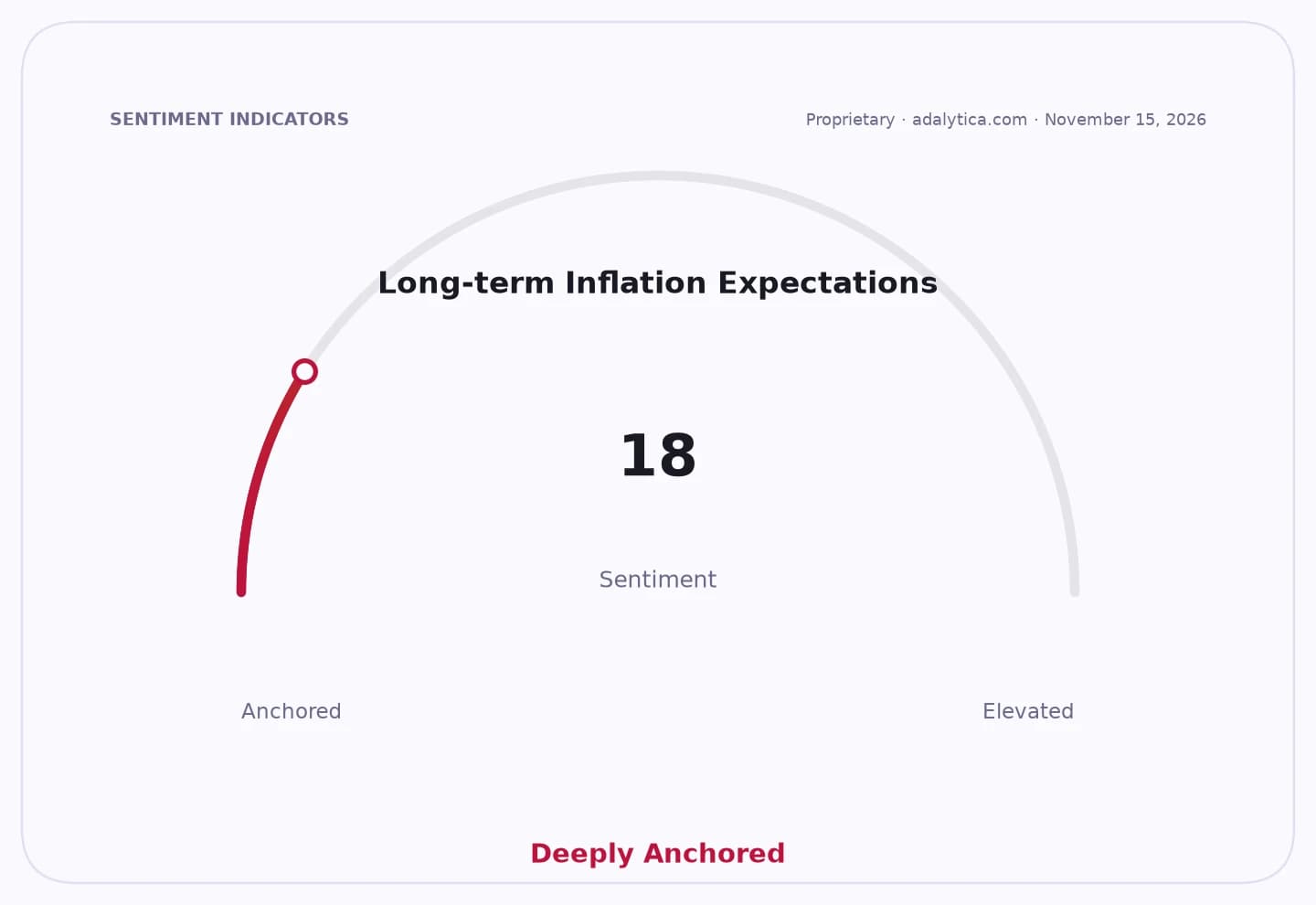
Long-term Inflation Expectations
The reading, reported by the Bureau of Statistics and Census and cited by Libyan Business Council adviser Mohamed Al-Manfi, points to a far steeper erosion in purchasing power than in most major economies and underscores how fragile Libya’s price stability has become. For fixed- and low-income earners, the problem is immediate: wages are losing value, savings are being eroded and basic imports are becoming more expensive.
Sentiment Indicators
That matters because Libya is a heavily import-dependent economy. When the local currency weakens on the parallel market, the pass-through into consumer prices can be fast and brutal, especially in food, medicine and other essentials. In that sense, the inflation spike is not just a statistic — it is a signal that the dinar is functioning less like a store of value and more like a pressure valve for an economy with weak institutions and persistent political fragmentation.
The debate now being opened by the House of Representatives under its new leadership could be the first serious attempt in some time to confront the drivers of Libya’s economic malaise. If policymakers move toward exchange-rate reform, tighter fiscal discipline or steps to stabilize imports, the effect could ripple through every part of the economy. If they do not, inflation will keep acting as a tax on consumption and a brake on domestic demand.
For investors, the message is broader than Libya itself. Higher inflation in a commodity-rich but institutionally fragile economy tends to support hard assets, raise risk premia and deepen the appeal of dollar-denominated exposure. It also reinforces a familiar emerging-markets theme: when currency credibility breaks down, capital rotates toward companies and assets that can preserve real purchasing power — energy, exporters and businesses with pricing power.
The market’s job now is to separate noise from signal. Libya’s inflation problem is not just about one month’s data; it is about whether policymakers can restore confidence in the currency before rising prices become entrenched. Until they do, the inflation shock will remain a drag on consumption, a test of political resolve and a reminder that macro instability in resource-rich economies can create both distress and opportunity.
| Entity | Gains | Losses |
|---|---|---|
| Hard assets | ▲Inflation hedge appeal | ▼Cash holders |
| Dollar exposure | ▲Relative purchasing power | ▼Libyan dinar savers |
| Energy exporters | ▲Pricing power | ▼Import-dependent consumers |
| Libyan households | ▲— | ▼Real wages and savings |