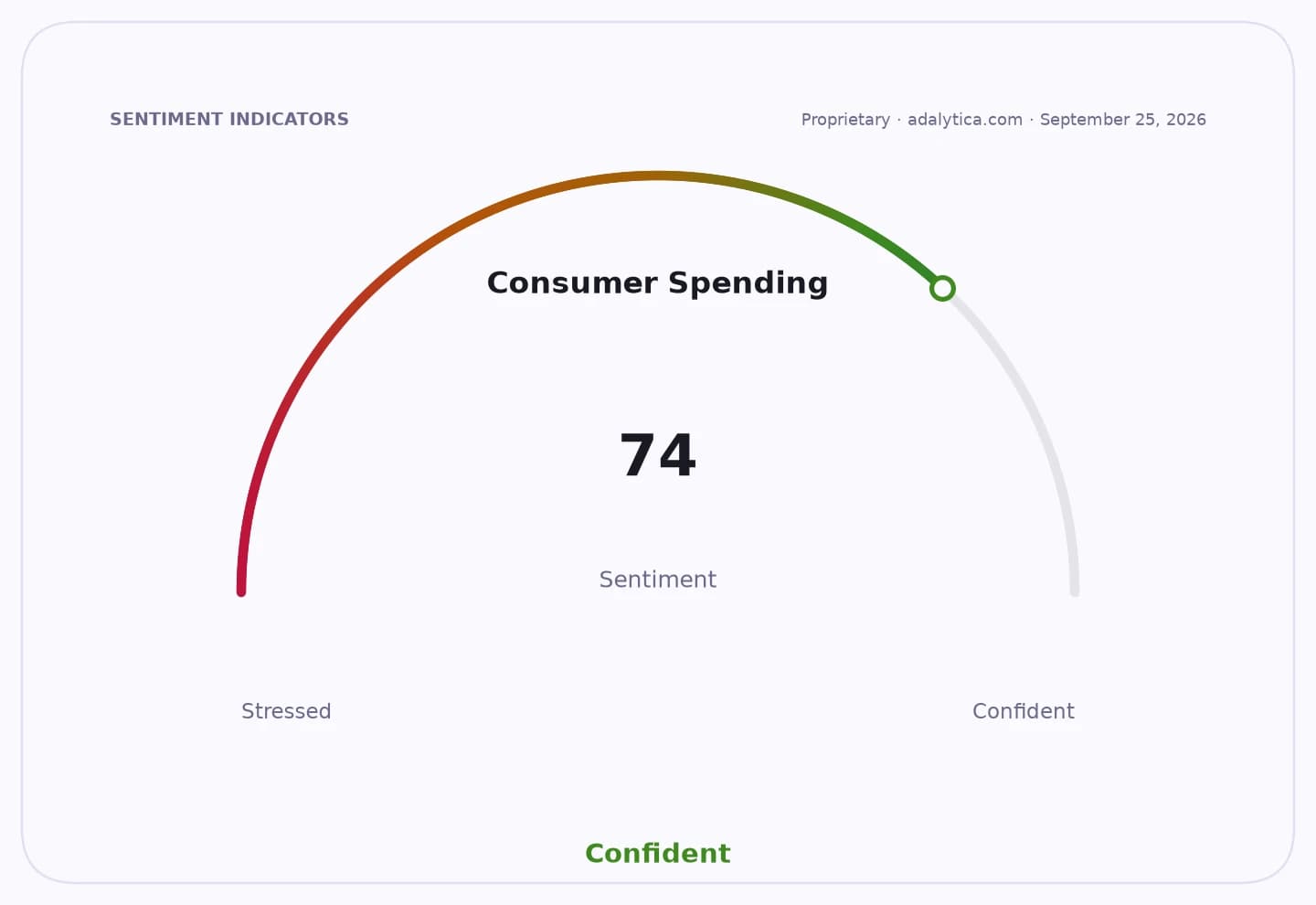
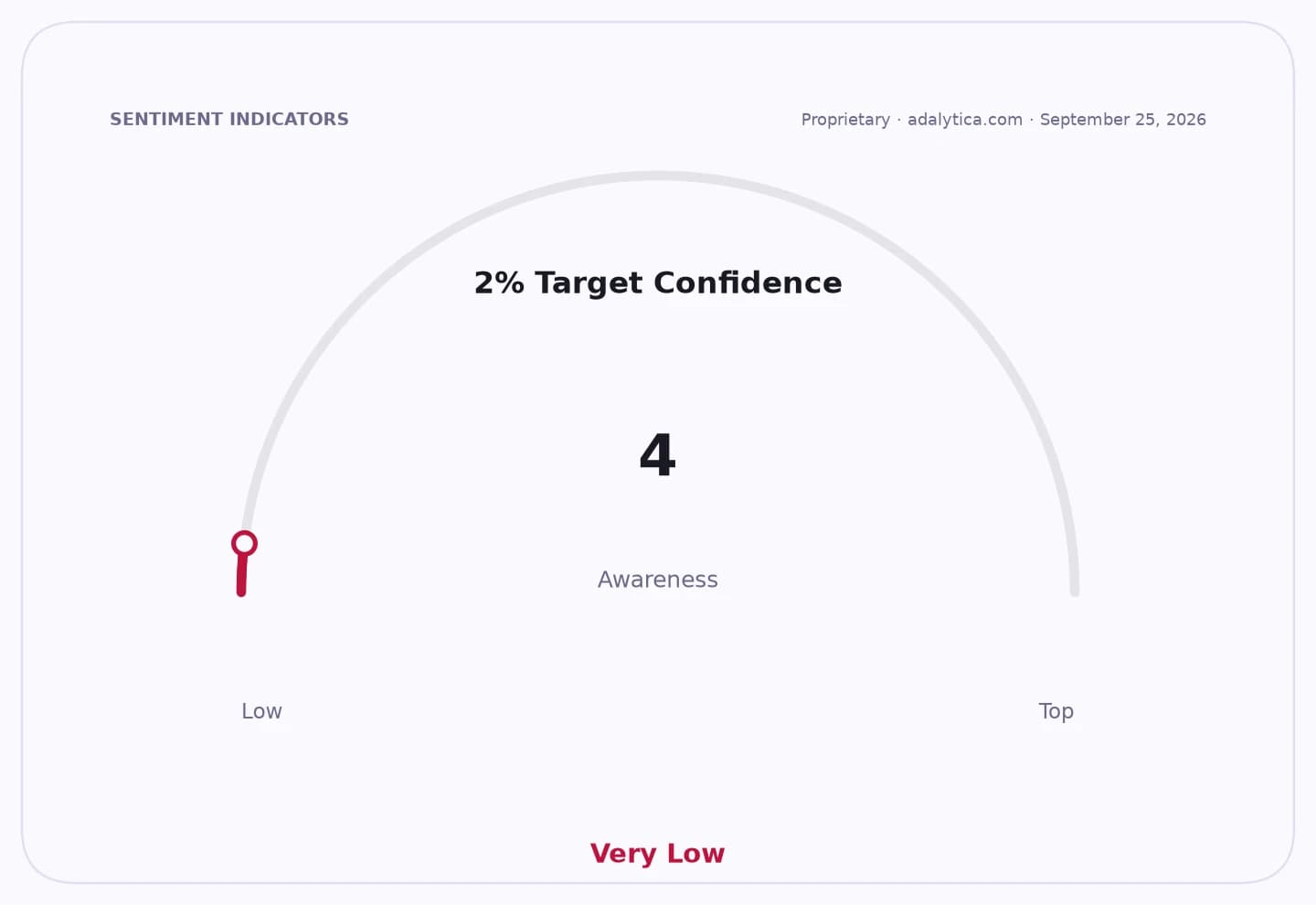
Greater liquidity is helping push credit growth higher, reinforcing the view that the economy remains on solid footing even as banks prepare for a less forgiving lending environment. The clearest market signal is that money supply is still expanding and bank lending appetite is improving, but the benefits are coming with a trade-off: rising bad-debt pressure is forcing lenders to be more selective and provision more aggressively.
Liquidity Supports Credit, but Bad Debt Risks Rise
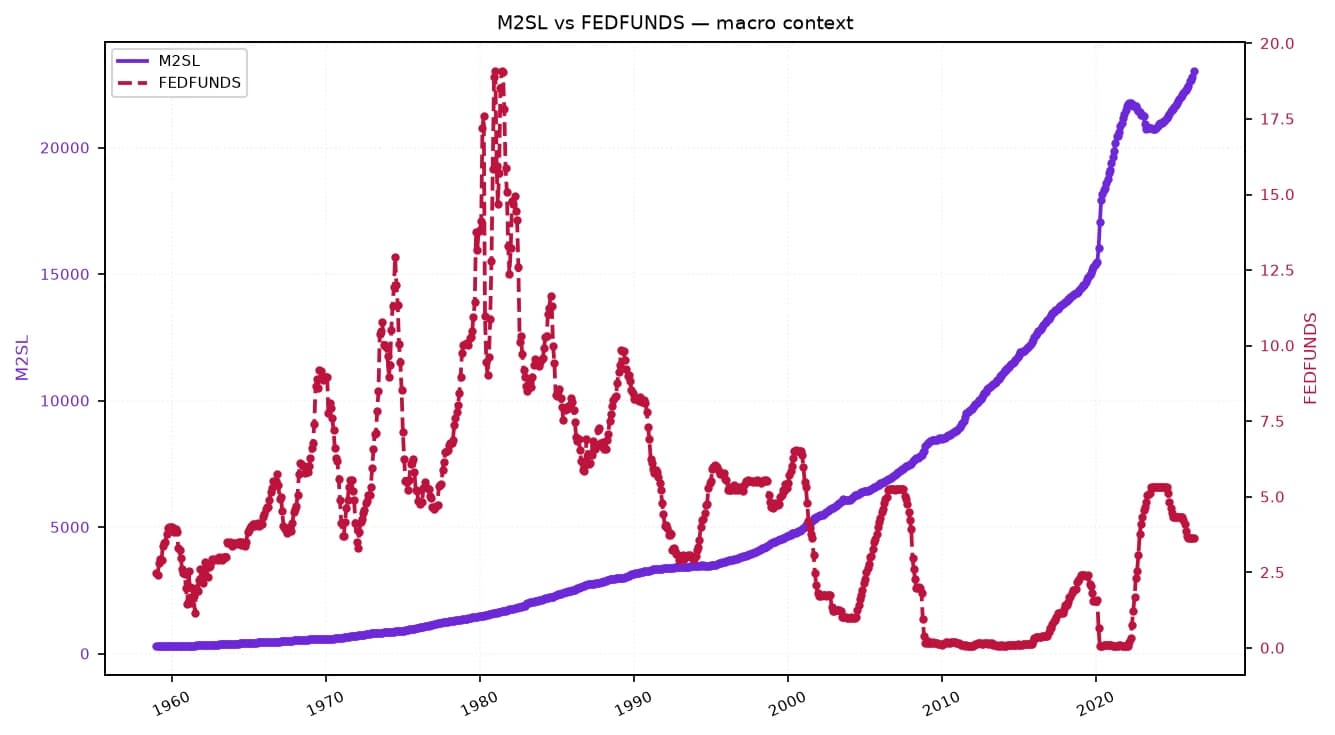
The macro backdrop is supportive. US M2, a broad measure of money supply, rose to 23.05 trillion in May from 22.81 trillion in April and is projected to edge up again in June, extending a steady climb that suggests financial conditions remain accommodative enough to keep credit circulating. At the same time, the fed funds rate sits at 3.63%, well below the peaks of the inflation-fighting cycle, giving borrowers and lenders a more workable funding environment than a year ago.
Sentiment IndicatorsⓘProprietary · adalytica.com · July 23, 2026
This is a snapshot — live sentiment, awareness and momentum for 130+ markets update continuously in the dashboard.Open AlphaPulse
That matters because credit is the transmission mechanism that turns liquidity into growth. When deposits and cash balances are ample, banks can extend more loans to households and businesses, and that generally supports consumption, investment and employment. The latest market data point to that dynamic playing out: bank stocks have firmed, with the Financial Select Sector SPDR Fund, XLF, trading above both its 50-day and 200-day moving averages, while regional-bank ETF KRE has also moved decisively higher and sits above its longer-term average. Those are not just technical signals; they reflect improving investor confidence in the earnings outlook for lenders as loan growth holds up.
The credit market itself is sending a cautiously constructive message. The high-yield spread tracked by the ICE BofA index has narrowed to about 2.69 percentage points from above 4 percentage points during earlier stress episodes, implying investors are demanding less compensation for default risk. Junk-bond ETF JNK has also remained resilient, another sign that financing conditions for lower-rated borrowers have not deteriorated sharply. In plain terms, capital is still available, and the cost of risk has not spiked enough to choke off lending.
For investors, the bull case is straightforward: stronger liquidity and credit creation can support bank net interest income, loan balances and broader risk appetite across equities and credit. That helps explain why financials have been among the better-performing parts of the market. The bearish case is that the same expansion in lending can turn later-cycle if underwriting weakens, especially with banks already flagging higher provisions and more legal and collection headaches around problem loans. Moderately tighter credit standards in the coming quarter would not be a surprise.
The broader narrative is one of durable but narrowing momentum. Liquidity is still doing its job, keeping the economy moving and credit growth alive, but lenders are no longer operating in an easy-money environment. Investors should watch whether deposit growth, delinquency trends and provisioning stay manageable as banks try to sustain loan expansion without eroding asset quality. If they do, financials can keep benefiting; if not, the current credit upswing may prove more fragile than the headline liquidity data suggest.
| Entity | Gains | Losses |
|---|---|---|
| Banks | ▲Loan growth, fee income | ▼Higher provisioning |
| Borrowers | ▲Easier credit access | ▼Tighter underwriting |
| Financials ETF XLF | ▲Investor inflows | ▼Limited if credit losses rise |
| Junk-credit investors | ▲Stable spreads | ▼Higher default risk if standards tighten |