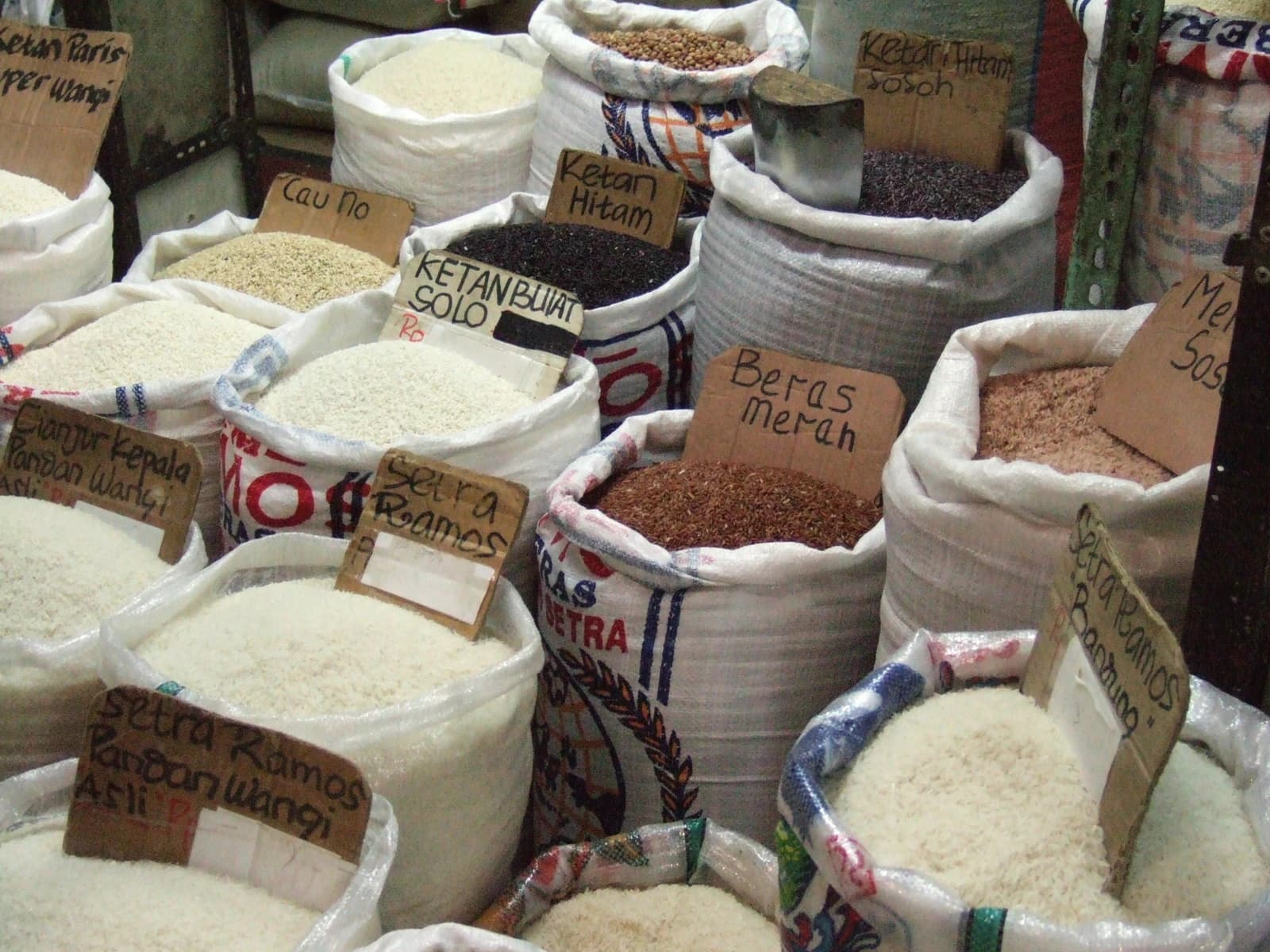
Madiun Regency’s rice inventory had reached 4,897 tons by the end of August, a buffer that underscores how a good local harvest is keeping supply conditions comfortable even as broader rice markets remain sensitive to policy and trade frictions.
Madiun Regency Rice Stock Reaches 4,897 Tons
For households, the significance is straightforward: abundant stock reduces the risk of near-term shortages and helps restrain price spikes in a staple food that carries outsized weight in Indonesia’s inflation basket. For local authorities, the figure signals that food security in the regency is intact for now, with more supply still likely as some paddy fields have yet to be harvested.
The stock level also matters beyond Madiun because rice remains one of the clearest indicators of rural income conditions and consumer price stability across Southeast Asia. Where supplies are ample, farmers can still benefit from harvest volume, while consumers and retailers get some protection from the kinds of price volatility that can quickly feed into inflation and political pressure.
Indonesia’s rice market has been shaped in recent months by the tension between comfortable domestic stocks and structural frictions in trade and distribution. Export prospects remain constrained in some markets by shelf-life rules, while governments continue to intervene to smooth prices and secure supplies for vulnerable buyers. In that context, a reported surplus in Madiun adds to evidence that the supply side of the market is not the immediate problem; the larger issue is how efficiently rice can be moved, stored and sold without losing quality or undermining farmer returns.
That dynamic leaves policymakers with a familiar balancing act. If stocks stay high, authorities may have more room to stabilize prices and support food security. But if harvests continue to outpace demand in some regions, the pressure shifts toward storage capacity, procurement policy and mechanisms that prevent a glut from eroding farm-gate prices. Investors and traders watching the rice complex will focus on whether surpluses like Madiun’s are mirrored elsewhere and whether policy steps improve distribution, because those factors will determine whether comfort in local stocks translates into broader market stability.
| Entity | Gains | Losses |
|---|---|---|
| Madiun Regency consumers | ▲Lower shortage risk | ▼Less urgency for emergency supply support |
| Local farmers | ▲Larger harvest volumes | ▼Potentially softer farm-gate prices |
| Local government | ▲Food security credibility | ▼Pressure to manage storage and distribution |
| Rice traders/importers | ▲Stable supply conditions | ▼Fewer scarcity-driven pricing opportunities |