A cross-party support pact meant to steady Malaysia’s government is now testing how much political transparency investors and voters will tolerate in an unsettled world.
Malaysia CSA support pact and budget stability
That matters because the confidence and supply agreement, or CSA, is not just parliamentary housekeeping. It is designed to keep Prime Minister Anwar Ibrahim’s administration afloat through the rest of the term and help secure passage of Budget 2027. In a country where policy continuity can influence spending, reform momentum and market confidence, the durability of that arrangement is a direct economic issue, not merely a political one.
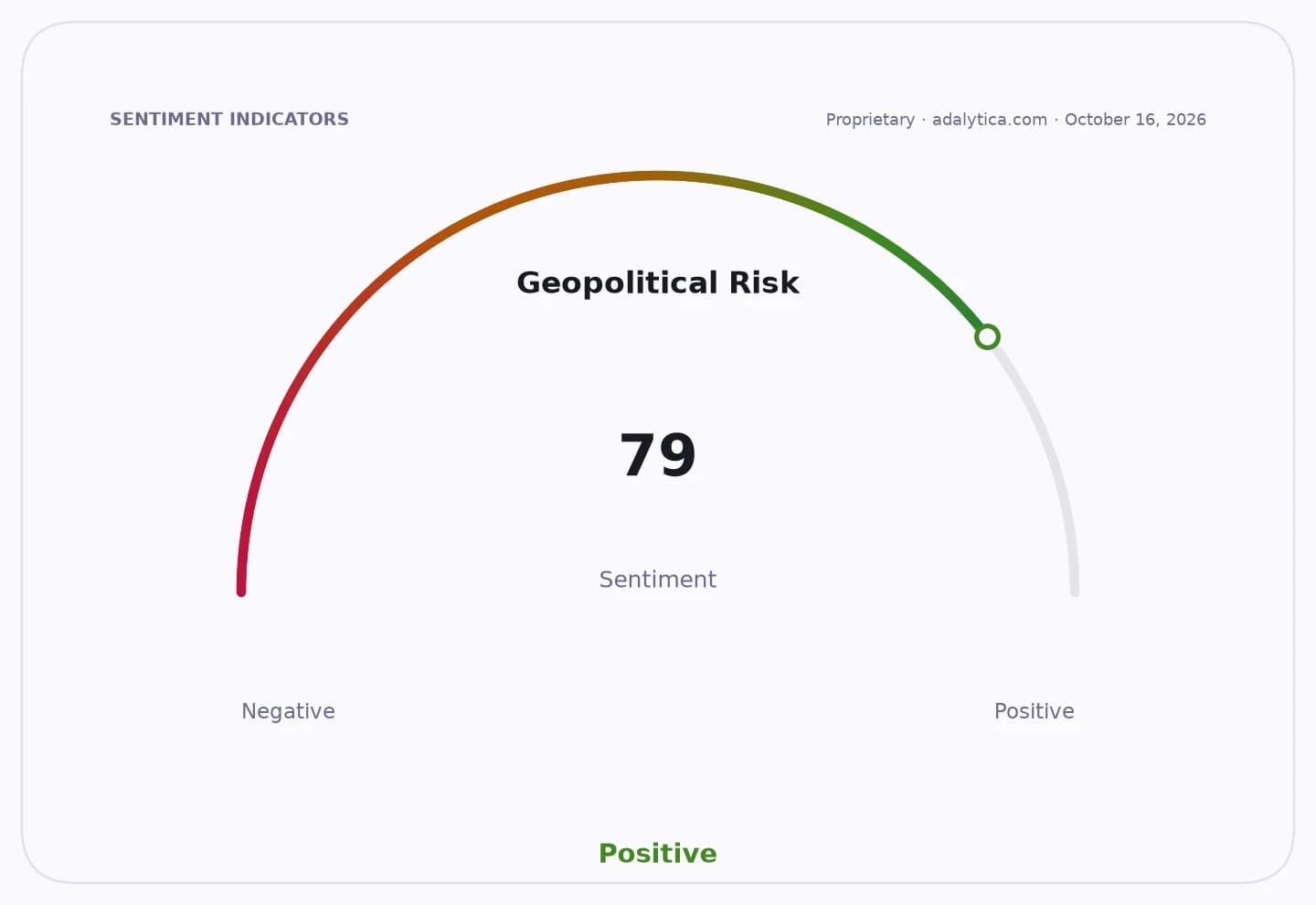
Sentiment Indicators
Bersatu lawmaker Radzi Jidin said his bloc backed the deal because “the world is at war,” pointing to Iran, Ukraine and trade tensions as reasons to prioritize national stability. His message was clear: with less than a year before the next general election, lawmakers judged that supporting the government was the least disruptive option for the economy and the public. The agreement, signed by six Bersatu MPs, six independents and Muar MP Syed Saddiq Syed Abdul Rahman, is intended to keep the parliamentary numbers intact until the end of the term.
For investors, the key question is whether this stability holds and whether it comes with reform. The CSA requires the government to table two constitutional amendments: one to limit the prime minister’s tenure and another to separate the roles of attorney-general and public prosecutor. Those are the kinds of institutional changes that can shape governance quality over time, even if they do little to move markets day to day. If the terms are made public, as Radzi wants, that could reduce uncertainty. If they remain opaque, the pact risks becoming another flashpoint in Malaysia’s already noisy political landscape.
The debate also shows how global shocks are filtering into domestic politics. Trade wars, sanctions risk and wider geopolitical strain are forcing governments everywhere to choose between policy ambition and continuity. Malaysia is no exception. The country’s exporters, importers and currency traders all benefit more from predictable policymaking than from another round of political brinkmanship.
That is why the CSA matters beyond Parliament. Stable budgets, a functioning reform agenda and fewer election-season surprises can support sentiment in Malaysian assets over the medium term. But the deal will only earn lasting credibility if its full terms are disclosed and its promised constitutional changes advance without more political theatrics.
For long-term investors, the takeaway is straightforward: political stability can be a tailwind for Malaysia, but transparency will decide whether this agreement becomes a genuine foundation or just another short-lived truce worth watching closely.
| Entity | Gains | Losses |
|---|---|---|
| Anwar government | ▲Budget stability | ▼More scrutiny if terms stay hidden |
| CSA supporters | ▲Policy continuity | ▼Political criticism from rivals |
| Malaysian economy | ▲Fewer shocks | ▼Reform delay if pact unravels |
| Opposition hardliners | ▲Less leverage | ▼Loss of attack line if deal holds |