Malaysia’s inflation is expected to edge up to 2.0% in 2027 from an estimated 1.8% this year, a modest acceleration that matters because it suggests price pressures are staying contained even as business costs, domestic demand and geopolitical risks remain elevated.
Malaysia Inflation Seen at 2.0% in 2027

The forecast from Apex Securities Bhd puts Malaysia near the low end of the Finance Ministry’s 1.8% to 2.8% range for next year, reinforcing the view that inflation is likely to remain manageable rather than become a policy shock. That gives Bank Negara Malaysia room to stay cautious on interest rates while watching whether cost pass-through from firms and energy markets picks up more forcefully.
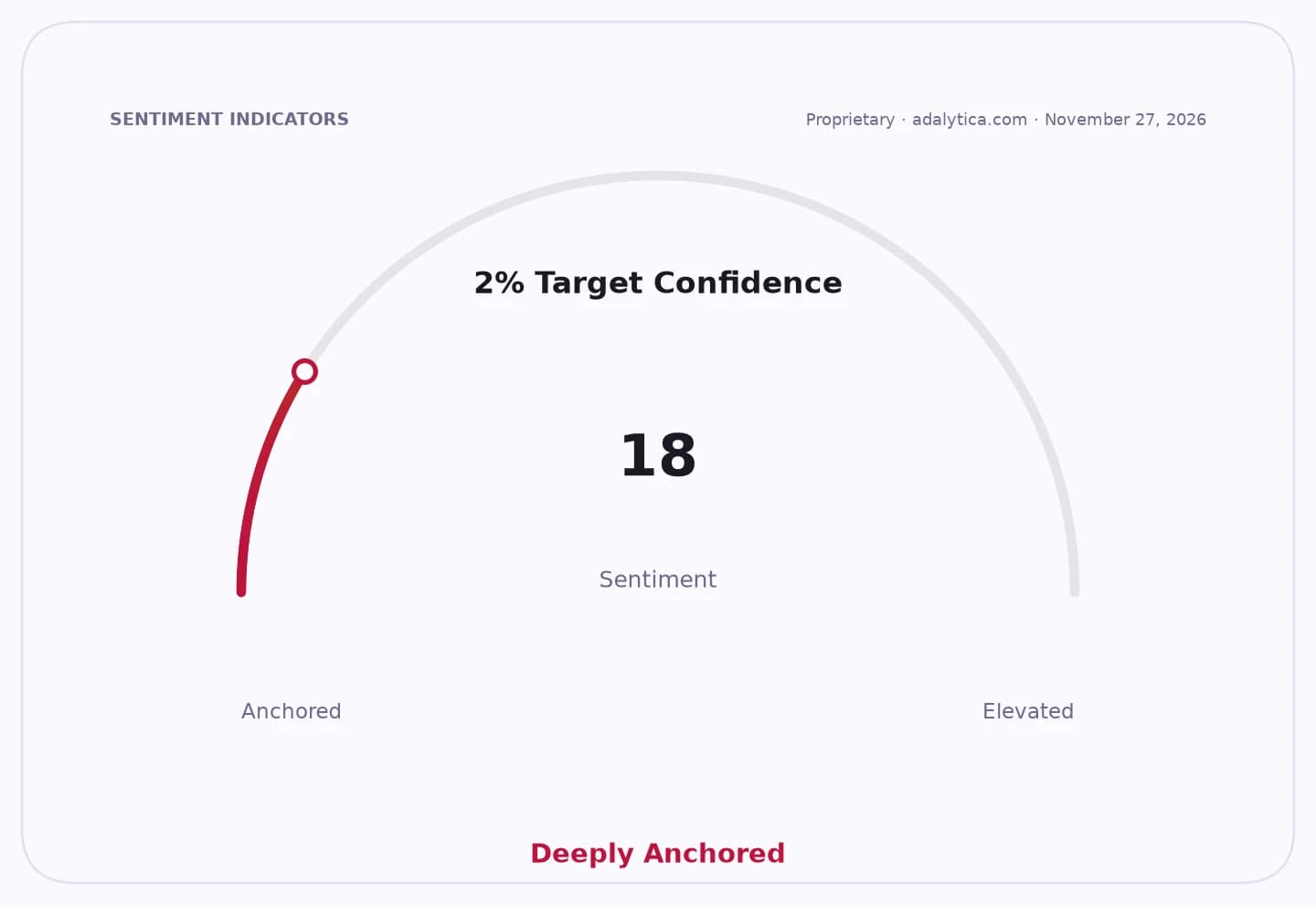
Sentiment Indicators

Apex kept its full-year 2026 inflation forecast at 1.8%, even after lifting its Brent crude assumptions to $90 a barrel for 2026 and $85 for 2027, underscoring how targeted subsidies are still acting as a buffer for household budgets. That is economically important because Malaysia is trying to balance price stability with support for consumption, and a controlled inflation path reduces the risk of a sharper hit to real incomes.
Still, the risks are tilted higher. Apex pointed to Middle East tensions that could disrupt commodity prices, while producer prices rose 12.0% year on year in September, a sign that input-cost pressure remains alive even if it has not fully reached consumers. That makes the inflation outlook less about headline CPI alone and more about how quickly firms can or must pass through costs into retail prices.

Domestic demand is also doing some of the heavy lifting. Cash assistance, the minimum wage increase and selective tax cuts are helping keep household spending resilient, which supports growth but can also limit how far inflation slows. The trade-off matters for investors because stronger consumption can benefit banks, retailers and consumer names, yet it also narrows the central bank’s room to ease if price pressure becomes more persistent.
Apex’s call that Bank Negara may raise the overnight policy rate to 3.00% in 2027 is a sign the policy debate is shifting from disinflation to timing. The bank is still expected to remain data-dependent, but if inflation stays near 2% while growth holds up, markets may start to price a longer period of higher-for-longer rates than previously assumed.
For investors, the key message is that Malaysia does not appear headed for an inflation problem, but neither is it in a clear easing cycle. The balance of risks favors stability over stress, yet higher oil, stronger wages and a firm consumer backdrop could keep yields, rate expectations and currency sensitivity in play through 2027.
| Entity | Gains | Losses |
|---|---|---|
| Malaysian consumers | ▲Stable purchasing power | ▼Higher living costs if pass-through rises |
| Bank Negara Malaysia | ▲Policy flexibility | ▼Less room to cut rates |
| Retailers and consumer firms | ▲Resilient domestic demand | ▼Margin pressure from costs |
| Importers and rate-sensitive borrowers | ▲Predictable inflation path | ▼Higher borrowing costs if OPR rises |