The ringgit ended unchanged against the US dollar on Tuesday, but the bigger story is that the currency remains trapped under a powerful greenback and investors still see little room for relief until the Federal Reserve signals a slower pace of tightening.
Ringgit Holds Steady as Fed Hike Bets Pressure
At 4.0915/4.0960 per dollar, the local currency was flat from Monday’s close, yet it weakened against most major and regional peers as markets positioned for a more aggressive Fed. That matters because the next leg in Malaysia’s currency will be driven less by domestic sentiment than by the path of US rates, which continues to pull capital toward dollar assets and away from emerging-market currencies.
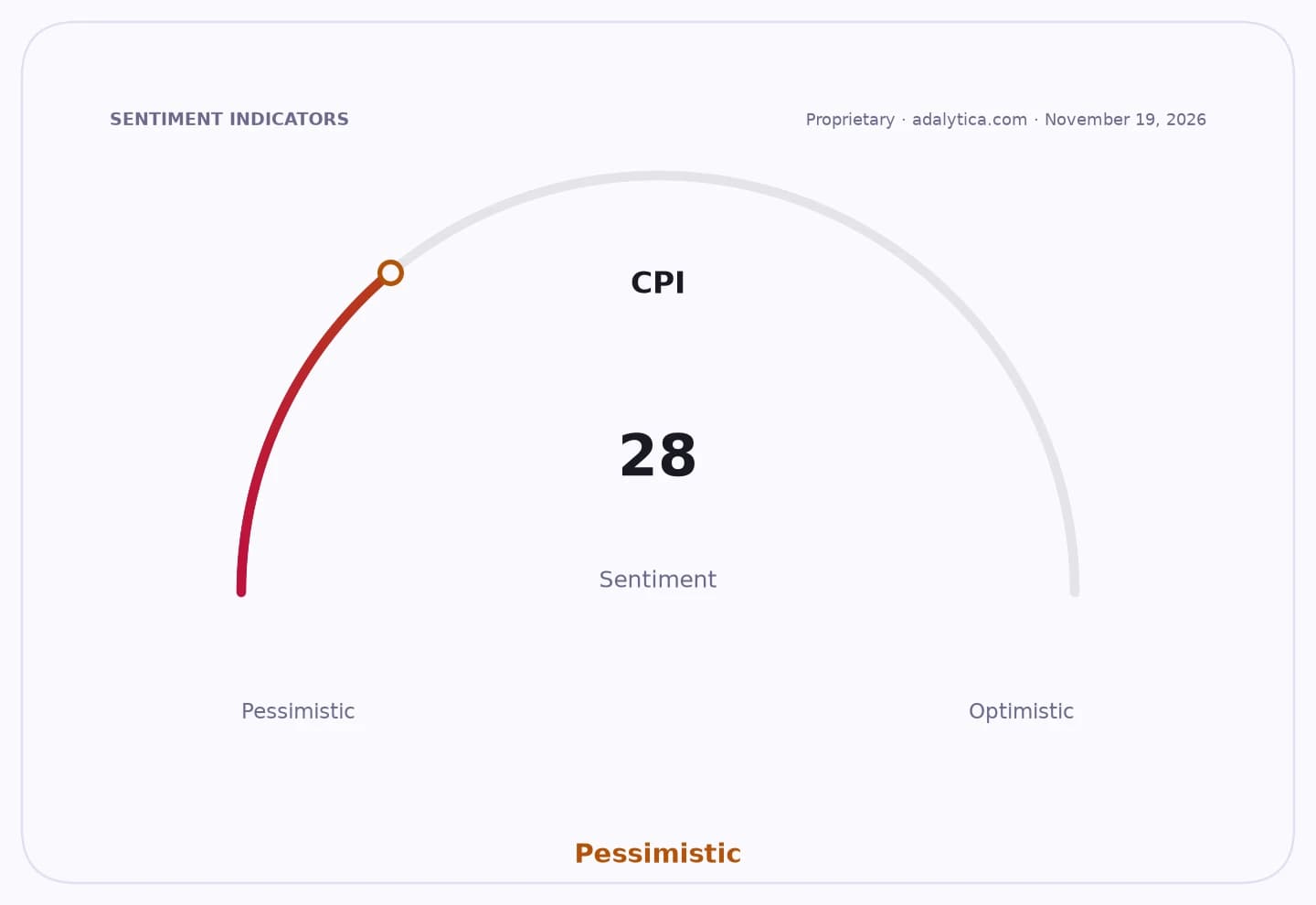
Sentiment Indicators

The ringgit traded in a narrow 4.0892 to 4.0945 range through the day, reflecting caution as technology stocks sold off and US-China trade tensions kept risk appetite subdued. In that environment, the dollar keeps its edge: expectations for a 50-basis-point Fed hike next month remain a direct headwind for the ringgit and, by extension, for imported inflation, corporate hedging costs and foreign portfolio flows into Malaysia.
Against that backdrop, the ringgit slipped versus the yen, pound and most ASEAN currencies. It eased to 2.5736 against the yen from 2.5638, weakened to 5.3991 against the pound from 5.3955, and lost ground versus the Singapore dollar, Thai baht, Indonesian rupiah and Philippine peso. The only modest exception was the euro, against which it edged slightly higher.
FX Vol Index vs MYR=Xadalytica.com
Explore this data interactively — full history, time series and cross-market comparisons.
FX Vol Index
For investors, the key implication is that Malaysia remains a relative-value trade, not a standalone currency story. If US yields keep rising, export-oriented sectors may get some support from a softer local currency, but domestic importers, consumers and companies with dollar liabilities will feel the squeeze. The ringgit’s 50-day moving average and 200-day moving average in recent price data show the currency is still stuck in a consolidation band rather than breaking into a durable recovery.
The trade to watch now is not whether the ringgit can hold steady for a day, but whether it can withstand another round of Fed-driven dollar strength without slipping back toward its recent lows. Until the market gets clearer evidence that US tightening is peaking, the ringgit is likely to remain a funding-currency underperformer and a reminder that currency markets are still being set in Washington, not Kuala Lumpur.
| Entity | Gains | Losses |
|---|---|---|
| US dollar | ▲Safe-haven demand | ▼None in near term |
| Malaysian exporters | ▲Better price competitiveness | ▼Higher input costs |
| Malaysian importers | ▲— | ▼More expensive imports |
| Ringgit longs | ▲— | ▼Fed-driven pressure |