Inflation is easing, but that is not the same as relief for workers, households and policymakers trying to keep living standards intact.
Inflation Eases but Prices Stay High for Households
The key economic problem is that a lower inflation rate only means prices are rising more slowly, not that they are falling. After years of sharp increases, the cost of essentials remains elevated, and even brisk wage gains may still fail to restore lost purchasing power. That gap helps explain why the debate over pay is intensifying again just as headline inflation recedes.
Sentiment Indicators
The arithmetic is unforgiving. If a good rises from 100 to 120, and inflation then slows to 5%, the price still climbs to 126 the following year. Households feel that in food, rent, transport and utilities, where once-pronounced increases are embedded into everyday spending. The result is a squeeze that can persist long after official inflation data starts to improve.
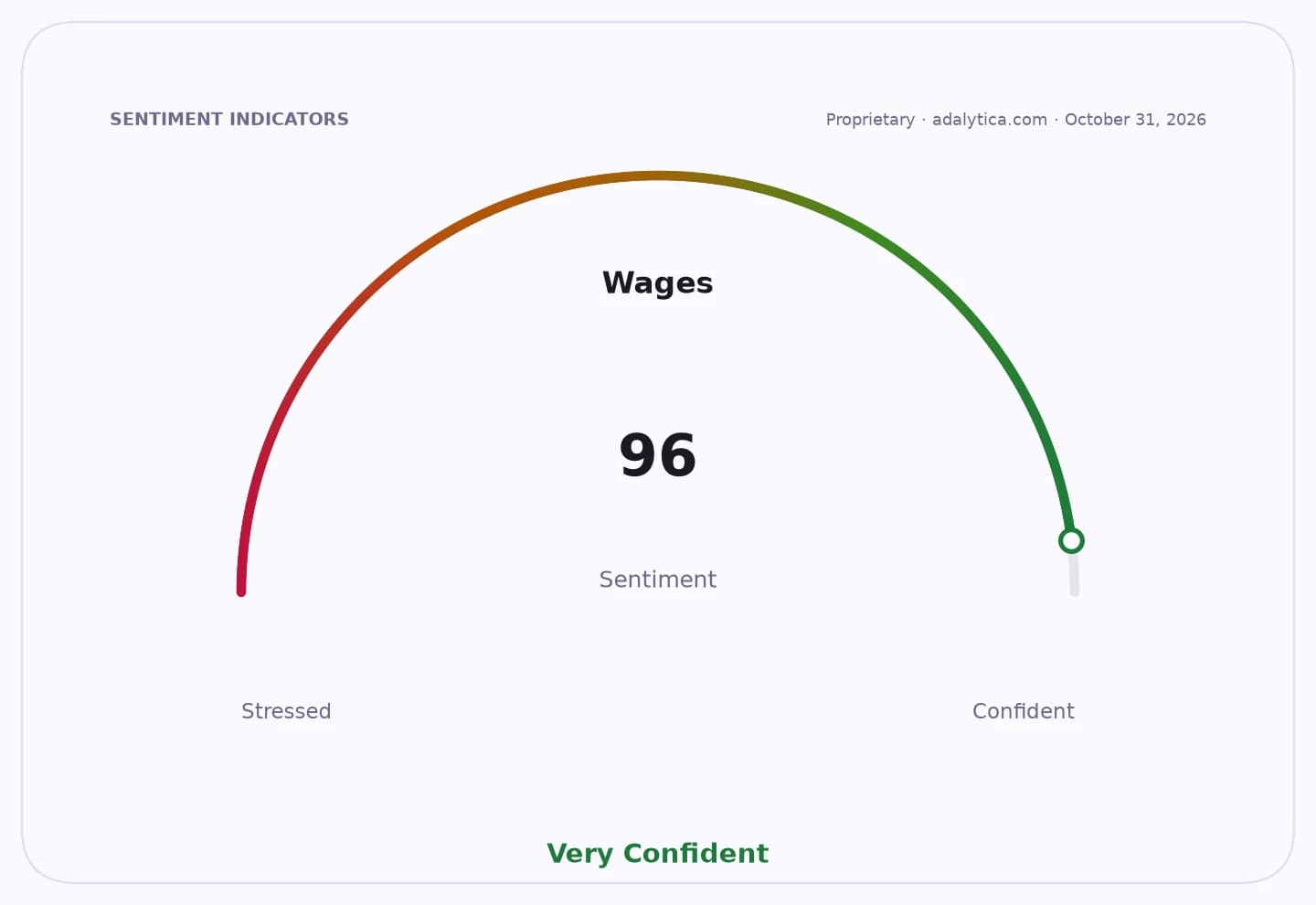
That mismatch between slower inflation and still-high prices is also what makes wage growth so politically sensitive. A worker getting a 10% pay increase in an environment where living costs are up 15% is poorer in real terms, even if the nominal salary looks better on paper. In Turkey, where minimum wage talks are expected to begin in December, the issue is already central to the 2027 pay round. Current discussions point to a minimum wage that could rise above 36,000 lira net next year, from about 28,075 lira in 2026, depending on inflation and government decisions.
CPIAUCSL — macro contextadalytica.com
Explore this data interactively — full history, time series and cross-market comparisons.
The broader macro backdrop is not helping. The International Monetary Fund has warned that global inflation could reaccelerate on energy shocks and AI-related demand, and forecast inflation rising to 4.7% in 2026 before easing to 4.1% in 2027. That matters because energy is still the fastest conduit from supply shocks to consumer prices, while the global build-out of artificial intelligence is creating fresh demand for chips, data centers, electricity and cooling capacity. Those investments may eventually raise productivity, but in the near term they can lift costs in constrained industries.
The strain is visible in the data across economies where headline inflation is slowing but price pressure remains uneven. Egypt’s annual urban inflation eased to 12.7% in October from 13.9% in September, while Tunisia’s reached 5.6% with food prices up 8.5%. Morocco’s inflation was just 1.9%, yet transport costs were still rising 11.6% year on year. That split illustrates why a single inflation number can obscure the real pressure on households.
For central banks, the implication is uncomfortable. Keeping rates high can help stop a fresh inflation spiral, but tighter policy also raises borrowing costs for companies and consumers and can slow hiring and investment. It does not produce more oil, wheat or shipping capacity. It can cool demand, but it cannot quickly fix the supply-side shocks that are driving much of the problem.
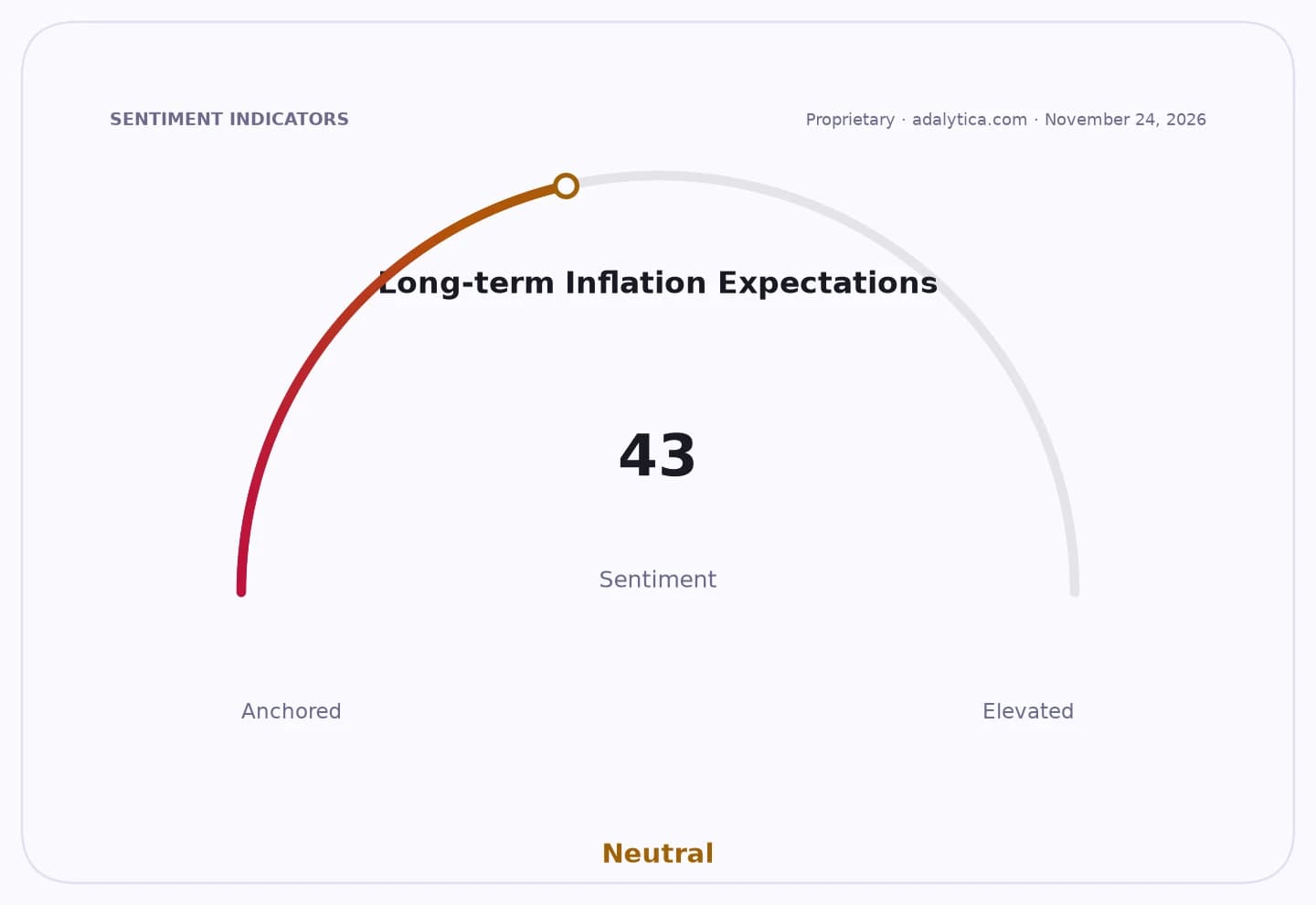
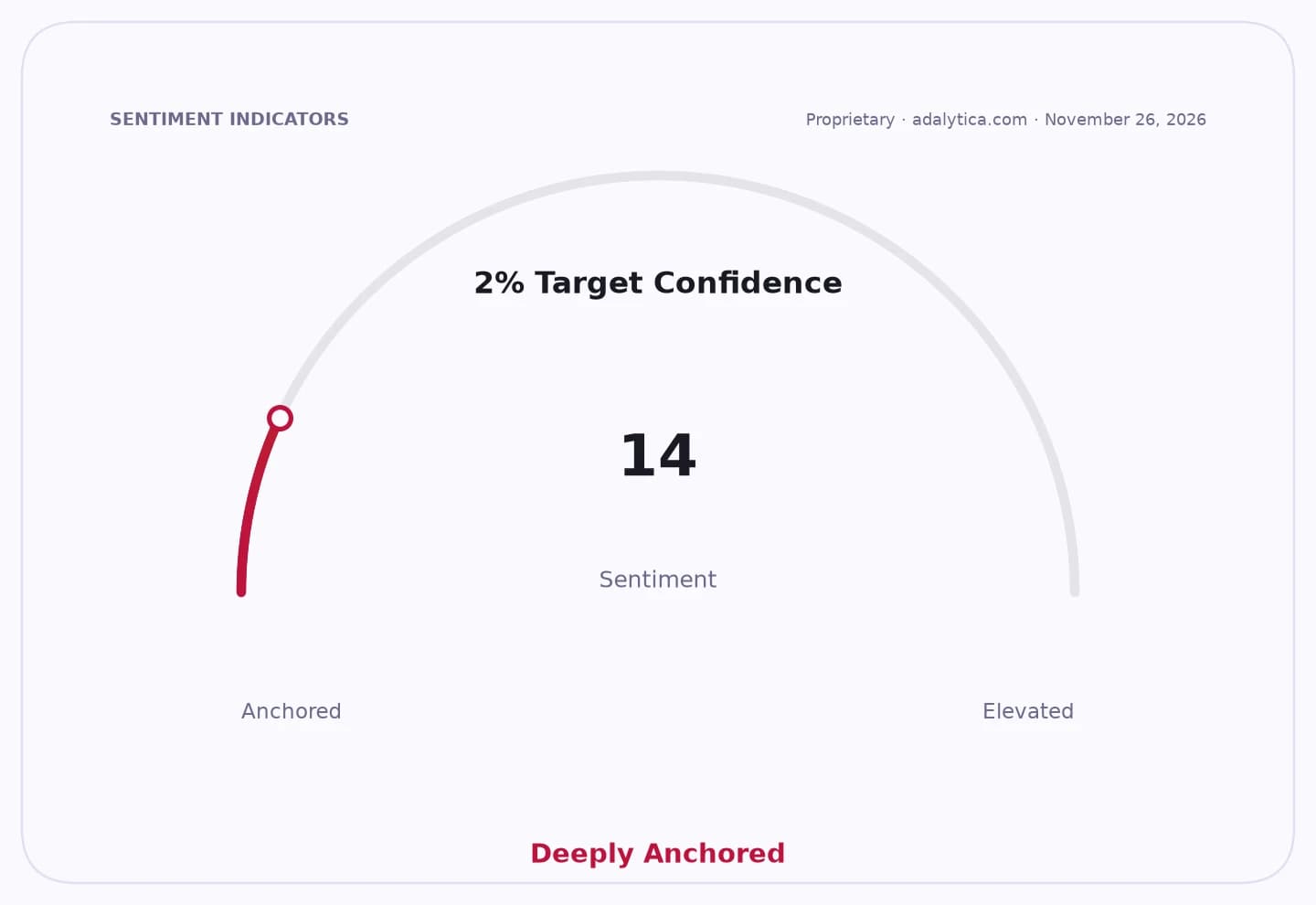
For investors, the story is less about whether inflation is coming down and more about whether real incomes and consumer demand can recover fast enough to sustain growth. Companies exposed to discretionary spending may face a cautious consumer for longer, while firms with pricing power or direct exposure to wages, energy and capital spending could see margins tested. Markets are also likely to keep watching inflation expectations closely; Adalytica’s gauge of confidence in the Fed’s 2% target remains in extreme fear territory, underscoring how fragile credibility can be when prices stay sticky.
The next catalyst is whether wage settlements, especially in large labor markets, begin to catch up with living costs without reigniting inflation. If pay gains remain below the cumulative rise in essentials, households will continue to feel poorer even in a disinflationary environment. If they accelerate too quickly, central banks may be forced to keep policy tighter for longer.
| Entity | Gains | Losses |
|---|---|---|
| Workers | ▲Higher nominal pay | ▼Real purchasing power if inflation outpaces wages |
| Central banks | ▲Lower headline inflation | ▼Pressure to keep rates restrictive |
| Consumers | ▲Slower pace of price rises | ▼Still-high costs for essentials |
| Employers | ▲Potentially steadier demand if inflation cools | ▼Higher wage bills and financing costs |