Turkey’s households lowered their 12-month inflation expectation in November, a modest sign that price-setting psychology is easing even as the outlook for the lira deteriorates and market participants turned more cautious.
Turkey households cut inflation expectations in November

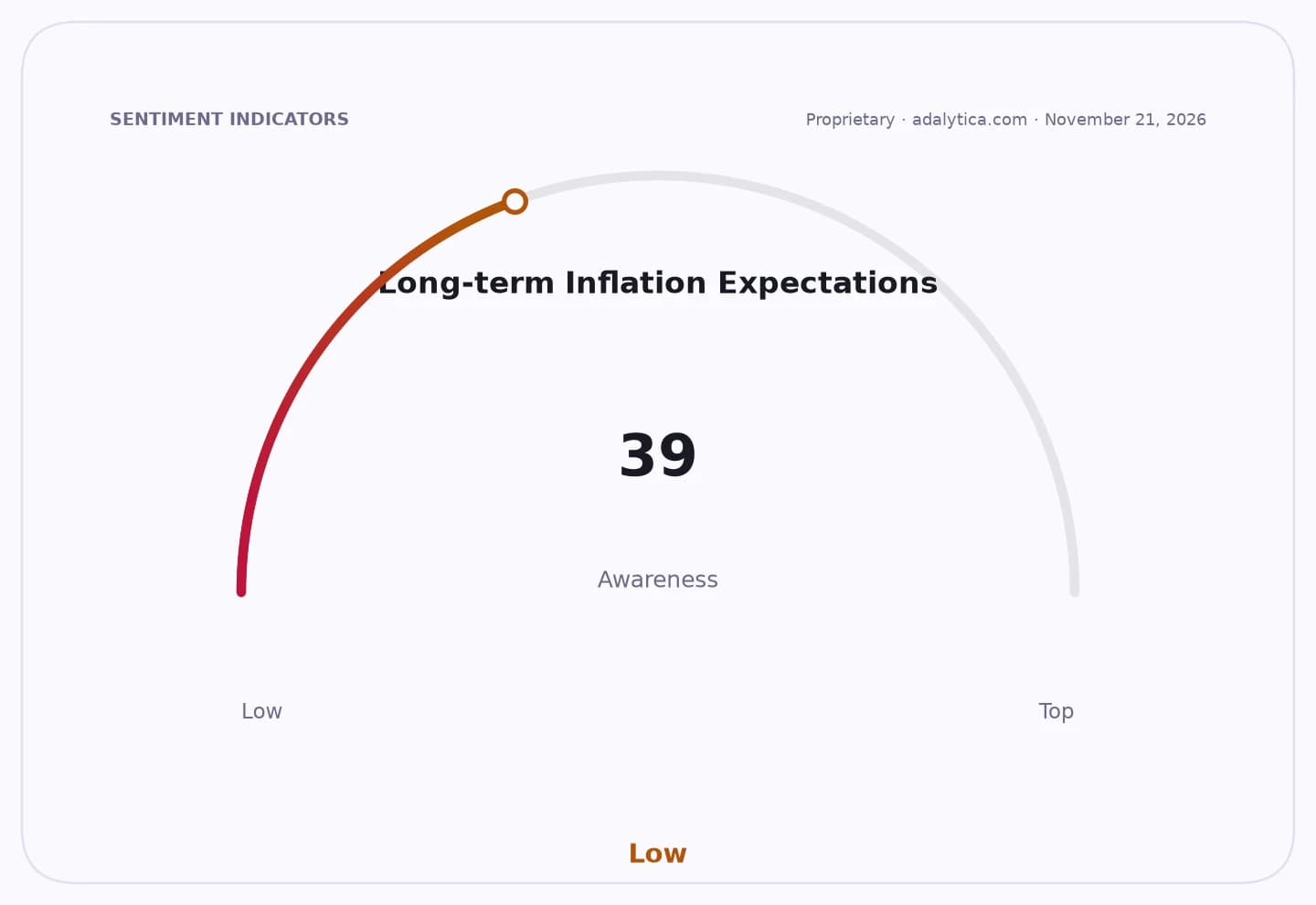
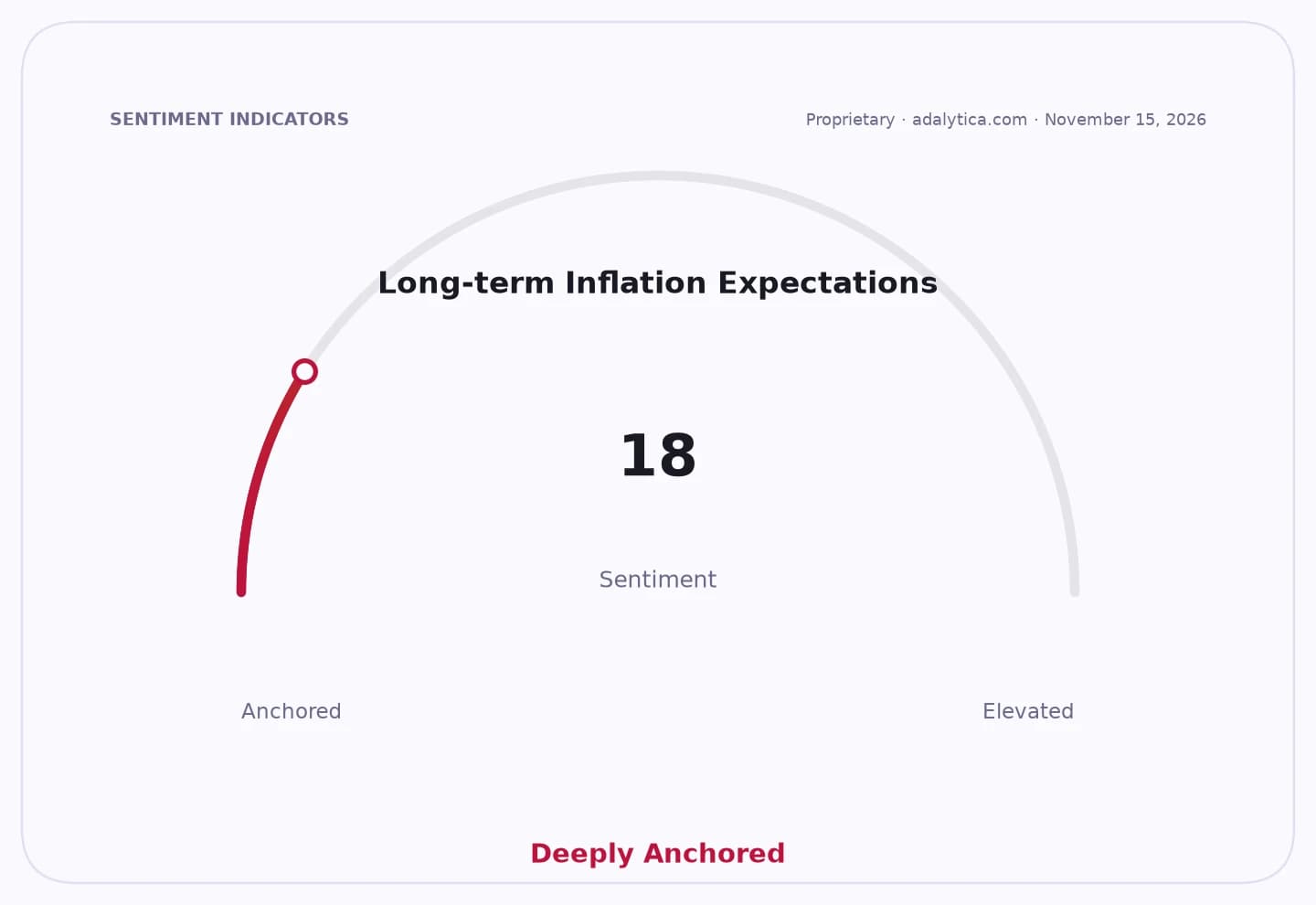
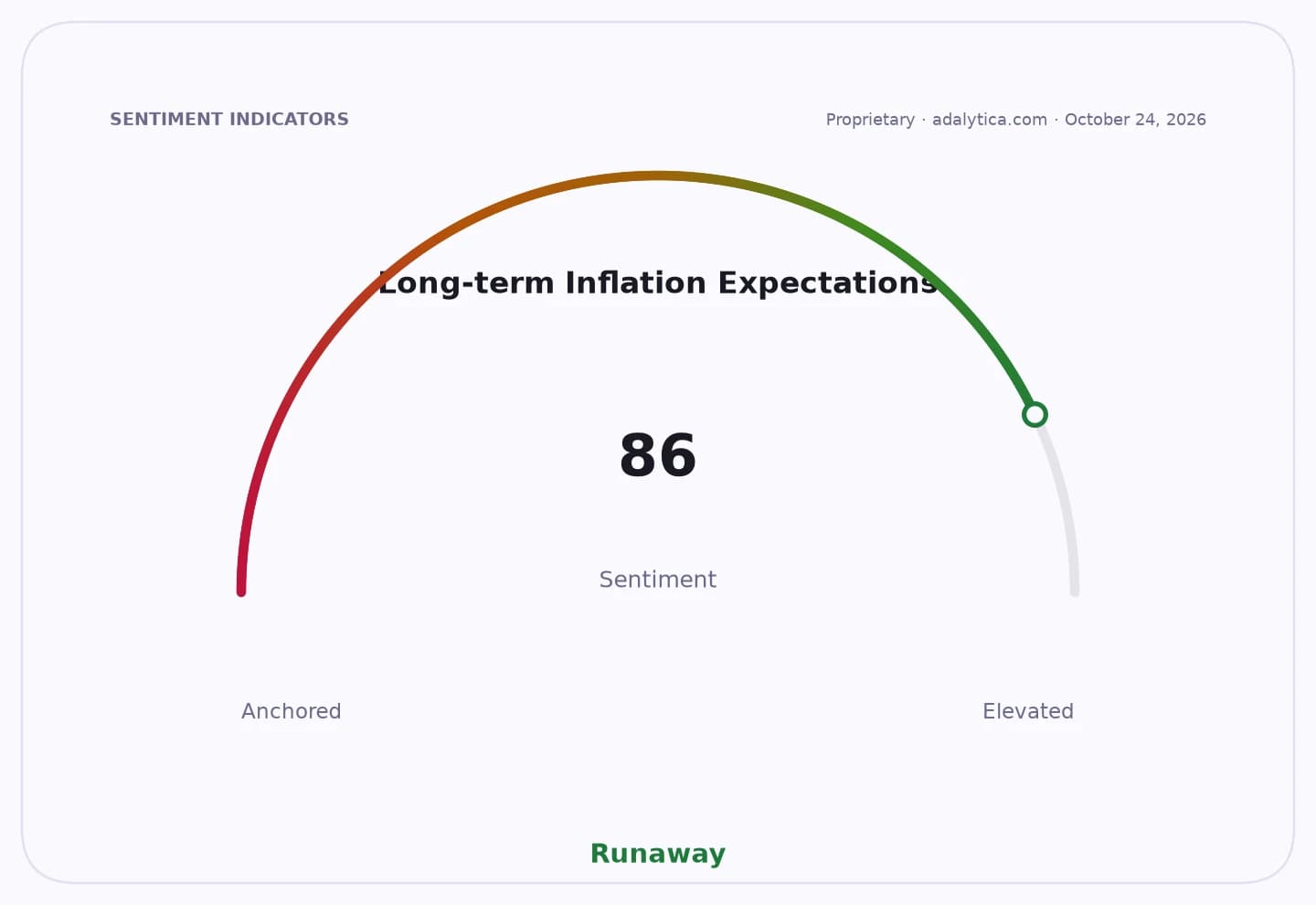
The central bank’s survey showed household inflation expectations fell 0.51 percentage point from the previous month to 43.24%, while expectations among real-sector firms also edged lower to 31.70%. The move matters because household expectations are a key transmission channel for inflation: when consumers believe prices will keep rising rapidly, they front-load purchases, demand higher wages and embed inflation into everyday pricing decisions.
Sentiment Indicators
The improvement in the household reading comes against a more mixed backdrop. Market participants lifted their 12-month inflation forecast to 24.04%, suggesting the professional view remains more anchored than the public’s, but still not consistent with the central bank’s disinflation goals. At the same time, the survey showed expectations for the dollar/lira rate rose by 1.32 lira to 58.18, underscoring that respondents still see currency weakness as a persistent inflation risk.
That combination is important for policy. For the Central Bank of the Republic of Turkey, softer household expectations are helpful, but not enough on their own to declare victory over inflation. The central bank needs expectations to converge lower across households, firms and markets if it is to sustain disinflation without having to lean even harder on tight financial conditions. A weaker exchange-rate outlook, however, can keep imported costs elevated and complicate that effort.
For investors, the data are a reminder that Turkey’s inflation story remains fragile. The household reading may support local-currency assets at the margin if it signals improving confidence in the central bank’s anti-inflation stance, but the rise in dollar expectations and the still-high household figure argue against complacency. The gap between household and market expectations also suggests inflation is not yet fully embedded in a single, stable regime.
The next test will be whether repeated declines in household expectations continue into year-end and whether firms begin to price in a more durable slowdown in inflation. If the lira holds firmer and monthly price growth stays contained, the central bank could gain room to preserve its tightening bias. If not, expectations may again drift higher, keeping pressure on rates, bond yields and consumer demand.
| Entity | Gains | Losses |
|---|---|---|
| Households | ▲Slightly lower inflation expectations | ▼Still-high cost-of-living pressure |
| CBRT | ▲Early sign of better anchoring | ▼Ongoing credibility test |
| Local-currency assets | ▲Support from easing expectations | ▼Currency risk from weaker lira outlook |
| Consumers and firms | ▲Potentially slower price spiral | ▼Real incomes and margins under pressure |