Malaysia can keep fuel flowing through the end of the year, but the more important message for markets is that crude prices may remain structurally high for another two to three years, a backdrop that keeps inflation, subsidies and energy costs under pressure even if supply disruptions do not escalate.
Malaysia Adviser Sees Higher Oil Prices Through 2026

That is the key investable takeaway from the prime minister’s economic adviser, who said the global oil market remains “very fluid” and skewed toward higher prices because of geopolitical tensions, attacks on shipping routes and the slow rebuilding of strategic reserves. His view that oil only begins to normalize around $80 a barrel suggests policymakers and investors should stop treating today’s prices as a short-lived spike and start pricing in a longer cycle of tighter supply discipline.
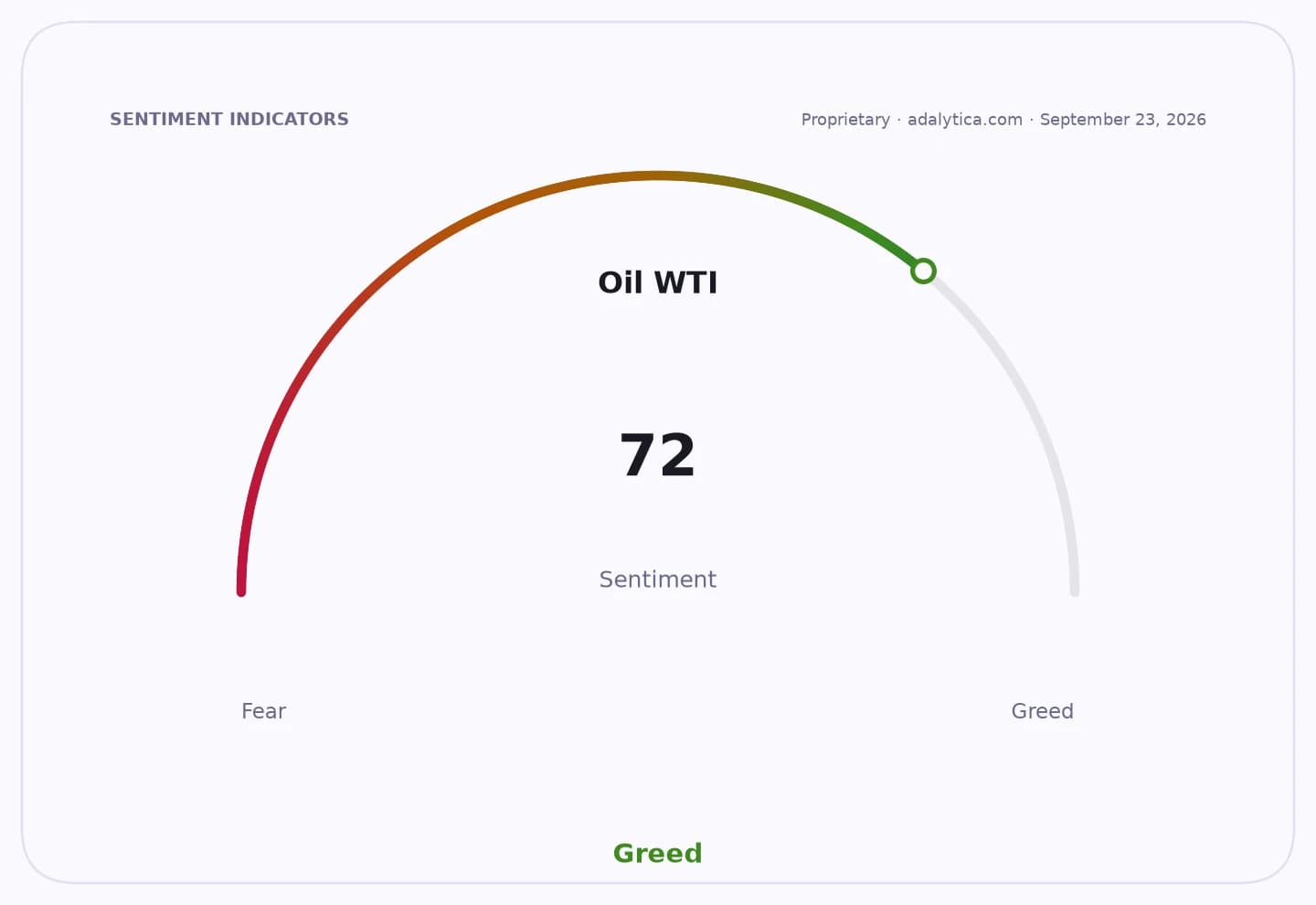
Sentiment IndicatorsⓘProprietary · adalytica.com · September 6, 2026
This is a snapshot — live sentiment, awareness and momentum for 130+ markets update continuously in the dashboard.Open AlphaPulse

The timing matters. Brent and WTI have already been volatile this year, with U.S. crude futures surging well above $90 a barrel again and the broad oil benchmark near $92 in the latest data, while the USO oil ETF has climbed back to about $142, trading near its 50-day and 200-day moving averages with a relatively strong RSI reading. Those levels reinforce a market that is not merely reacting to headlines, but repricing a persistent premium for geopolitical risk.
For Malaysia, the immediate issue is less physical shortage than economic leakage. The country is a major crude importer, so elevated prices feed through to transport, industrial inputs and food costs even as domestic supply remains stable. The adviser said inflation is still running around 2%, but diesel pass-through is already showing up in pockets of price pressure, forcing the government to widen support under its Budi Madani subsidy scheme. That is exactly how prolonged energy inflation becomes a fiscal story: not through a single shock, but through a steady drain on household purchasing power and state finances.
DCOILWTICO vs CPIAUCSL — macro contextadalytica.com
Explore this data interactively — full history, time series and cross-market comparisons.Open AlphaPulse
Investors should read this as a call to favor the parts of the energy complex that benefit from a higher-for-longer crude regime, while being cautious on fuel-intensive sectors and countries that are heavy importers without subsidy buffers. The XLE energy ETF has already broken higher, and the move fits the broader setup: when oil stays elevated, upstream producers, service companies and infrastructure operators tend to gain pricing power, while airlines, transport, chemicals and consumer names face margin compression.
There is also a second-order trade here. The adviser pointed to China’s rapid adoption of electric vehicles and high refinery utilization, both of which help cap demand growth and support exports. That means the next big oil move may not be driven by demand collapse, but by supply restraint and reserve rebuilding. In that world, the market underestimates how sticky the price floor can be.
The cleaner thesis is simple: Malaysia’s assurance on fuel supply removes near-term panic, but it does not remove the macro problem. If oil holds near or above the $80 to $90 range for the next several years, the winners are energy producers, pipelines, shipping and select materials names tied to the cycle. The losers are subsidy-stretched governments, import-dependent economies and any business model that assumes cheap fuel is coming back quickly.
| Entity | Gains | Losses |
|---|