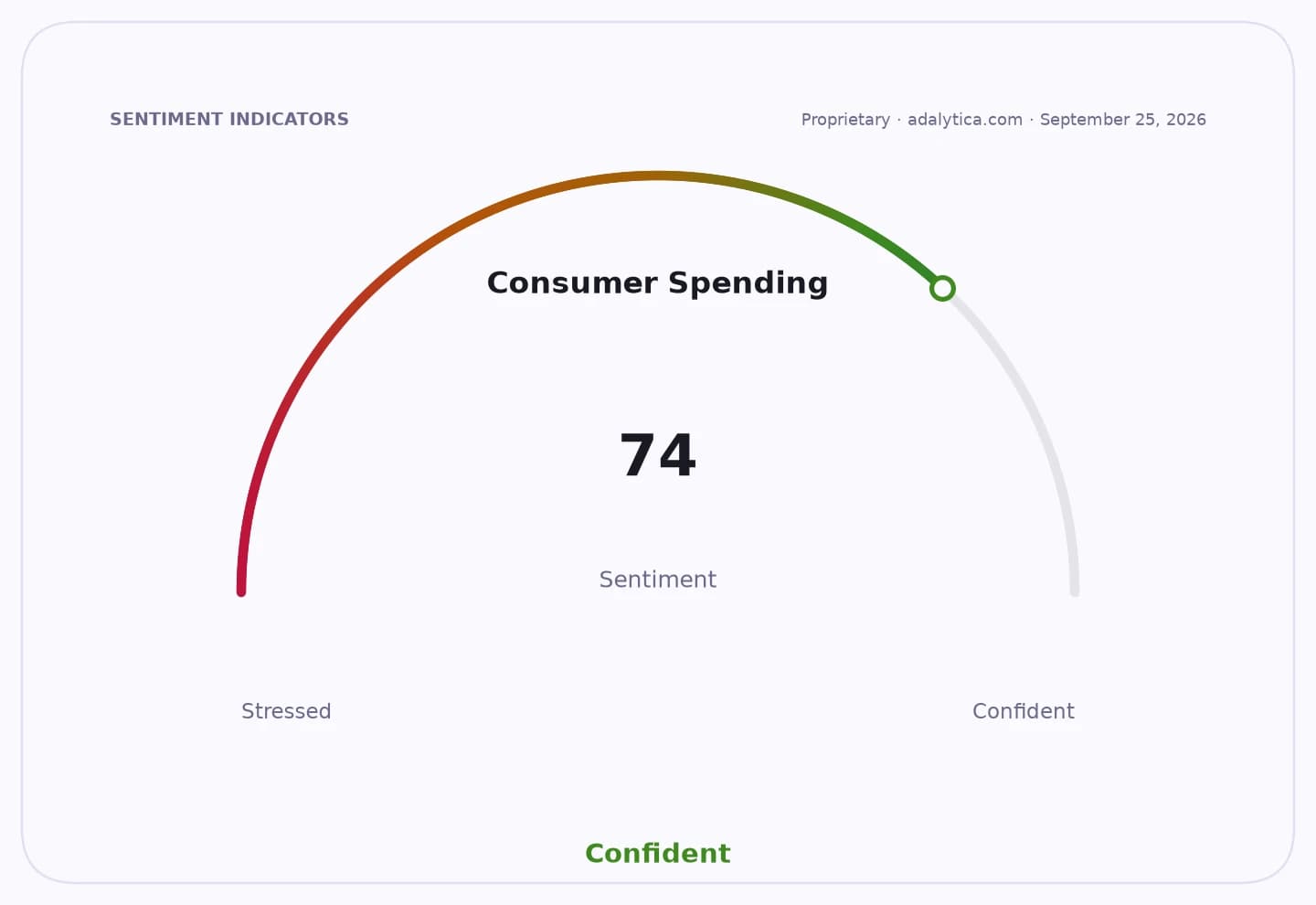
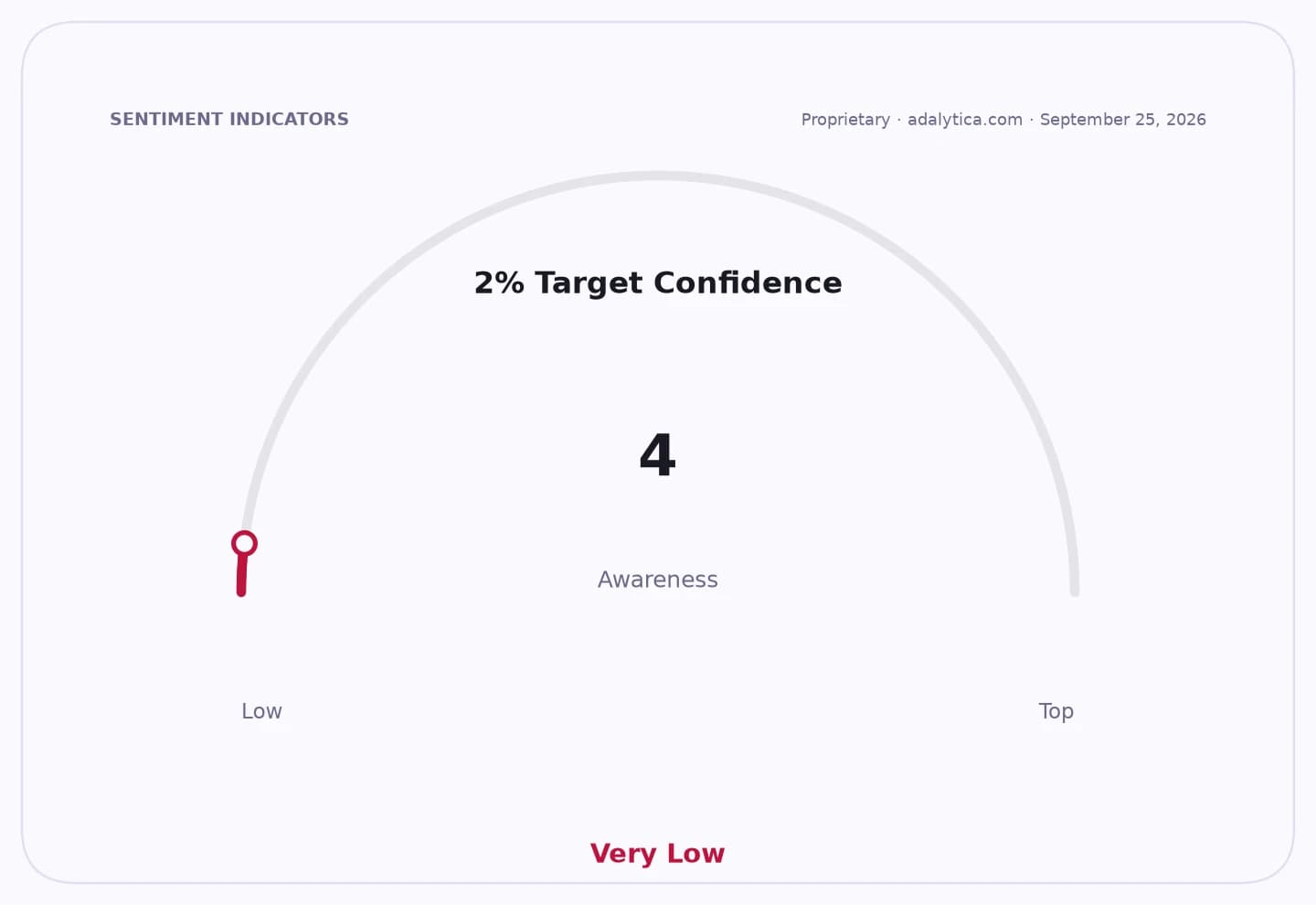
Manufacturing confidence fell to its lowest level in three months in August, underscoring how sluggish domestic demand is starting to outweigh pockets of export and defense-related strength.
Manufacturing Sentiment Slips as Domestic Demand Softens
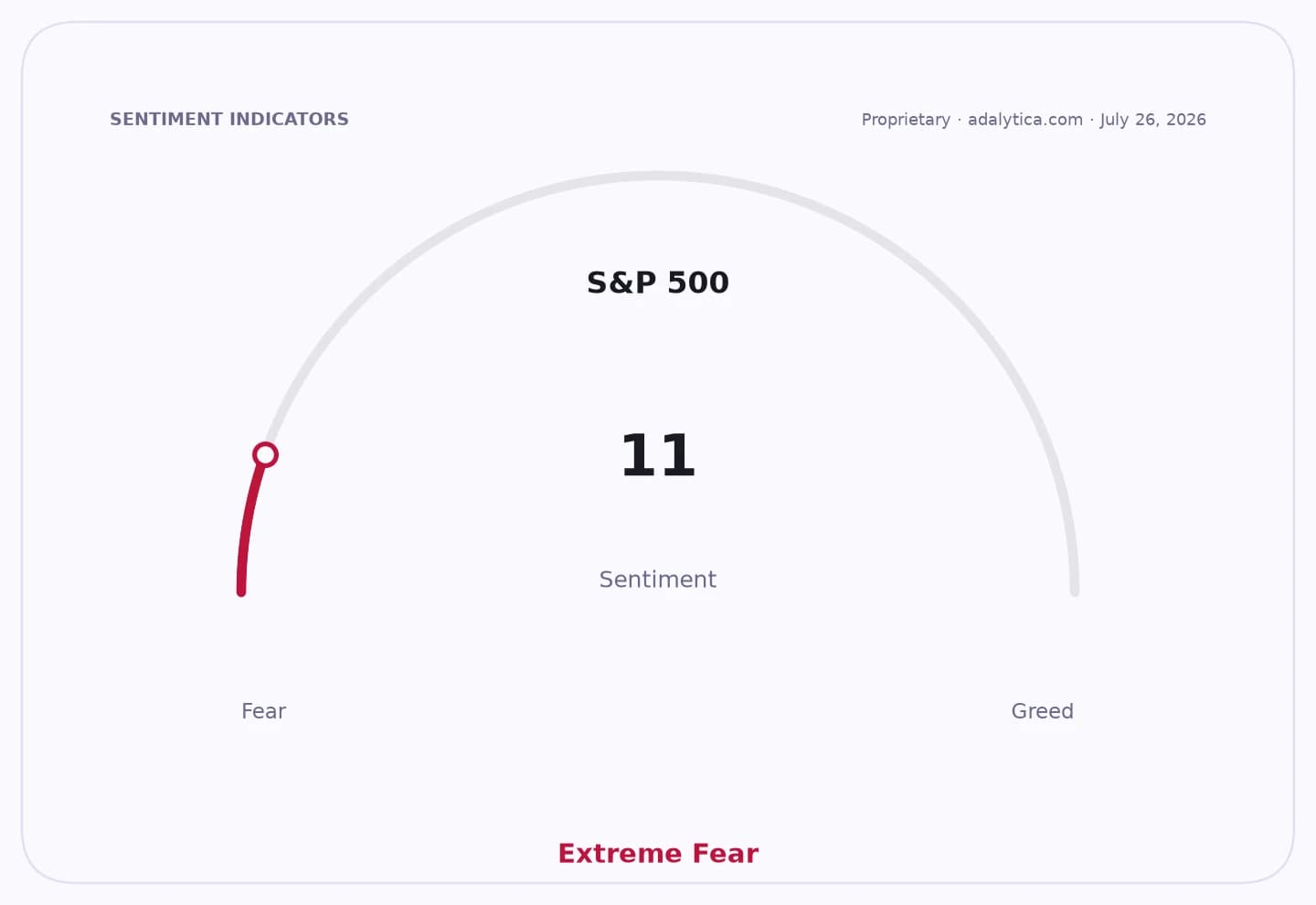
The drop matters because factory sentiment is often an early read on industrial activity, capital spending and employment, all of which feed into broader growth. A weaker mood in the sector suggests companies are becoming more cautious about orders, inventory build and hiring, even as the economy avoids the kind of outright collapse associated with a deep downturn.
Sentiment IndicatorsⓘProprietary · adalytica.com · July 26, 2026
This is a snapshot — live sentiment, awareness and momentum for 130+ markets update continuously in the dashboard.Open AlphaPulse
The latest signals point to an uneven industrial backdrop rather than a uniform slowdown. While some manufacturers continue to benefit from resilient demand in specific niches — including military equipment and export-linked businesses — the broader tone has darkened as domestic customers hesitate to place fresh orders. That split is consistent with the message from recent output data showing industrial production still expanding, but only modestly. The trend in the industrial production index has been positive through mid-2026, with the latest reading at 102.64 and a July forecast of 102.94, but the pace is not strong enough to dispel concerns about momentum.
Employment data also do not yet show a sharp downturn, which helps explain why the sector is not in crisis. The unemployment rate has edged down to 4.2% from 4.3% in the prior two months, suggesting the labor market is still absorbing weakness rather than breaking. But investors tend to look past headline resilience and focus on inflection points. If domestic demand remains soft, manufacturers may eventually trim shifts, slow hiring and defer investment, which would weigh on suppliers, transport and commodity demand.
INDPRO vs RSXFS — macro contextadalytica.com
Explore this data interactively — full history, time series and cross-market comparisons.Open AlphaPulse
Markets are already reflecting a more defensive posture. The industrials ETF XLI has retreated from recent highs after a strong spring rally, even though it remains above its 50- and 200-day moving averages. Recent price action has been choppy, with the fund’s relative strength index cooling from overbought levels, while volatility in the broader market has intensified. By contrast, the consumer staples ETF XLP has held up better, a pattern that often appears when investors rotate toward stability and away from cyclical growth.
Within the sector, the divergence is stark. Caterpillar’s sharp swing from highs above $1,060 to the high $880s shows how quickly sentiment can reverse when investors question the durability of cyclical demand, even after a powerful run. That kind of move can be read two ways: bulls would say the pullback creates a better entry point if industrial spending rebounds; bears would argue it is a warning that earnings expectations were too optimistic given the domestic demand backdrop.
The broader macro message is that manufacturing is still growing, but with less conviction. A low sentiment reading does not by itself confirm recession risk, yet it does raise the odds that executives will turn more defensive in the months ahead. For investors, the key question is whether export strength, defense orders and infrastructure-related spending can offset softer home-market demand — or whether the domestic slowdown broadens enough to cap earnings across industrials, materials and economically sensitive consumer names.
| Entity | Gains | Losses |
|---|---|---|
| Exporters | ▲Overseas demand tailwind | ▼Domestic weakness |
| Defense contractors | ▲Strong order books | ▼Cyclical manufacturers |
| Defensive equities | ▲Relative bid | ▼Industrials |
| Industrial suppliers | ▲Potential rebound if demand returns | ▼Near-term earnings pressure |