Lying, paranoia and conspiracy may define the political story, but the economic story is that investors are pricing a world with more instability, more policy risk and a lower tolerance for upheaval.
Market Prices More Policy Risk in Treasuries and SPY
That matters because markets do not need a constitutional crisis to reprice risk. They only need the perception that institutions are less predictable. In the latest market data, the 10-year Treasury yield is hovering around 5.02%, the fed funds rate is near 3.89%, and the 10-year/2-year curve has only just crawled back to 0.28 percentage point. That is not a calm backdrop. It is a market that still reflects sticky policy uncertainty, elevated real rates and the cost of financing in a more contested political era.
Sentiment Indicators
The clearest signal is in Treasuries and equities. TLT, the long-duration Treasury ETF, has bounced to 81.45 after trading as low as 79.13 in October, but it still sits below its 200-day moving average of 82.62. SPY has been far more vulnerable: it closed at 689.81 on November 20 after a steep slide from 766.81 earlier this month, with the 50-day average at 760.03 and RSI readings near 29, a level that typically indicates heavy selling pressure. The message is not that investors are abandoning risk entirely. It is that they are demanding a bigger premium for holding it.
That is the market’s real verdict on political turbulence. When confidence in institutions erodes, capital does what it always does: it seeks shelter in duration, liquidity and hard assets linked to scarcity rather than discretion. That creates a powerful setup for the beneficiaries of fear trade positioning — high-quality bond proxies, defensives, infrastructure, defense contractors and firms that can pass through policy shocks without breaking margins.
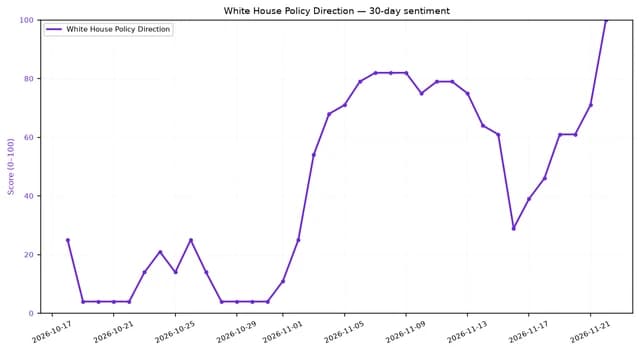
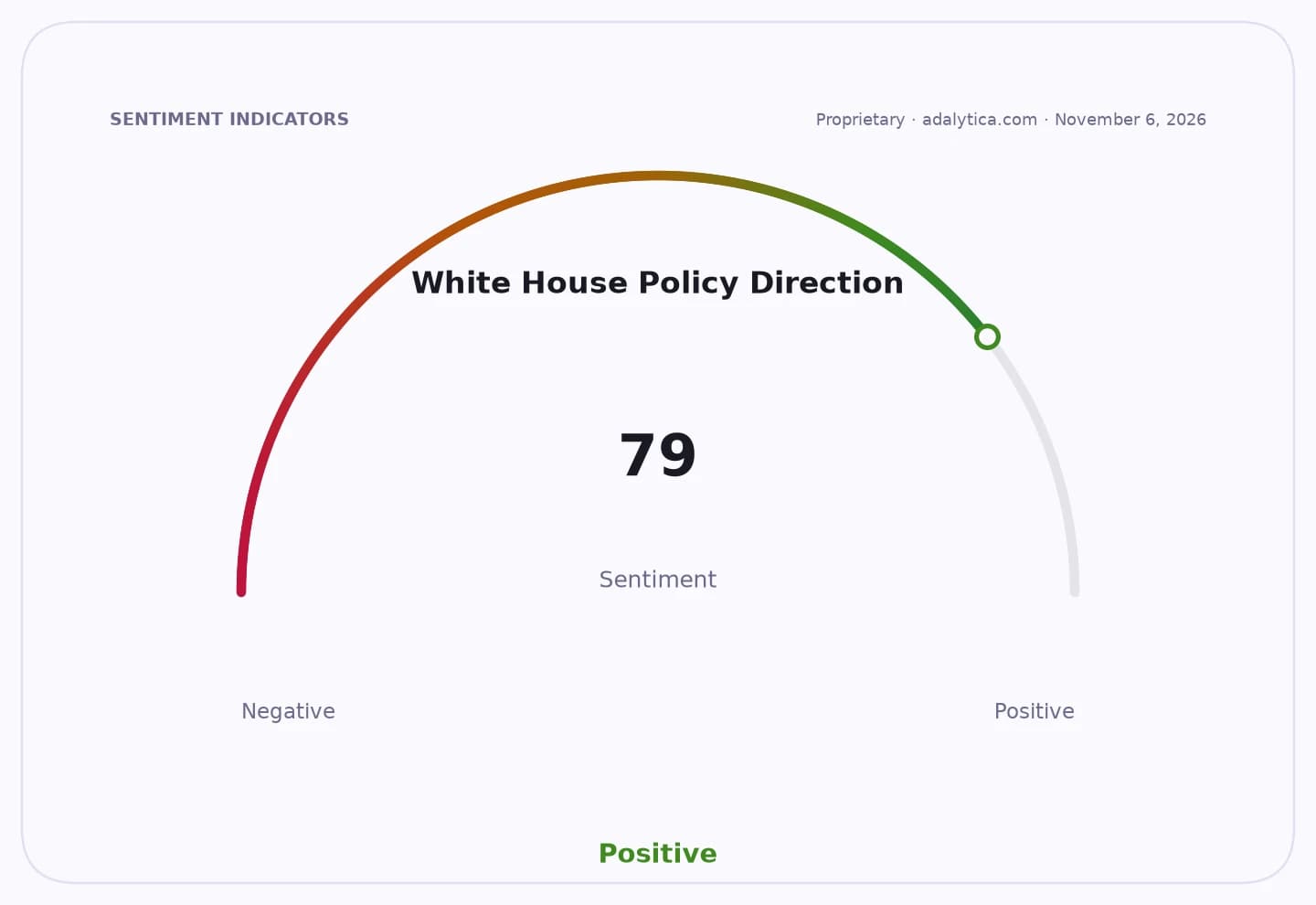
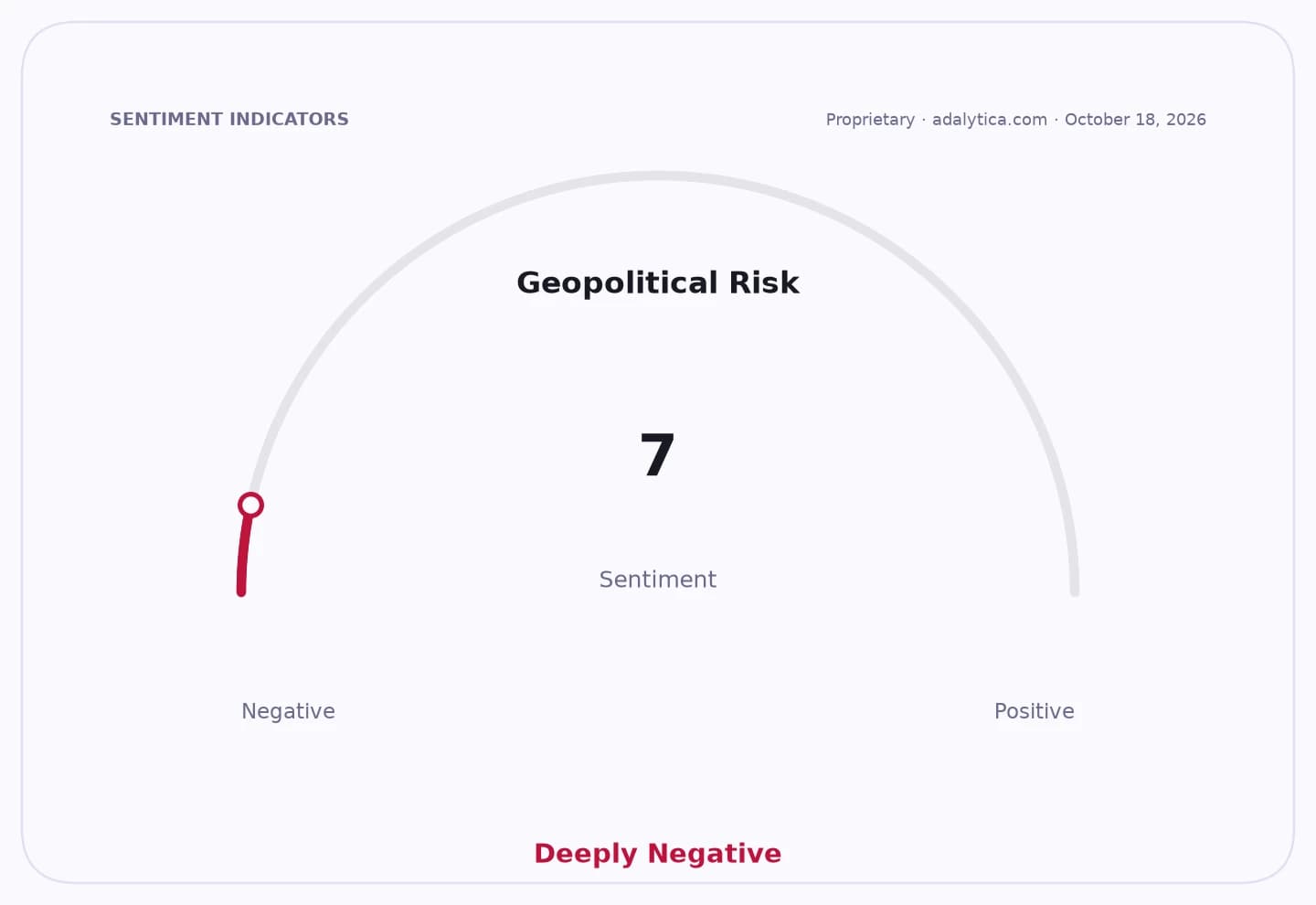
The macro backdrop reinforces the case. Global Stability Sentiment from Adalytica sits at an extreme-fear reading of 4, while the U.S. White House Policy Direction Sentiment is at 100, labeled extreme greed, with awareness still depressed at 4. In plain English, policy conviction is soaring while broad confidence is collapsing. That combination is dangerous for the economy, but it can be highly investable for those positioned early. Markets rarely reward consensus comfort in times like these; they reward assets tied to resilience, pricing power and government spend.
Investors should also watch the second-order effects. Political dysfunction raises the odds of tariff swings, retaliatory trade barriers and capital misallocation — exactly the kind of environment that showed up in filings from Deere and Caterpillar, where management teams flagged tariff costs and trade frictions as real profit headwinds. In that world, companies exposed to global supply chains and discretionary demand face margin pressure, while firms tied to domestic infrastructure, energy security, cybersecurity and defense can see sustained budget support.
My thesis is simple: the market underestimates how much a more chaotic political climate can reshape capital flows over the next several years. If trust in institutions weakens further, the winners will not just be the obvious safe havens. They will be the companies and sectors that sell protection, redundancy and national capability. That includes defense names, grid and power infrastructure, industrial automation, and select Treasury exposure while long rates remain elevated and the curve stays fragile.
The actionable takeaway is to own resilience, not rhetoric. Favor quality balance sheets, defense and infrastructure spending, and duration hedges where volatility is creating better entry points. In a world where democracy itself is being questioned, the market’s most durable trade is protection against disorder.
| Entity | Gains | Losses |
|---|---|---|
| Treasuries / TLT | ▲Safe-haven demand | ▼Growth-sensitive risk assets |
| Defense and infrastructure stocks | ▲Policy and spending tailwinds | ▼Cyclical importers |
| SPY / broad equities | ▲Selective rebounds only | ▼Higher valuation multiples |
| Trade-exposed industrials | ▲Pricing power if localized | ▼Tariff costs and supply-chain friction |