NATO’s top commander is effectively telling markets and policymakers that the alliance’s biggest economic risk from Russia is not a full-scale invasion of Europe, but a prolonged campaign of sabotage, arson and terror that will keep defense spending elevated for years.
NATO sees Russia hybrid threats, defense spending stays high
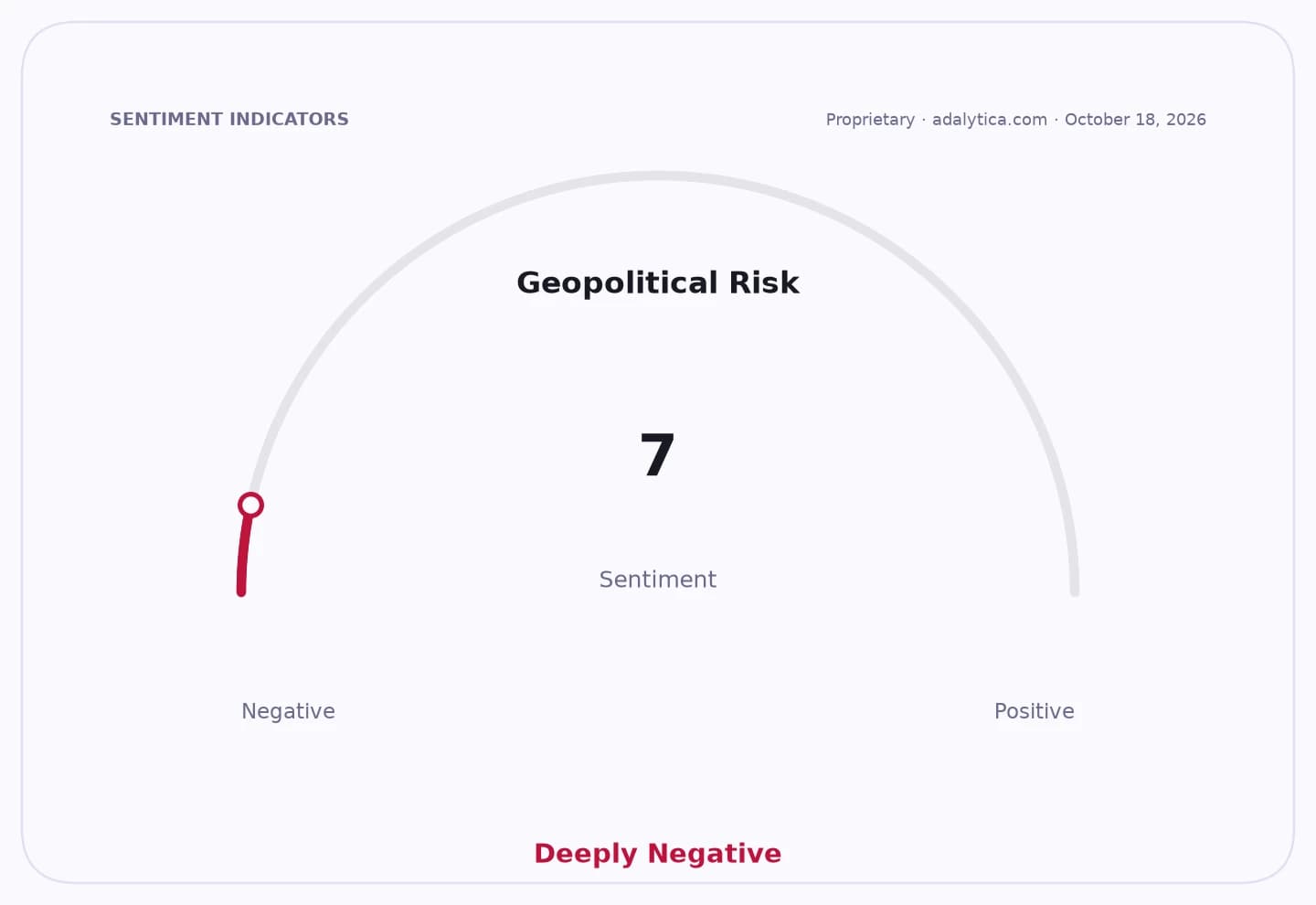
That matters because a lower probability of direct conventional war reduces the most catastrophic tail risk for European assets, but it does not bring peace dividends. Instead, it reinforces a regime of persistent military rearmament, infrastructure hardening and intelligence spending that should keep defense orders, industrial capex and cyber-security demand structurally strong.
US General Alexus Grynkewich said NATO’s military capabilities “far exceed” Moscow’s in a major conflict and that he is confident Russia will not launch a large conventional assault on Europe. Moscow, he said, is turning to other methods because it lacks better options. His message is that deterrence is working — but only if NATO continues to modernize, train and prove its capabilities.
For investors, that is a crucial distinction. It suggests the market should not price this as an event risk that fades after the next headline. The more durable trade is in the defense complex, where elevated European procurement and replenishment cycles are now being reinforced by a security doctrine built around constant readiness rather than a one-off emergency.
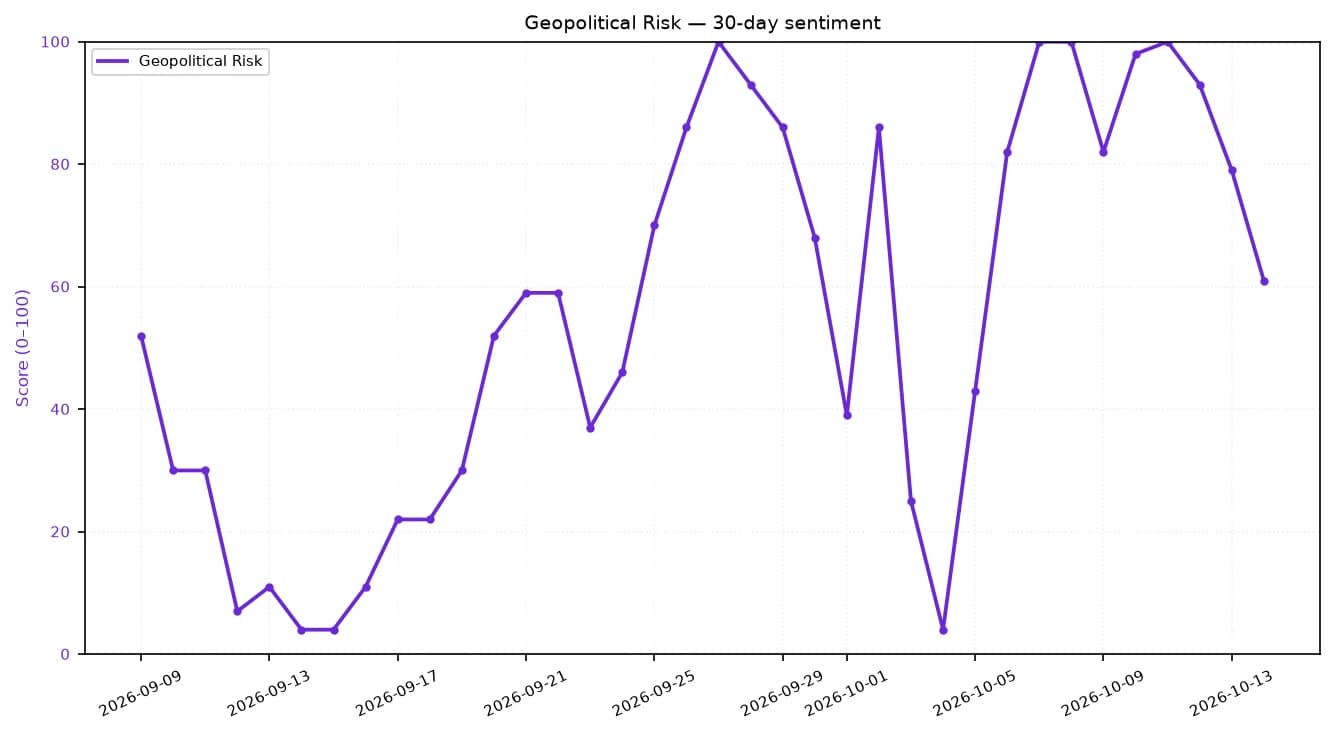
Geopolitical Risk vs BAESYadalytica.com
Explore this data interactively — full history, time series and cross-market comparisons.Open AlphaPulse
The stock reaction already hints at where capital is leaning. British defense contractor BAE Systems has been volatile but remains up sharply from earlier in the year, while Lockheed Martin and RTX have also held up as investors keep paying for exposure to missiles, sensors, air defense and secure communications. These are not just defense names anymore; they are toll roads on the geopolitical reindustrialization of Europe.
Technical readings underscore that the sector is still digesting a strong run rather than breaking down. BAE shares recently rebounded toward their 50-day moving average after a pullback, while Lockheed has recovered from a sharp selloff and is again testing its recent trend. RTX is also stabilizing after weakness earlier in the year. In a market where safety is scarce, any pullback in defense leaders has increasingly looked like an entry point, not a warning.
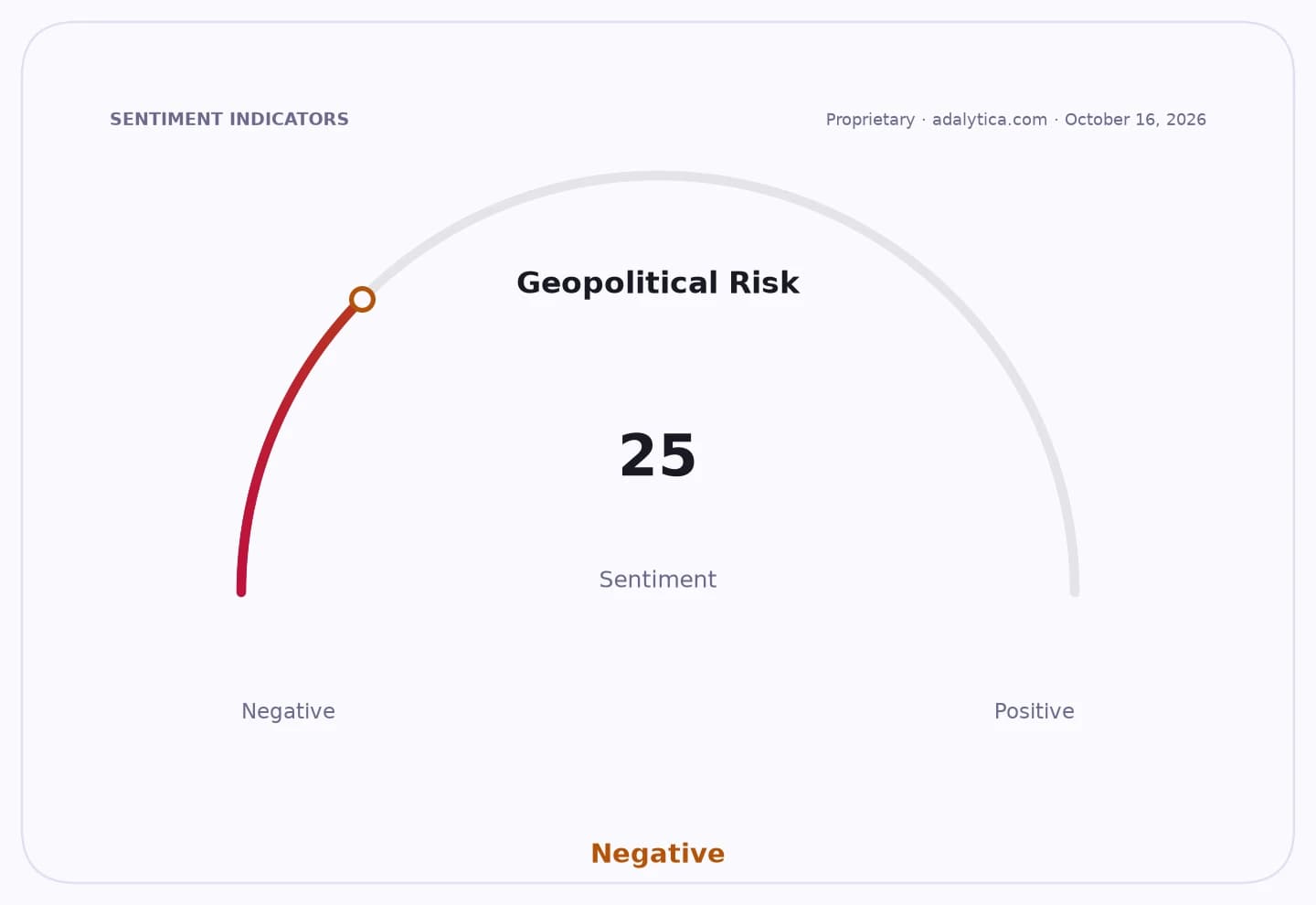
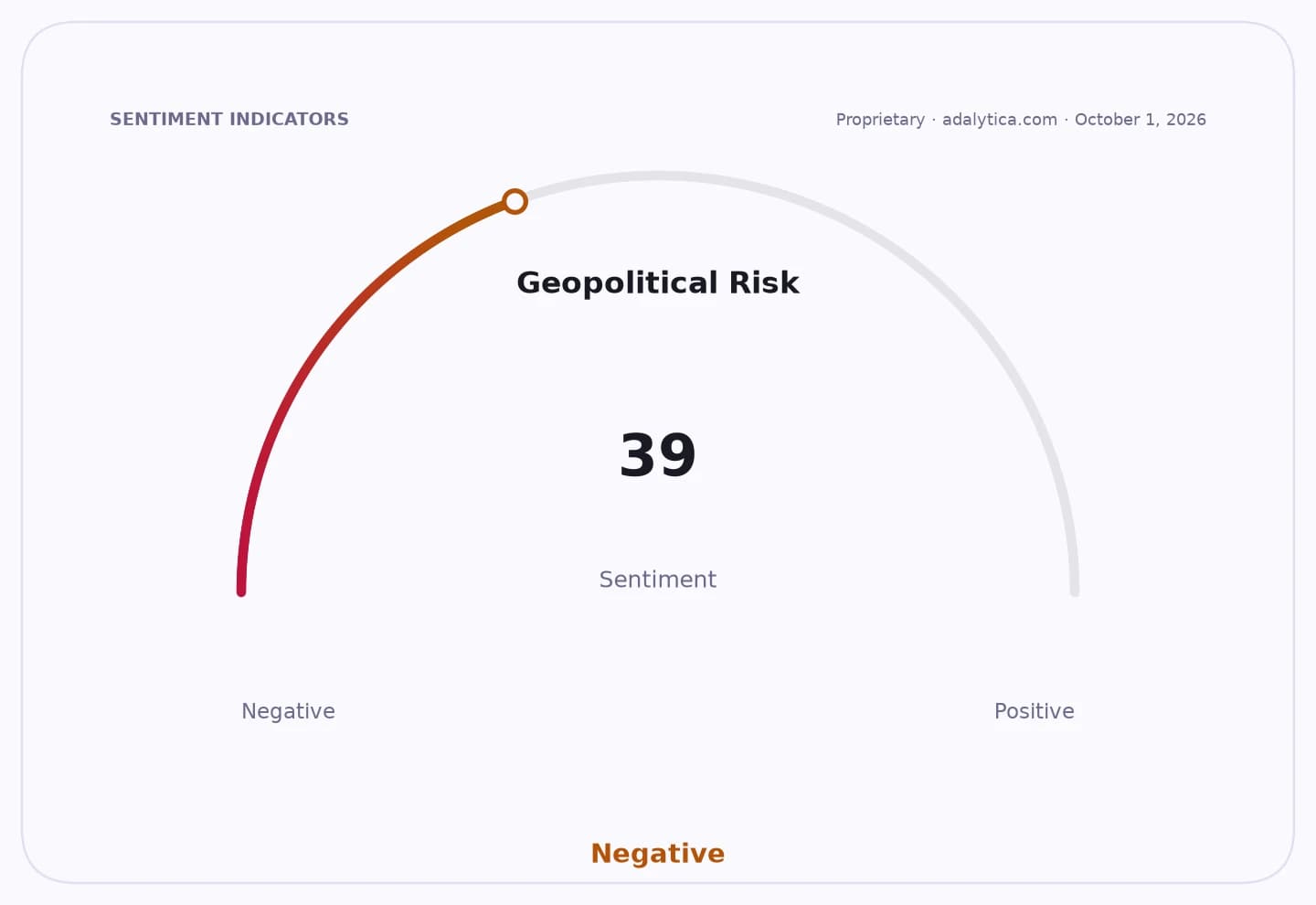
The broader macro signal is equally important. Adalytica’s Global Stability Sentiment has collapsed to “Extreme Fear,” showing how quickly geopolitical anxiety can infect positioning even when a direct war remains unlikely. In credit markets, high-yield spread measures have widened only modestly, suggesting investors are still distinguishing between a costly, grinding security confrontation and a systemic financial shock.
That is the market mispricing I think matters most here. Investors often treat NATO-Russia tension as binary: either war or peace. Grynkewich’s comments point to a third path — strategic confrontation without full invasion — and that is the one that can persist longest, drive the most sustained procurement, and reward the companies supplying Europe’s deterrence machine.
The likely winners are defense primes, missile makers, radar and air-defense suppliers, and cybersecurity vendors. The losers are import-dependent European industries, rate-sensitive assets vulnerable to another surge in fiscal spending, and any investors betting that geopolitics will quickly normalize. My view is simple: the market underestimates how long this rearmament cycle can run, and that keeps the defense trade alive well beyond the next headline.
| Entity | Gains | Losses |
|---|---|---|
| BAE Systems, Lockheed Martin, RTX | ▲Higher defense demand | ▼None immediately |
| NATO and European governments | ▲Stronger deterrence | ▼Higher spending burden |
| Russia | ▲Hybrid leverage | ▼Conventional deterrence failure |
| European consumers and rate-sensitive assets | ▲Limited direct benefit | ▼Fiscal pressure, security risk |