The Trump administration is pushing China to open its financial markets to Mastercard and Citigroup, a move that could turn a politically symbolic trade thaw into real revenue opportunities for two U.S. giants long blocked from fully competing in the world’s second-largest economy.
Mastercard, Citigroup Seek China Market Access

That matters because market access in China is not just about prestige. For Mastercard, it would determine whether the company can move beyond a limited partnership structure and eventually control its own domestic clearing business in yuan, a far bigger prize in a market where payments remains dominated by state-backed players. For Citigroup, a long-delayed securities license would let it build a fully owned brokerage, underwriting, research and trading platform inside China, giving the bank a chance to reclaim a foothold in a market it has chased since 2021.
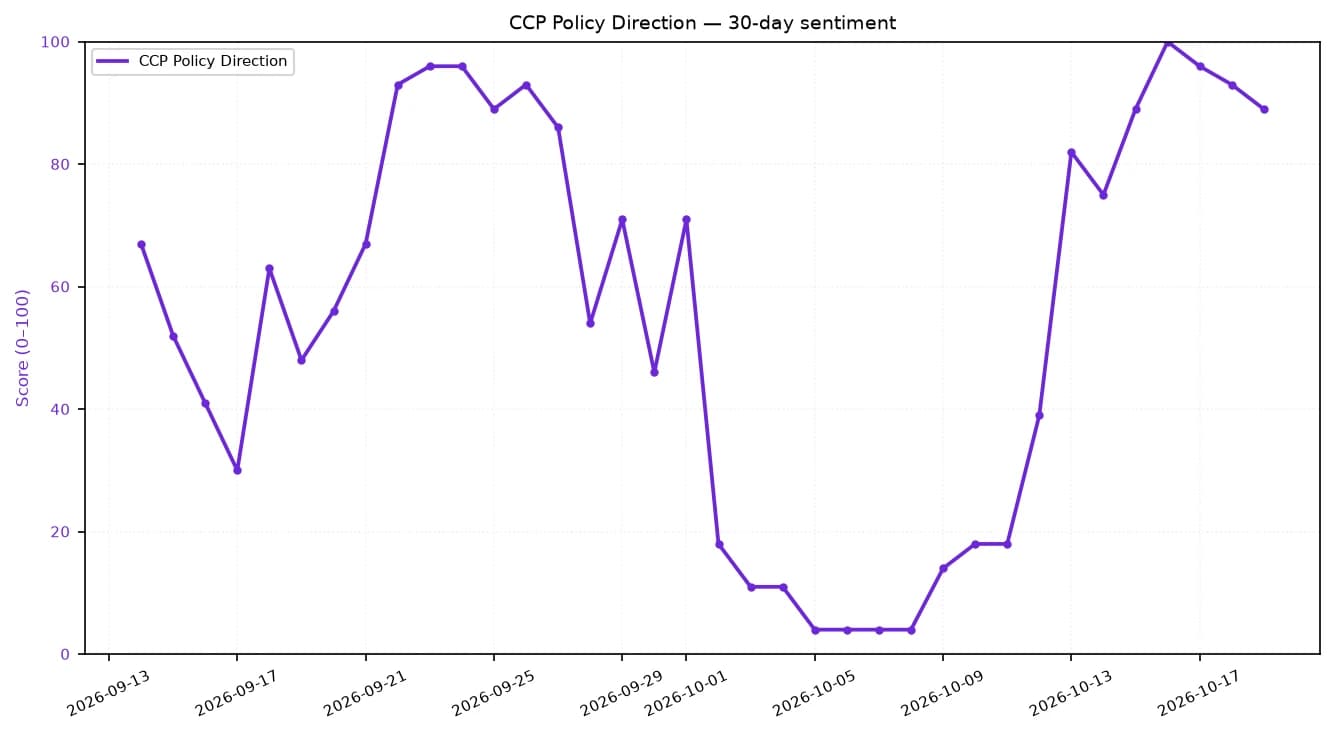
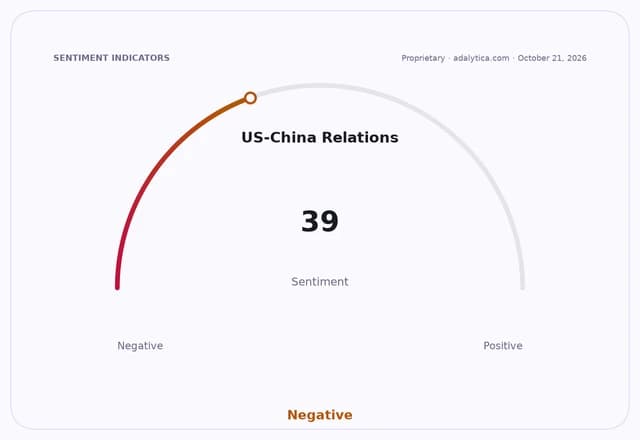
Sentiment IndicatorsⓘProprietary · adalytica.com · October 21, 2026
This is a snapshot — live sentiment, awareness and momentum for 130+ markets update continuously in the dashboard.Open AlphaPulse
The diplomatic pressure comes after the latest round of U.S.-China talks in Bangkok and follows the October 13 decision by China’s central bank to let Visa prepare for a wholly owned domestic card-clearing business. Mastercard already runs yuan-denominated card services through a joint venture with NetsUnion, but full approval would allow it to operate independently and capture more economics from a market that is still tightly controlled. Citigroup’s application for a wholly owned securities license has been pending for years, underscoring how slowly Beijing has moved even as it has eased foreign ownership rules in parts of finance since 2018.
For investors, the immediate takeaway is that Washington is trying to convert a fragile détente into incremental commercial wins for U.S. financial firms. The market is likely to read that as a modest positive for Mastercard and Citigroup, but the real significance is broader: even limited openings in China can improve sentiment toward cross-border financial flows, foreign participation and the prospects for more selective liberalization in a sector Beijing has historically guarded closely.
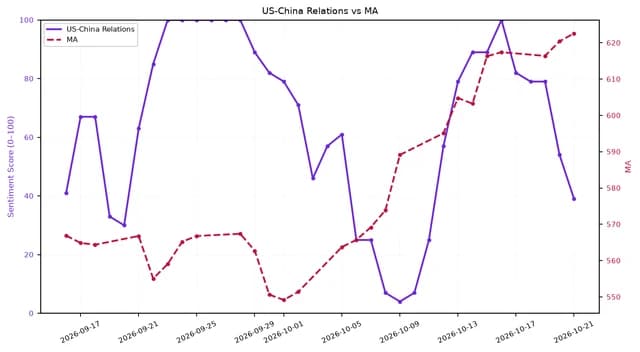
The market backdrop supports that interpretation. China equities have steadied as policymakers try to support the stock market and stabilize financial conditions, while investor mood around U.S.-China relations has improved only slightly from deeply defensive levels, according to Adalytica’s sentiment gauges. That leaves plenty of room for any concrete licensing progress to matter, especially if it signals Beijing is willing to make targeted concessions ahead of a planned Trump-Xi meeting at the APEC summit in November.
Mastercard’s stock has rallied sharply this year and now trades near the upper end of its recent range, while Citigroup has also been stronger, but both remain vulnerable to shifts in policy and global risk appetite. The technical picture shows Mastercard extended after a powerful run, with its 50-day moving average well below the current price, while Citigroup has pulled back from recent highs, suggesting the market has not yet fully priced a durable China re-opening story for either name.
The bigger investment thesis is that a narrow China market-access thaw could become an underrated catalyst for global payments, U.S. banks and other infrastructure providers that benefit when capital and commerce flow more freely. If Beijing follows through, the winners are not just Mastercard and Citigroup, but also investors positioned for a slow, uneven normalization of U.S.-China financial ties.
| Entity | Gains | Losses |
|---|---|---|
| Mastercard | ▲China clearing access | ▼State-backed rivals lose share |
| Citigroup | ▲Securities license, fees | ▼Local brokerages face competition |
| Visa | ▲First-mover advantage | ▼Mastercard lags if delayed |
| China regulators | ▲Trade détente, investor confidence | ▼Less control over market access |