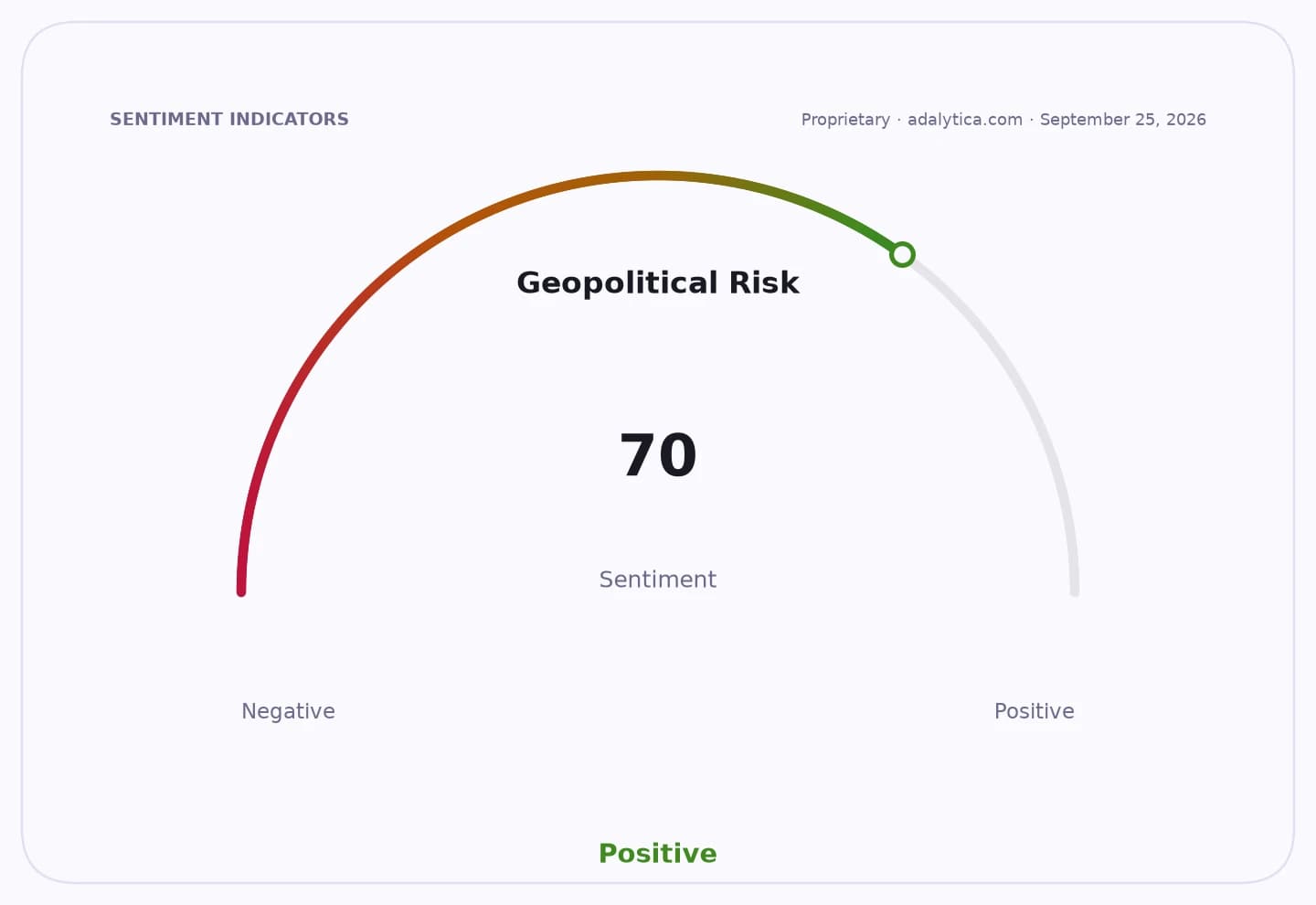
Mauritius’ price index climbed 2.4% in the second quarter, reinforcing the view that inflation is still running hot enough to keep pressure on household budgets, corporate margins and the central bank’s policy path.
Mauritius Inflation Keeps Policy Cautious
The rise matters economically because even a modest quarterly increase compounds quickly in an import-reliant economy like Mauritius, where fuel, food and transport costs feed through fast to consumers and businesses. It also leaves policymakers with less room to ease financing conditions if inflation expectations remain sticky.
Sentiment IndicatorsⓘProprietary · adalytica.com · July 17, 2026
This is a snapshot — live sentiment, awareness and momentum for 130+ markets update continuously in the dashboard.Open AlphaPulse
For investors, the key question is whether the latest increase marks a temporary bump or the start of a broader price cycle that could weigh on real spending and demand-sensitive sectors. Higher inflation tends to hit consumer discretionary names, retailers and companies with weak pricing power, while benefiting firms able to pass on costs.
The reading comes against a mixed global inflation backdrop in which oil prices have been volatile, the U.S. dollar has weakened and investors are still watching for signs of renewed price pressure. That makes Mauritius’ inflation trajectory especially relevant for local bond yields, rate expectations and imported-cost exposure.
The next catalyst will be whether upcoming price data show the second-quarter increase filtering into the third quarter, which would strengthen the case for a cautious monetary stance and keep rate-sensitive assets under pressure.
| Entity | Gains | Losses |
|---|---|---|
| Price setters | ▲Higher pricing power | ▼Softer demand risk |
| Consumers | ▲— | ▼Lower purchasing power |
| Import-dependent businesses | ▲— | ▼Higher input costs |
| Rate-sensitive assets | ▲Possible policy relief if inflation eases | ▼Tighter-for-longer risk |