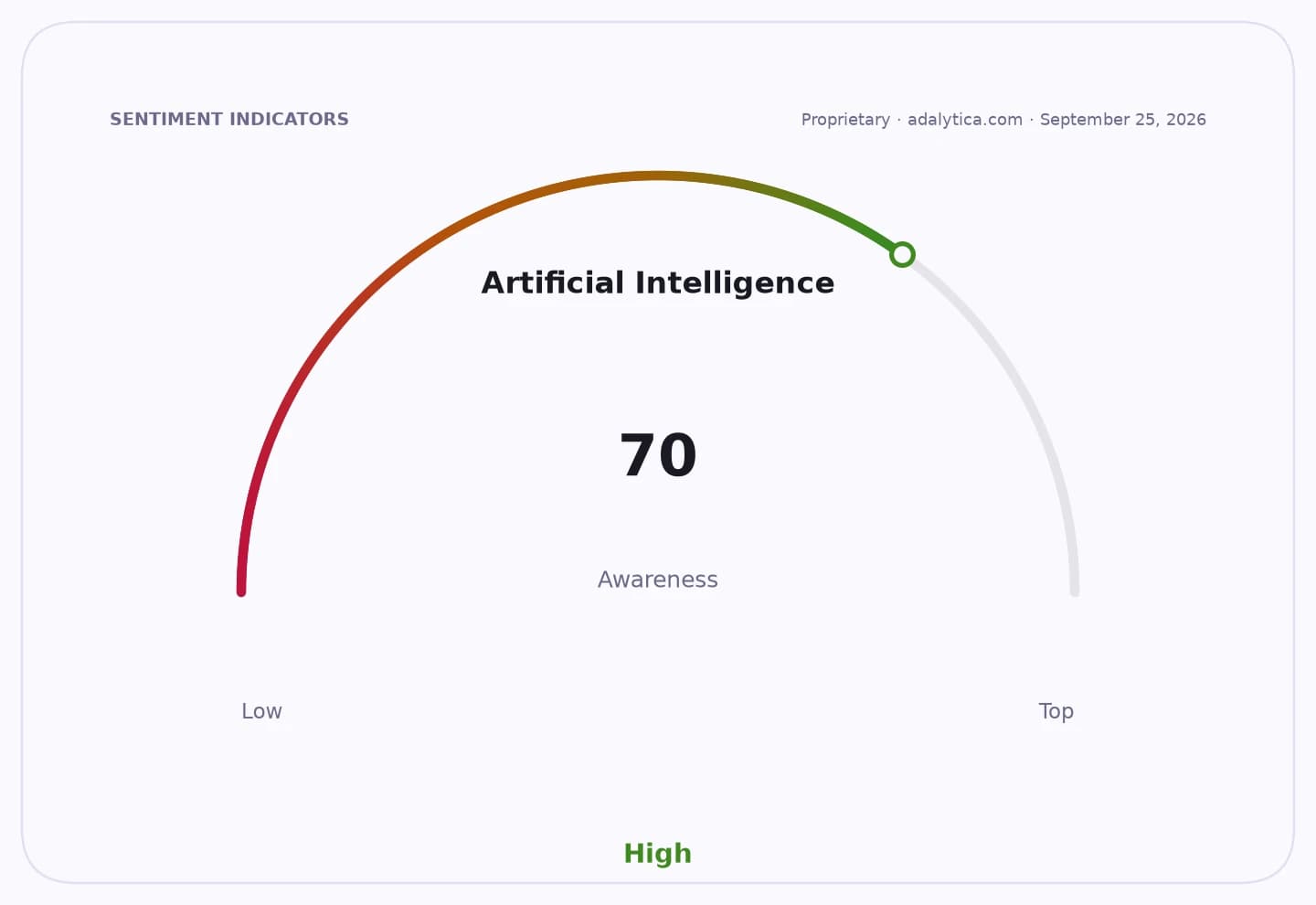
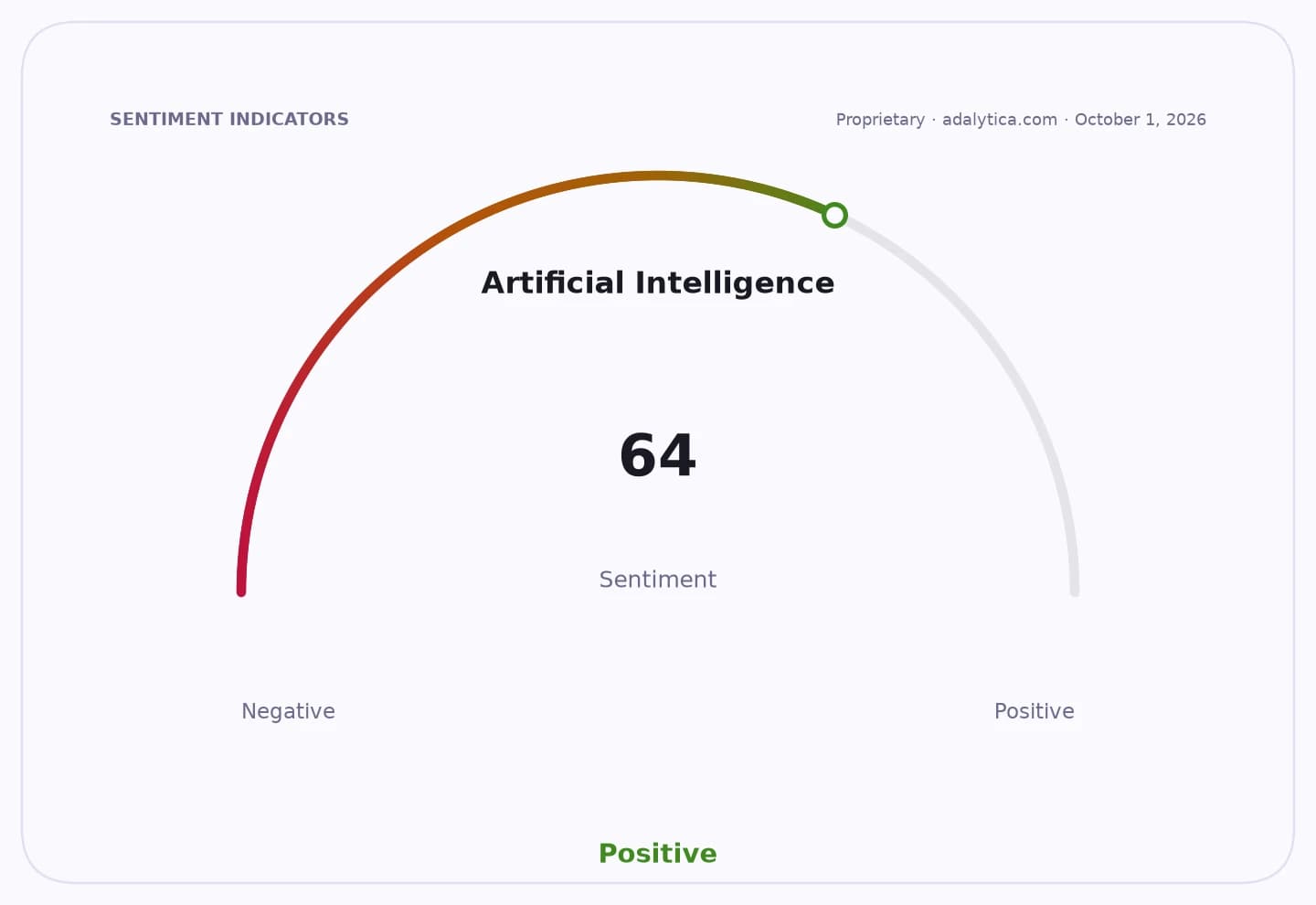
Mercedes-Benz’s production deal with Wayve matters because it moves autonomous-driving software out of the lab and into the factory, turning AI from a promise into a product that could reshape one of the auto industry’s most expensive battlegrounds.
Mercedes-Benz signs Wayve production deal
For investors, that is the key inflection point. Carmakers do not sign production agreements for show; they do it when they believe software can become a differentiating feature customers will pay for, and when the economics of building in-house become less attractive than partnering. In a market that has spent years debating whether driver-assist systems will ever justify their cost, Mercedes is now betting that AI can help defend pricing power, support premium trims and keep it relevant as Chinese and U.S. rivals race ahead on software-defined vehicles.
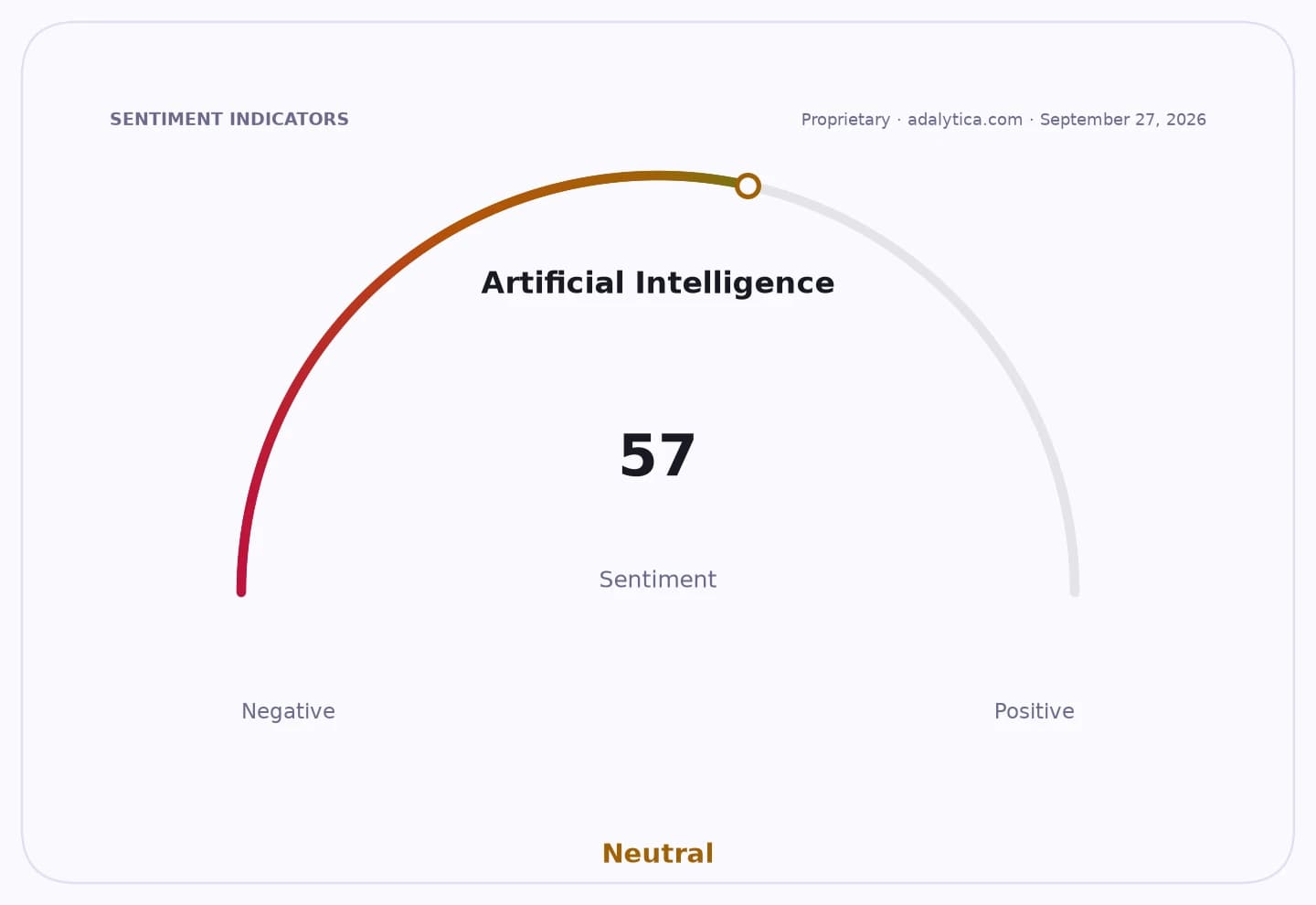
Sentiment IndicatorsⓘProprietary · adalytica.com · September 27, 2026
This is a snapshot — live sentiment, awareness and momentum for 130+ markets update continuously in the dashboard.Open AlphaPulse
The deal also underscores a broader shift in capital spending across mobility. The winners in this next phase may not be the automakers trying to own every layer of the stack, but the infrastructure and compute providers supplying the brains behind it. That is why the story reaches beyond Mercedes and Wayve: it reinforces the case for semiconductor makers, AI model developers, sensor suppliers and cloud-linked tooling that will sit behind the next generation of vehicles. Nvidia, already central to AI infrastructure, remains a direct beneficiary of any push to load more compute into cars, even if the market has recently been skittish on the stock. UBER also stays in focus, because every credible step toward production-grade autonomy increases the long-term pressure on ride-hailing economics and the race to control autonomous fleets.
The timing matters too. Road safety remains a live political and social issue, and regulators are under growing pressure to improve driver-assistance standards after a series of serious accidents and public concern around reckless driving. That makes systems that can reduce human error not just a consumer feature but a policy tailwind. At the same time, the market is still treating autonomous driving as a distant payoff story rather than a manufacturing one. Mercedes’ move suggests the industry is entering a commercialization phase where the real value shifts from headlines about test fleets to recurring software revenue, licensing, and platform control.
That is why I think the market underestimates the second-order trade. If Mercedes can bring AI driving into production, the next wave of demand does not stop at the carmaker’s showroom. It flows into compute, data, mapping, sensors and the industrial software layer that makes these systems reliable enough for mass-market use. The most asymmetric opportunity may be in the picks-and-shovels around autonomy, not the end-user application itself.
For investors, the takeaway is clear: treat this as an early signal that autonomous driving is becoming a real industrial market, not just a speculative tech theme. The companies that enable it — especially those supplying AI compute and automotive software architecture — look positioned for a multi-year capital cycle, while legacy mobility businesses face a slower, more expensive transition.
| Entity | Gains | Losses |
|---|---|---|
| Mercedes-Benz | ▲Software differentiation | ▼Upfront integration costs |
| Wayve | ▲Production validation | ▼Execution and scale risk |
| Nvidia | ▲More automotive compute demand | ▼Margin pressure from competition |
| Uber | ▲Potential autonomy partnerships | ▼Long-term ride-hailing disruption |