Meta is bringing its AI assistant into Threads direct messages, making one-on-one chatbot conversations more private and extending the company’s push to turn AI into a native feature of its social apps.
Meta adds AI chats to Threads direct messages

That matters because the battle for consumer AI is no longer just about smarter models — it is about distribution, frequency and trust. The more seamlessly Meta can embed AI inside the apps people already use, the more it can keep users inside its own ecosystem while creating another surface for engagement, retention and eventually monetization.
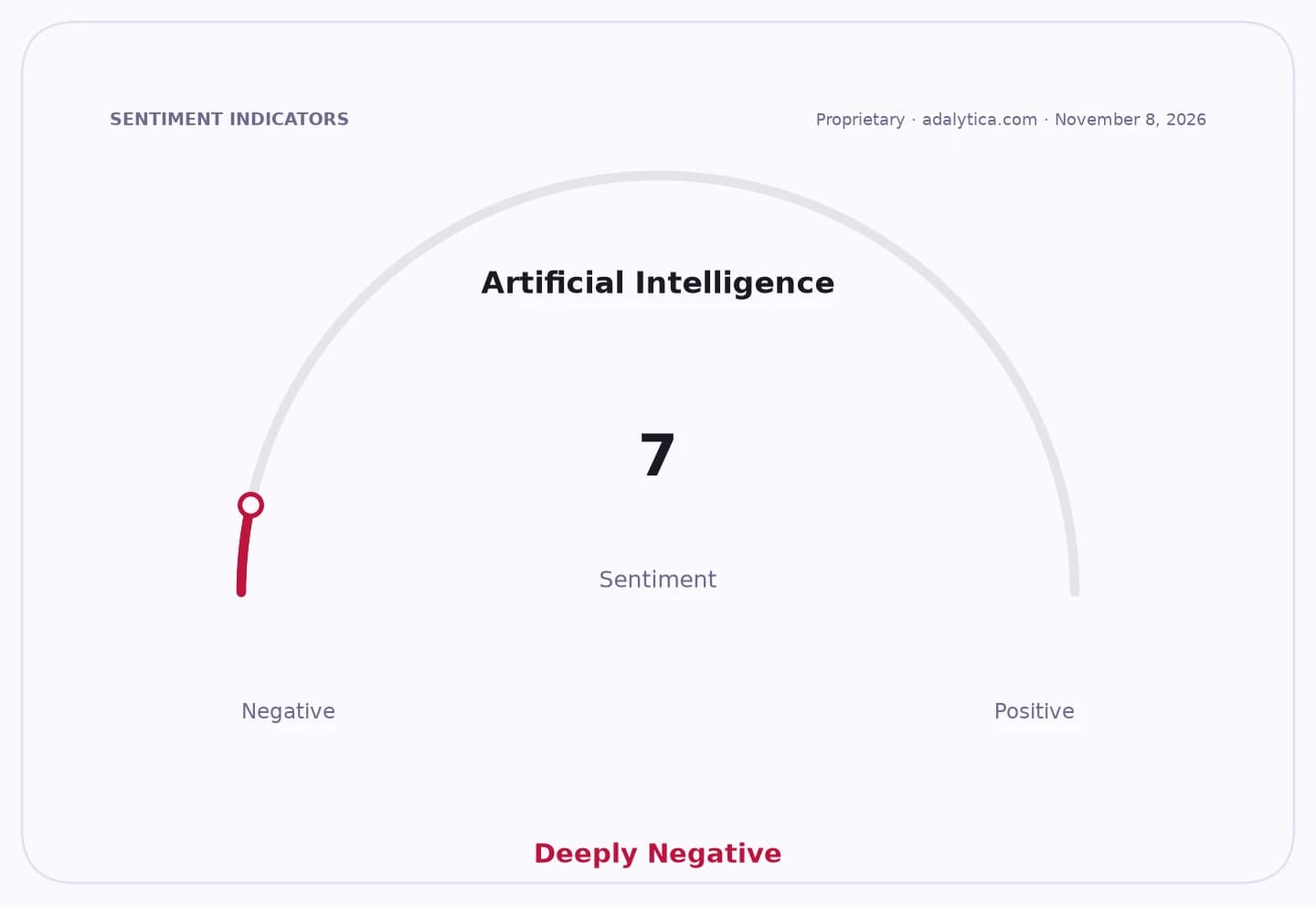
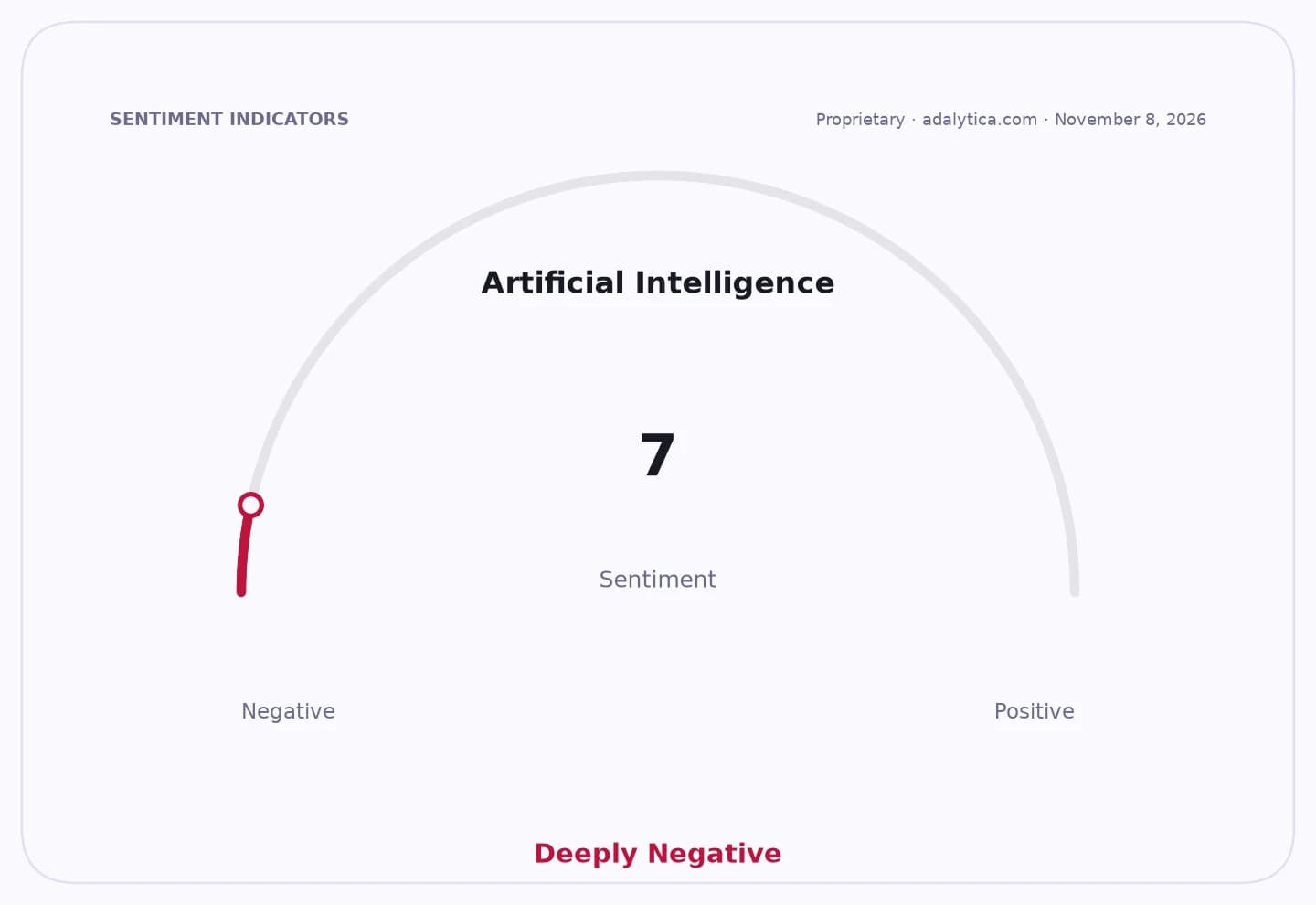
Sentiment Indicators
Artificial Intelligence
The move also fits a broader industry shift toward private, personalized AI interactions. Users increasingly want to query text, images, links and video without broadcasting their questions to a public feed. Meta is responding by threading AI through WhatsApp, Instagram, Facebook and now Threads, giving it one of the widest consumer distribution networks in the AI race.
For investors, that reinforces the bullish case on Meta as an AI infrastructure and consumer platform hybrid. The stock’s recent pullback has taken it from above $760 in October to about $635, with the 50-day moving average still well above the current price, while RSI readings have fallen into oversold territory. That kind of reset can create an attractive entry point when the underlying product cadence is still expanding.
Artificial Intelligence — 30-day sentimentadalytica.com
Explore this data interactively — full history, time series and cross-market comparisons.
The market underestimates how much value Meta can unlock simply by making AI feel native, private and frictionless. Every extra minute in Threads or Instagram strengthens the ad engine, and every new AI touchpoint increases the chance that Meta can layer paid tools, business messaging or creator services on top later. In a market still obsessed with model benchmarks, the real prize is consumer habit.
Competitors are moving too. Snap shares have been choppy around $5.84, but its own filing flags regulatory and privacy pressure on AI and data use, underscoring how central trust has become in social media AI. Alphabet, meanwhile, is also fighting for AI engagement, but Meta’s advantage is that it already owns the social graph and the messaging layer where private AI usage naturally lives.
The bigger narrative is that AI is shifting from a standalone product to a default interface inside communications. That favors the companies with the deepest user relationships, the most daily sessions and the strongest ability to normalize AI as part of conversation. Meta is pushing exactly in that direction, and the market should treat it as a secular product cycle, not a cosmetic feature update.
| Entity | Gains | Losses |
|---|---|---|
| Meta | ▲More engagement and retention | ▼More privacy scrutiny |
| Threads users | ▲Private AI chats | ▼Less public sharing |
| Alphabet | ▲Broader AI demand halo | ▼Less messaging distribution |
| Snap | ▲Validation of private AI use cases | ▼Competitive pressure on social AI |