Meta’s Mark Zuckerberg told Donald Trump he opposed a national AI regulator, putting fresh attention on a fight that could shape how quickly Big Tech can deploy and monetize artificial intelligence in the U.S. The stance matters because a federal referee could determine compliance costs, product rollout speed and how much freedom companies like Meta, Microsoft and Alphabet have to train and ship frontier models.
Meta, Microsoft, Alphabet Face AI Regulation Debate

For investors, the issue is less about Washington symbolism than about margins and valuation. A lighter-touch regime would favor the biggest AI spenders by allowing faster commercialization and fewer constraints on model release, while a new regulator could add oversight, delay launches and raise legal costs across the sector.
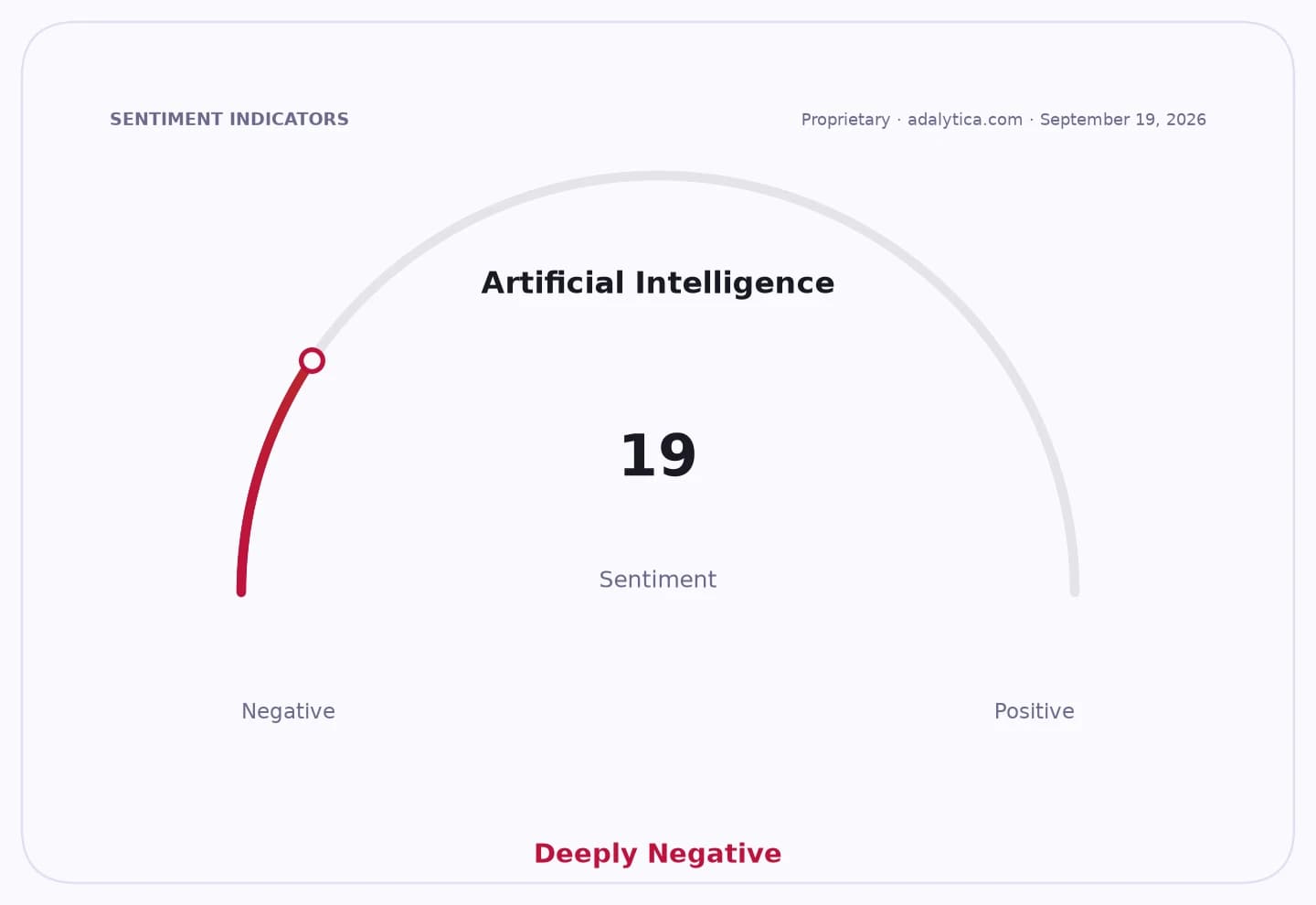
Sentiment IndicatorsⓘProprietary · adalytica.com · September 6, 2026
This is a snapshot — live sentiment, awareness and momentum for 130+ markets update continuously in the dashboard.Open AlphaPulse
The policy backdrop is already turning more restrictive. Europe’s AI rules have started to tighten the global playbook, and filings from Meta, Microsoft and Alphabet warn that evolving AI laws can increase costs, slow deployment and trigger investigations or restrictions on advanced models and cross-border access.
The market is still pricing AI as a growth engine, but the stocks have been volatile as that growth story collides with regulation and heavy capital spending. Meta shares closed at $616.77 on Sept. 4, above their 50-day moving average of $595.49, while Microsoft ended at $499.70, well above its 50-day average of $443.56, and Alphabet finished at $338.46 versus a 50-day average of $348.35. Conventional technical indicators show Meta’s RSI at 69.9, Microsoft’s at 62.8 and Alphabet’s at 44.5, underscoring strength in Meta and Microsoft and more muted momentum in Alphabet.
Artificial Intelligence — 30-day sentimentadalytica.com
Explore this data interactively — full history, time series and cross-market comparisons.Open AlphaPulse
That backdrop explains why AI-related sentiment remains fragile despite the sector’s long-term appeal. Adalytica’s AI sentiment gauge sits in fear territory at 26, while its Microsoft earnings sentiment is in extreme fear at 15, suggesting investors are still wary that regulation, infrastructure spending and margin pressure could temper the AI trade.
The immediate question is whether Washington moves toward a single national framework or leaves oversight fragmented across agencies and states. Either path matters for Meta, Microsoft and Alphabet, but a national regulator would be the most direct test of how far the U.S. wants to let AI scale before the rules catch up.
| Entity | Gains | Losses |
|---|---|---|
| Big Tech AI leaders | ▲Faster launches | ▼Tighter oversight |
| Meta | ▲Policy flexibility | ▼National AI regulator |
| Microsoft | ▲Faster monetization | ▼Higher compliance costs |
| Alphabet | ▲Lighter federal rules | ▼Slower model deployment |