Meta’s new AI pendant is more than a novelty; it is a high-stakes attempt to move artificial intelligence out of the phone screen and into a product people wear all day.
Meta Muse Charm AI Pendant Holiday Launch
The company unveiled Muse Charm, a small pendant that can be worn around the neck or wrist and used for two-way voice interaction with Meta’s new AI model, Muse. It comes with microphones, a speaker, a fingerprint sensor and a tiny display that shows an animated AI character responding as users talk. Meta said the device should be ready for the Christmas and New Year shopping season, with first deliveries expected in December, but it has not yet disclosed pricing or a firm launch date.
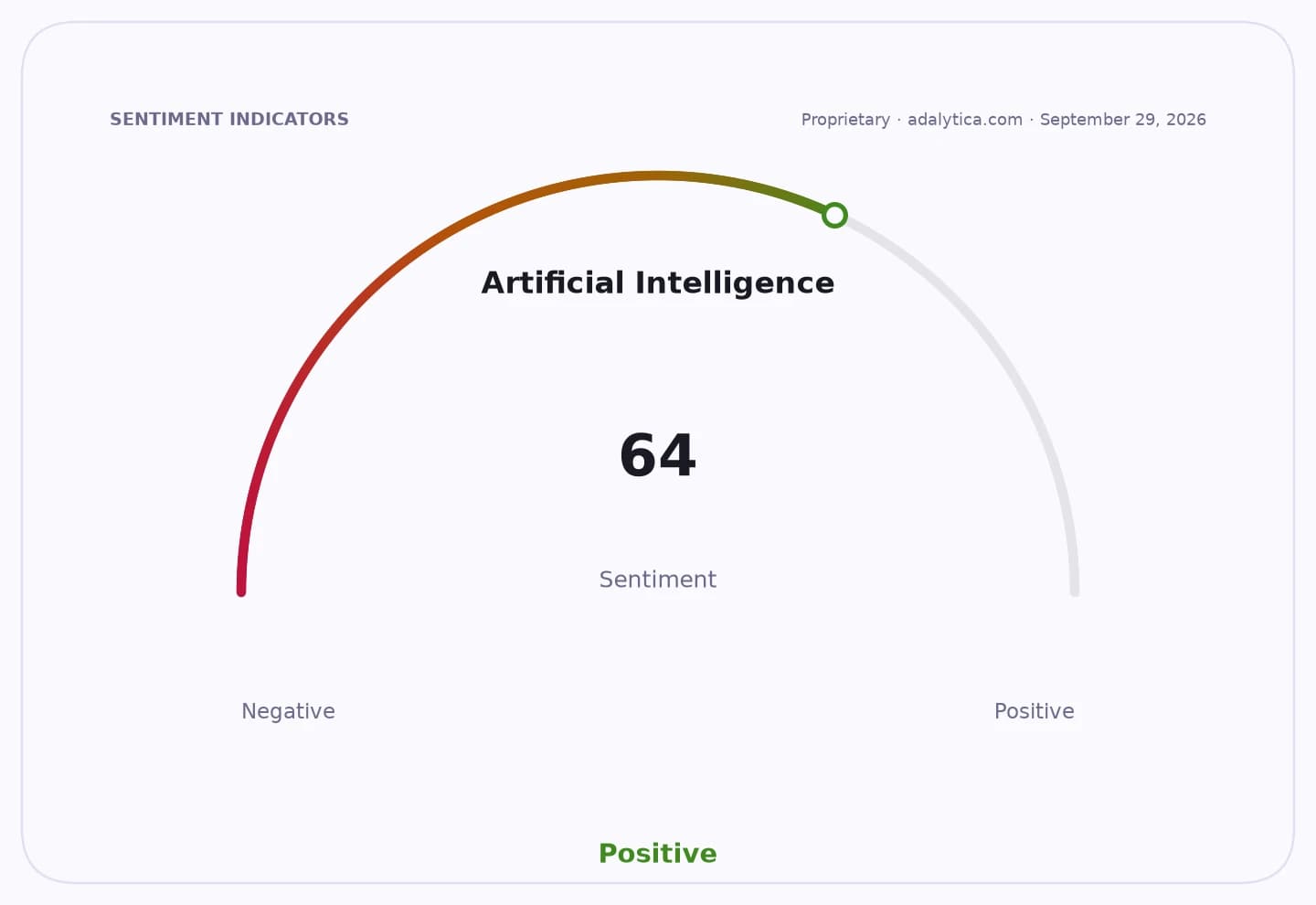
Sentiment IndicatorsⓘProprietary · adalytica.com · September 29, 2026
This is a snapshot — live sentiment, awareness and momentum for 130+ markets update continuously in the dashboard.Open AlphaPulse
For Meta, the device fits a broader strategy that now puts AI and wearables alongside its core social platforms. The company has already told investors in its filings that it is directing efforts toward “next-generation interfaces” and making significant AI investments across its business. That matters because Meta is spending heavily to defend its position in consumer tech while searching for the next hardware category that could create another durable ecosystem around its software and services.
The economic question is whether consumers want a wearable AI assistant enough to justify another hardware bet. The market has already seen attempts at dedicated AI gadgets, and most have struggled to prove they add enough convenience over smartphones to win mainstream adoption. Meta’s pitch is that a pendant is more ambient and immediate than a phone: always accessible, voice-first and less disruptive than opening an app. If that works, it could support a new layer of engagement that strengthens Meta’s AI offerings and potentially creates future revenue streams through device sales, services or stickier user behavior.
For investors, the announcement is less about immediate revenue than about capital allocation, product execution and the scale of Meta’s ambition. Meta shares were recently trading at 719.08, above both the 50-day moving average of 618.20 and the 200-day moving average of 626.08, a sign that the stock has recovered sharply even as the relative strength index has cooled from overbought levels to 63.1. That leaves the market receptive to growth narratives, but also wary of hardware projects that could consume resources without producing meaningful returns.
There is also a strategic read-through for the wider tech sector. Apple remains the incumbent in consumer devices, while Google and others are pushing AI features through phones, software and cloud services rather than a new class of wearables. Meta’s move suggests it still sees an opening to own a more personal AI interface, even if the path to scale is uncertain. The company’s challenge will be proving that a pendant is not just a demonstration of technical capability, but a product people choose to carry every day.
The first test will come in the holiday season. If Muse Charm sells, it could give Meta a foothold in a new consumer hardware category and reinforce the case for its AI spending. If it fails, it will add to the list of experimental devices that drew attention but never escaped the hype cycle.
| Entity | Gains | Losses |
|---|---|---|
| Meta | ▲New hardware ecosystem | ▼Risk of product flop |
| Consumers seeking AI assistants | ▲Hands-free AI access | ▼Privacy and utility concerns |
| Apple and phone incumbents | ▲Less direct impact if device niche | ▼Pressure to answer with wearables |
| Short-term skeptics | ▲Potential for failed launch thesis | ▼Upside if product gains traction |