Meta is adding New York Times Cooking to its AI and display glasses, a small but strategically important move that gives its wearables a more practical use case and could help push the devices beyond novelty into daily utility.
Meta adds NYT Cooking to AI glasses

The integration matters because Meta has been trying to prove that smart glasses can be more than a camera-and-assistant experiment. Cooking is one of the clearest real-world scenarios for hands-free AI: users can follow steps, view ingredients and measurements, and avoid touching a phone with messy hands.
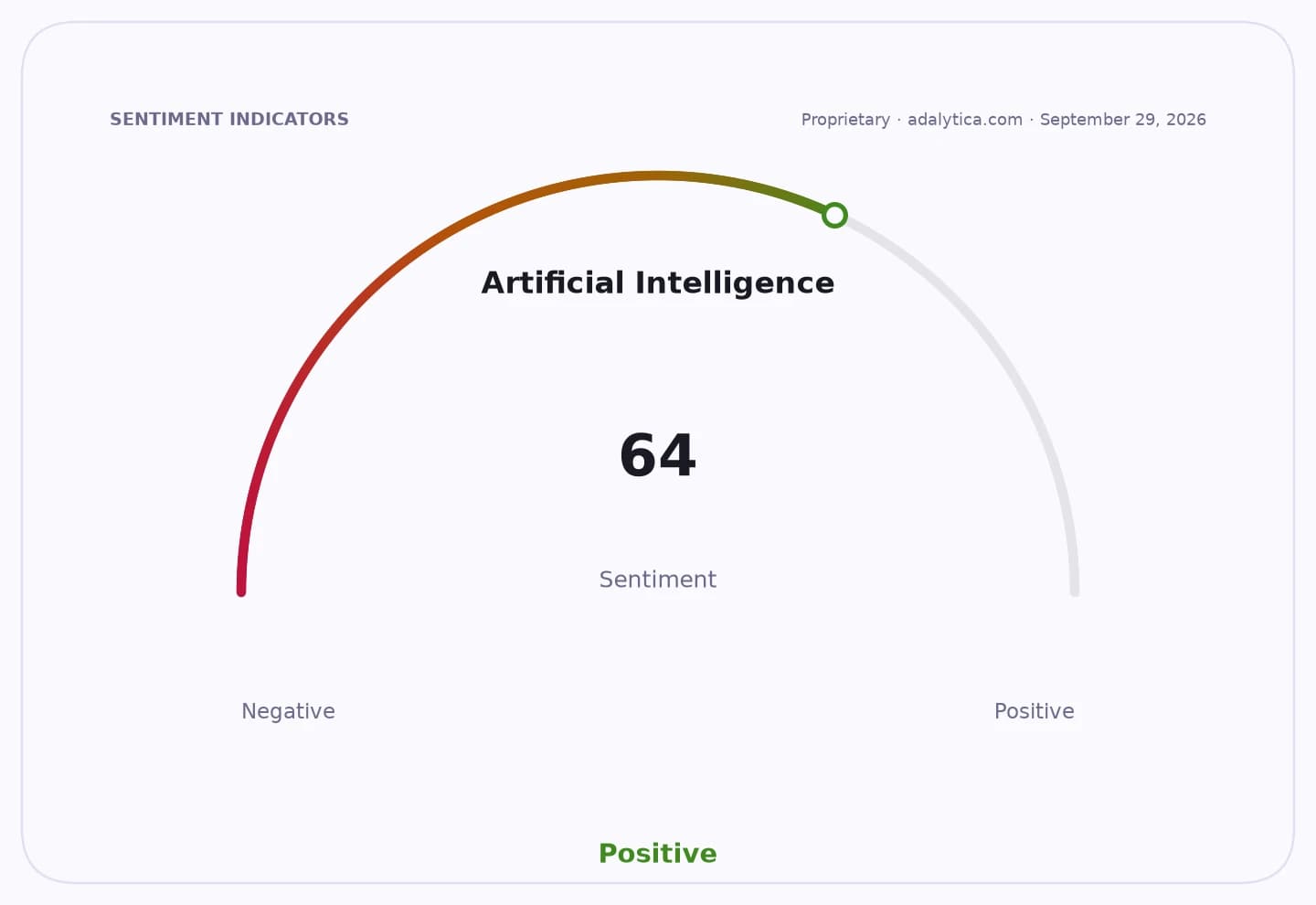
Sentiment IndicatorsⓘProprietary · adalytica.com · September 30, 2026
This is a snapshot — live sentiment, awareness and momentum for 130+ markets update continuously in the dashboard.Open AlphaPulse
The New York Times said the app will get a new hands-free mode that converts longer recipe instructions into brief audio prompts, while Meta’s Ray-Ban Display glasses will show shortened steps on cards that users can swipe through. The feature is expected to roll out later this fall.
For Meta, the partnership adds a recognizable premium content brand to a product category the company sees as a long-term consumer hardware bet. The company already has more than 80% share of the AI glasses market, but it still faces the broader challenge of convincing consumers that wearable AI is useful enough to buy and keep wearing.
That makes app integrations economically important. The more everyday tasks Meta can move onto glasses — cooking, messaging, media and navigation — the more likely it is to increase engagement, support hardware sales and deepen dependence on its platform. It also gives Meta another way to differentiate its glasses from rival wearables that lean more on generic assistant functions.
The stock reaction is unlikely to hinge on this one announcement, but investors tend to reward evidence that Meta’s wearables strategy is becoming more concrete. Meta shares have been volatile, but the stock remains well above its 50-day moving average and near the upper end of its recent trading range, suggesting the market continues to assign value to the company’s AI and device ambitions.
For the New York Times, the deal extends Cooking into another distribution channel and reinforces the commercial appeal of its subscription brands. It also shows how publishers are looking for new ways to embed paid content into AI products without losing control over presentation or attribution.
The next test is execution: whether Meta can deliver a smooth hands-free experience and whether users actually adopt glasses as a kitchen tool rather than a demo feature. If the rollout works, it could become a template for more utility-driven partnerships across Meta’s AI glasses line.
| Entity | Gains | Losses |
|---|---|---|
| Meta | ▲More useful AI glasses | ▼Higher hardware expectations |
| New York Times Cooking | ▲New distribution channel | ▼Some content control complexity |
| Consumers | ▲Hands-free recipe guidance | ▼Reliance on wearable hardware |
| Rival wearable makers | ▲Little immediate upside | ▼Meta’s feature lead widens |