Trump’s midterm defeat matters because it weakens his political leverage, but not enough to stop the policy pressure on Mexico, trade and border security that markets care about most.
Mexico assets face U.S. pressure after Trump setback
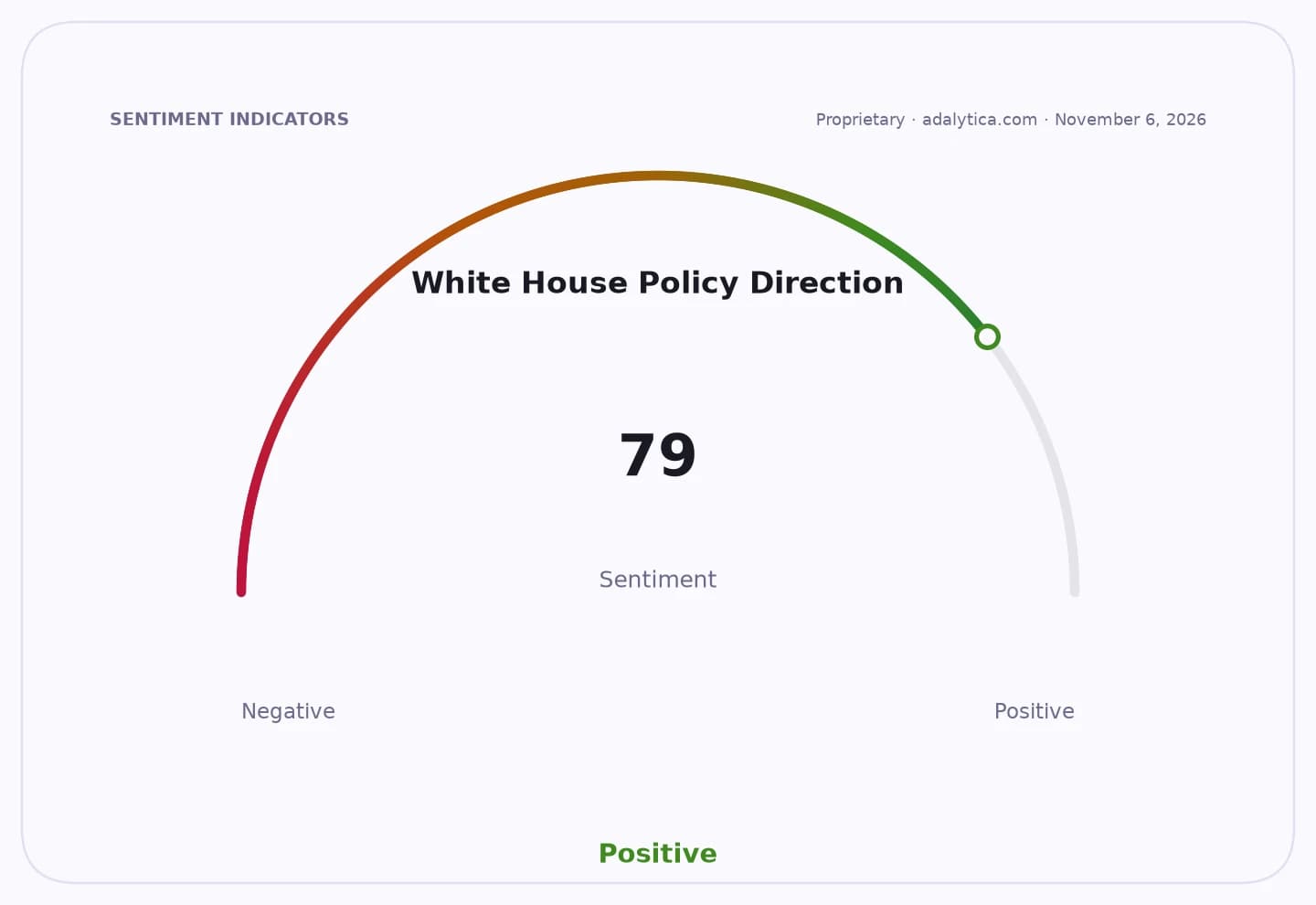
White House Policy Direction
The bigger economic point is that a president facing a more hostile Congress loses room to push domestic legislation, yet keeps substantial authority over security, tariffs and foreign policy through the executive branch and the courts. That means investors should not expect the election result to automatically unwind the White House’s hard line on Mexico, even if Trump emerges politically diminished and his MAGA movement takes a hit.
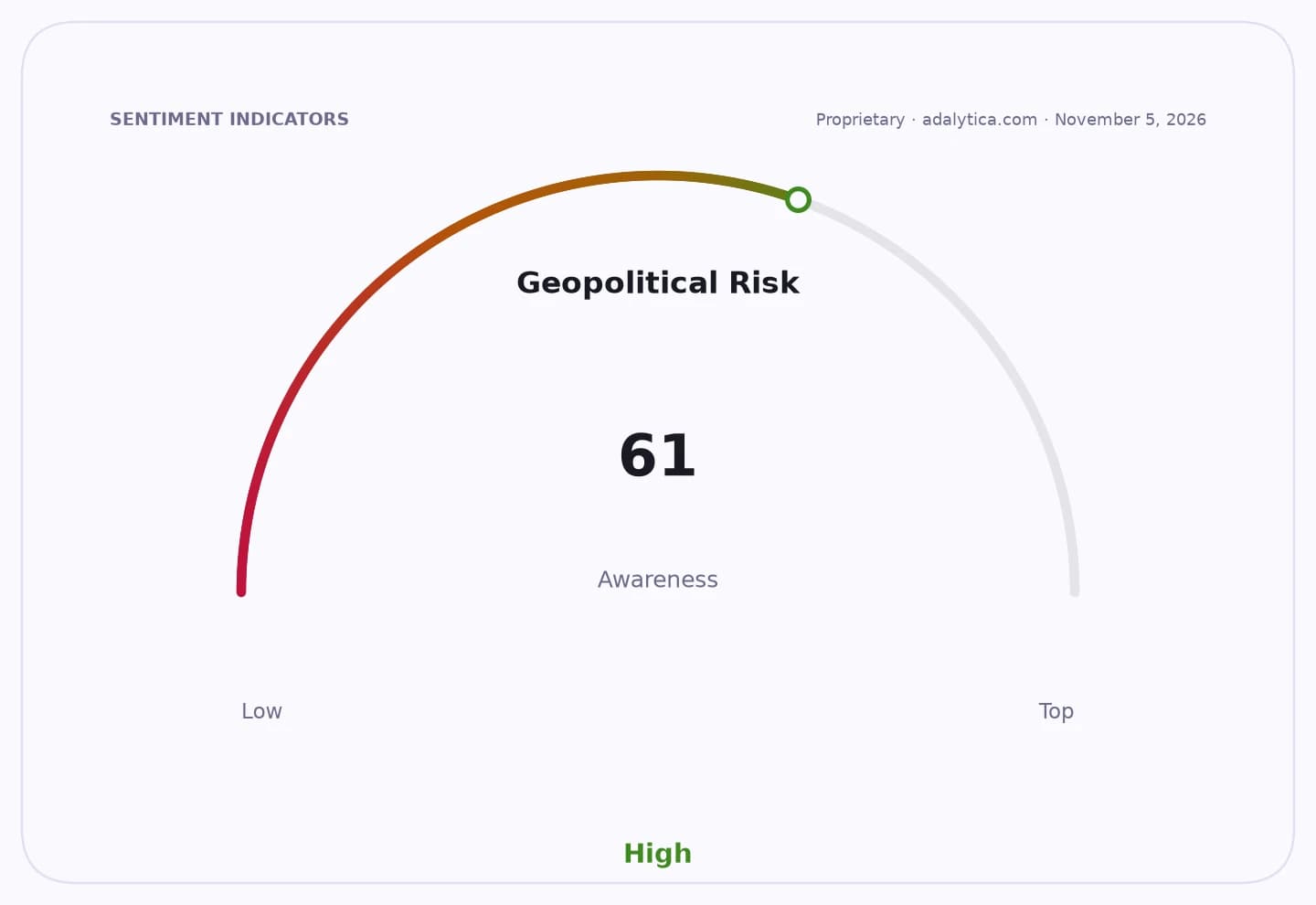
Sentiment Indicators
For markets, that distinction is crucial. Mexican assets, exporters and companies with cross-border exposure were always vulnerable to the idea that Washington could pivot quickly on tariffs, investigations or demands for extraditions. The article’s central message is that those risks remain alive because trade disputes are likely to be fought in the judicial arena, where Trump has been stronger, while the Justice Department and State Department can still press Mexico on drug trafficking and politically connected suspects.
Mexico’s government, meanwhile, has some room to resist. Claudia Sheinbaum has already shown more willingness than the market feared to harden her stance, and the report argues that a rupture between Mexico City and Washington is still unlikely because both sides need cooperation on border enforcement and security. That reduces the odds of an all-out diplomatic break, but it does not remove the risk of selective escalation around arrests, extraditions and legal cases.
That is why investors should focus less on the headline political loss and more on the second-order effects. A weaker Trump may change the style of U.S. pressure, but not the substance. With Republicans still facing a reduced hand in Congress and Trump barred from reelection, the policy mix becomes more unpredictable, not less: tariff threats, court fights and enforcement actions can continue even without legislative momentum.
The investable implication is straightforward. This is not a clean “risk off” or “risk gone” event. It is a reminder that North America remains a geopolitical trade zone, with Mexico exposed to U.S. legal and security pressure even after a Republican setback. That keeps a floor under volatility in the peso, Mexican equities and nearshoring beneficiaries, while preserving upside for exporters and infrastructure names that benefit from any long-term supply-chain shift toward Mexico.
For U.S. markets, the broader backdrop still favors large-cap resilience over small caps. The S&P 500 has reclaimed its 50-day moving average and sits above its 200-day average, while the Russell 2000 remains more fragile despite recent recovery. That split says investors are still rewarding scale, pricing power and balance-sheet strength over cyclical optimism. In other words, the market is preparing for policy noise, not for a clean macro reset.
The trade now is to stay positioned for volatility, not certainty. If Trump’s defeat limits his political momentum, it may reduce the odds of a dramatic rupture, but it does not eliminate the hard-edged U.S. pressure campaign that matters most for Mexico-linked assets. The best opportunities remain in businesses and funds that can benefit from supply-chain reconfiguration, border-security spending and cross-border logistics, while avoiding names that depend on a quick normalization of U.S.-Mexico relations.
| Entity | Gains | Losses |
|---|---|---|
| Mexico nearshoring winners | ▲Supply-chain inflows | ▼Policy volatility |
| Mexican government | ▲More room to resist | ▼More U.S. pressure |
| U.S. hardliners | ▲Enforcement leverage | ▼Congressional clout |
| Mexico-linked exporters | ▲Long-term re-routing | ▼Short-term uncertainty |