Mexico’s stock-market proxy has become the dominant emerging-market haven in this data set, while China’s large-cap ETF remains under pressure and Brazil has given back part of an earlier surge. The split matters because it captures a broader rotation in investor preference: capital is favoring countries with comparatively steadier policy backdrops and away from markets where growth, politics or corporate leverage look less predictable.
Mexico EWW Holds Above Key Averages
Mexico-focused EWW closed at $75.01 on Aug. 14, holding well above its 200-day moving average of $73.36 and only slightly below its 50-day average of $75.81. That leaves the fund in a technically constructive range even after a modest two-day pullback from $75.45. RSI at 47.7 suggests the rally has cooled from the overbought readings seen earlier in the year, but not decisively reversed, while the MACD remains positive. For investors, that combination usually points to consolidation rather than a trend break.
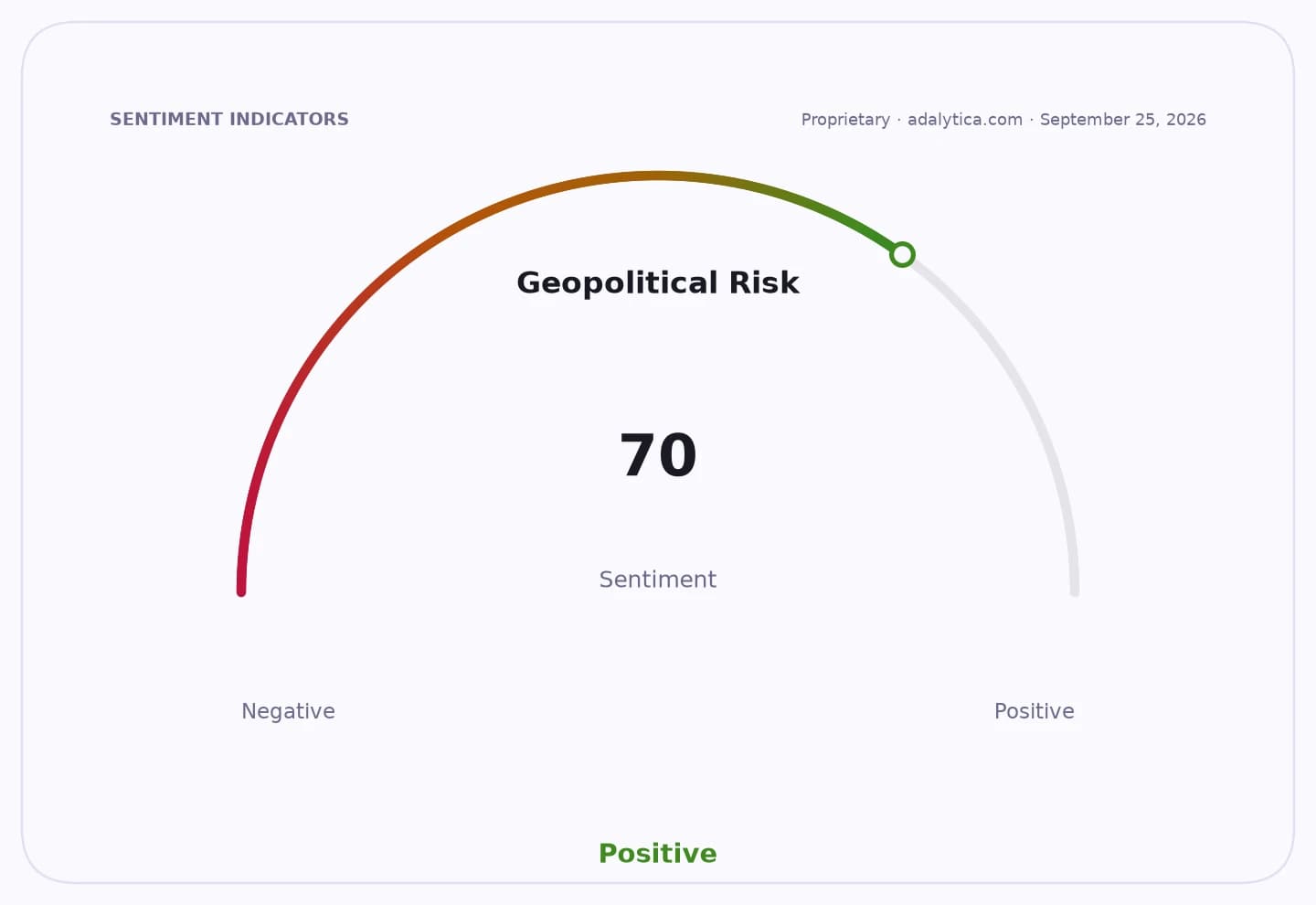
Sentiment IndicatorsⓘProprietary · adalytica.com · August 18, 2026
This is a snapshot — live sentiment, awareness and momentum for 130+ markets update continuously in the dashboard.Open AlphaPulse
Brazil’s EWZ looks weaker. The fund ended at $33.93, below both its 50-day average of $34.91 and its 200-day average of $35.19, with RSI at 30.7 indicating the market is close to oversold territory. The technicals suggest some value hunters may start circling, but they also show that the prior advance has faded. Volume remains elevated enough to imply conviction, not just noise, and the fund has not yet reclaimed the levels needed to confirm a durable rebound.
China’s FXI is the weakest of the three on a trend basis. It finished at $34.89, above the lower end of its recent range but still under its 200-day moving average of $36.80. The ETF is off its earlier highs, and the gap between price and long-term trend underscores why many global managers remain selective on China despite periodic tactical rebounds. With RSI at 45.1, the fund is neither washed out nor momentum-driven, which tends to keep sidelined capital on the fence.
The macro narrative behind the move is that emerging-market positioning is being shaped less by broad beta and more by country-specific debt, policy and growth concerns. The “number one debtor” framing in the seed headline points to a market where leverage and refinancing risk are central to the investment case. That matters economically because high debt loads can constrain fiscal policy, limit room for rate cuts and leave governments or corporates more exposed if global funding costs stay elevated. For stock investors, that usually translates into wider dispersion across country ETFs and a premium on balance-sheet quality.
The broader dollar backdrop also matters. Adalytica’s US Dollar Trade Signals show sentiment in “Extreme Fear” even as awareness remains elevated, a mix that often reflects unsettled positioning rather than a clean directional call. A softer dollar would generally support emerging-market assets by easing financial conditions and helping capital flow back into higher-yielding markets. But that tailwind is not enough to erase country-level concerns, especially where debt burdens are already part of the story.
For investors, the key question is whether the current split is a temporary technical correction or the start of a more durable allocation shift. EWW’s relative resilience argues for Mexico staying on watchlists, EWZ’s weakness keeps Brazil in the recovery camp, and FXI’s inability to regain its long-term trend keeps China in the penalty box for now. The next catalyst will be whether local policy, growth data or debt headlines reinforce that divergence or pull the group back into a common trade.
| Entity | Gains | Losses |
|---|---|---|
| EWW | ▲Relative strength | ▼Bulls facing consolidation |
| EWZ | ▲Oversold bounce potential | ▼Momentum traders |
| FXI | ▲Tactical traders | ▼Long-term trend followers |
| USD | ▲Safe-haven demand | ▼EM currency borrowers |