Mexico’s inflation fight is proving harder to win because the most stubborn price pressures are still showing up where consumers feel them most: on the grocery bill, at the pump and in basic household spending.
Mexico inflation stays sticky in July, Banxico cautious
That matters because inflation is no longer just a headline macro variable in Mexico — it is shaping how much real income families have left to spend, how fast the central bank can ease policy and which consumer companies can keep volumes growing without sacrificing margins.
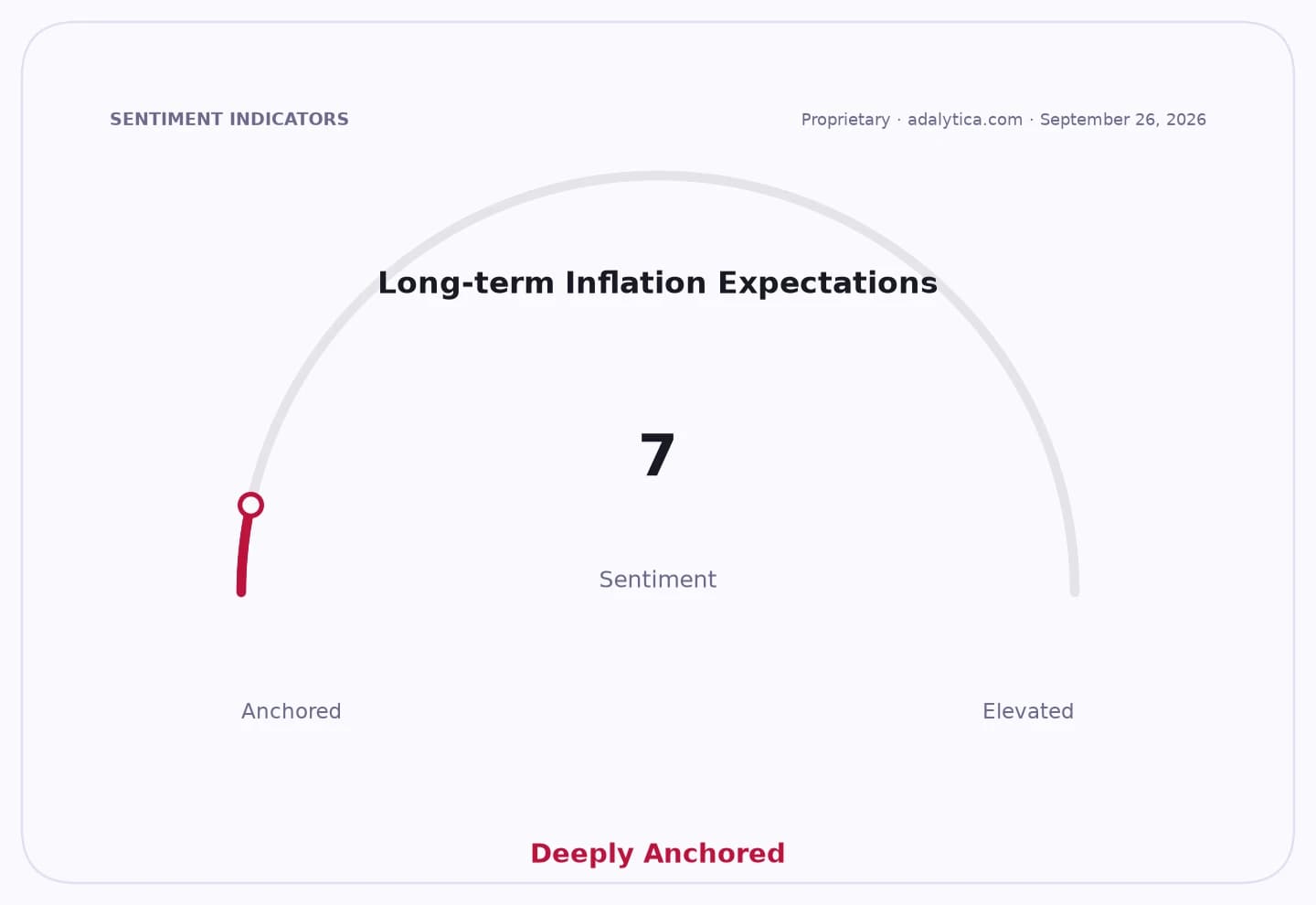
Sentiment IndicatorsⓘProprietary · adalytica.com · August 7, 2026
This is a snapshot — live sentiment, awareness and momentum for 130+ markets update continuously in the dashboard.Open AlphaPulse
INEGI’s latest price data point to a mixed picture. The broader inflation backdrop has cooled from its worst spikes, but the underlying trend remains uncomfortable. Using the official CPI series, the July reading is expected to rise 0.89% month on month to 335.512, after June slipped 0.42% to 332.568. The core gauge, which strips out volatile food and energy, is seen up 0.33% to 337.1758, after essentially flat readings in May and June. Producer prices are also set to rebound 3.14% in July after June fell 1.26%, a reminder that cost pressure is not gone — it is moving back up the chain.
That is the key economic story: even as some shelves have stabilized, inflation in Mexico remains broad enough to keep the Bank of Mexico cautious. The central bank has already held its benchmark rate at 6.5% and pushed back its timeline for returning inflation to target, signaling that officials do not yet trust the disinflation trend. For investors, that means rates may stay restrictive longer than the market would like, keeping pressure on domestic demand, credit growth and rate-sensitive sectors.
The consumer impact is also the most investable part of this story. When inflation lingers, households trade down, buy less discretionary merchandise and stretch every peso further. That helps discount retailers, warehouse clubs and value-oriented grocers, while squeezing premium brands and any business reliant on stronger traffic or pricing power. Walmart de México, Costco and other mass-market retailers are positioned to capture share if shoppers continue shifting toward cheaper alternatives. At the same time, food producers and packaged-goods companies face a tougher balancing act: input costs remain elevated, but their ability to pass them through is limited by weaker purchasing power.
The broader narrative is not that Mexico is re-entering an inflation shock. It is that inflation is becoming sticky enough to delay a full policy normalisation and keep consumer behavior defensive. That is precisely where the next investment opportunities tend to emerge: not in the obvious inflation winners, but in the businesses that profit when value matters more than variety and volume matters more than margins.
For investors, the takeaway is clear: stay positioned for a Mexico economy where inflation relief is incomplete, rates remain high and the best relative winners are the retailers and consumer staples players that can serve a pressured household without losing pricing discipline.
| Entity | Gains | Losses |
|---|---|---|
| Walmart de México | ▲Value-seeking shoppers | ▼Premium retailers |
| Costco Mexico | ▲Trade-down demand | ▼Discretionary brands |
| Mexican households | ▲Some shelf stability | ▼Real purchasing power |
| Bank of Mexico | ▲Policy flexibility later | ▼Faster rate cuts |