AI-driven cloud expansion is making emissions management a more direct operating issue for Microsoft, Amazon and Alphabet, as the real lever for decarbonising public cloud shifts from reporting to how efficiently workloads are run and where they are placed.
Microsoft, Amazon, Alphabet Cloud Emissions Focus
The core economic point is that cloud carbon is no longer just a disclosure exercise. As enterprise and government customers add more AI-heavy workloads, power demand rises with it, and so do the costs and emissions tied to datacentre utilisation, site selection and infrastructure sizing. That puts operators in the position of having to manage carbon the same way they manage performance and cost: by right-sizing capacity, improving utilisation and shifting workloads to lower-carbon grids where response times and reliability allow.
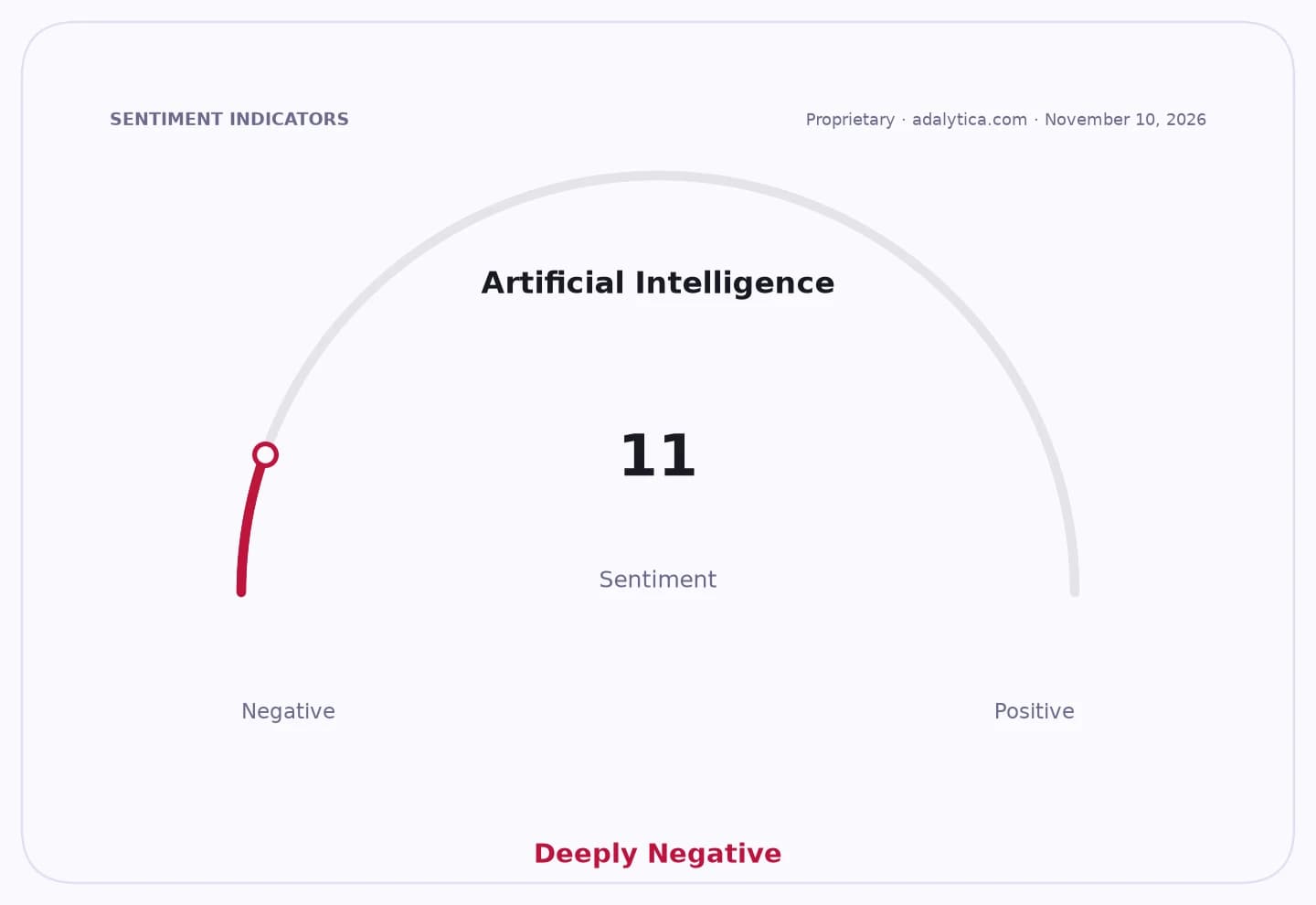
Sentiment Indicators
That matters because the operating room for emissions cuts is large. Uptime Institute says companies that actively track capacity and utilisation can reduce energy use and associated carbon emissions by up to 40% through right-sizing CPU and memory resources and maximising utilisation. For cloud buyers, that creates a tangible path to interim carbon targets without waiting for a perfect grid mix. For providers, it reinforces that efficiency gains and cleaner power procurement are becoming part of the product, not just a sustainability side project.
The report also underscores a split in responsibility that has often been blurred in corporate climate accounting. Cloud providers such as Microsoft, Amazon Web Services and Google Cloud control datacentre efficiency, energy sourcing and embodied emissions in infrastructure materials. Customers, meanwhile, control the choice of region, workload architecture and how much compute they actually consume. In other words, both sides own part of the emissions stack, and buyers can no longer credibly outsource the whole problem to the provider.
That is increasingly relevant for investors because the cloud giants are already spending heavily to support AI infrastructure, and that spending is colliding with scrutiny over margins, power availability and clean-energy claims. Microsoft shares have risen to about $520 after trading above $555 earlier in the month, while Amazon has held around $267 and Alphabet near $292, but those moves sit against a broader market still trying to judge how much AI capex can be monetised without eroding returns. Cloud carbon strategy is now linked to that question: inefficient infrastructure consumes more electricity, raises unit costs and can slow the payback on new AI capacity.
The more immediate investment implication is that carbon performance may become a differentiator in enterprise cloud procurement. Customers under pressure to hit net-zero goals will increasingly ask for emissions estimates tied to actual workload placement and documented before-and-after energy use, not just annual dashboard totals. That should favour providers with better telemetry, more efficient hardware and stronger renewable-energy access. It also raises the bar for smaller operators and carbon-accounting vendors whose tools are useful only if they can translate into operational changes.
There are limits, however. Carbon-aware workload placement software remains early-stage and is not yet widely proven, which means many of the easiest gains still come from basic operational discipline rather than automation. And while the argument for cleaner site selection is straightforward, it is constrained by latency, reliability and customer-facing service levels. For critical workloads, cost and performance will still outrank emissions.
The broader narrative is that public cloud decarbonisation is moving from a compliance debate to an optimisation problem. The winners will be the operators and providers that can lower energy intensity without sacrificing speed or uptime. The laggards will be those that keep treating emissions as an accounting output rather than a variable that can be engineered down through infrastructure choices.
| Entity | Gains | Losses |
|---|---|---|
| Microsoft, Amazon, Alphabet | ▲Better cloud efficiency, lower unit emissions | ▼Higher scrutiny on AI power use |
| Cloud customers | ▲Lower emissions, potential cost savings | ▼More workload-management responsibility |
| Clean-energy providers | ▲More demand for low-carbon power | ▼Fossil-heavy grids and slow decarbonisation |
| Carbon-accounting laggards | ▲Less immediate compliance pressure | ▼Reduced credibility with investors and buyers |