Edge-cloud infrastructure for personalized AI in community health care is becoming a strategic battleground because the winners will shape how clinical data is processed, where costs land, and which platforms own the next layer of digital health workflows. For Microsoft, Amazon and Alphabet, that matters less as a software feature than as a way to turn AI spending into recurring cloud demand while giving providers faster, lower-latency tools for triage, care coordination and patient engagement.
Microsoft, Amazon, Alphabet Eye AI in Community Health
The investment case is tied to a simple economic logic: community health systems cannot afford to ship every task back to centralized data centers, especially when workflows depend on near-real-time interaction and privacy-sensitive patient information. Pushing model inference closer to clinics and care sites can reduce latency, limit bandwidth needs and lower the friction of deploying tailored AI tools across distributed networks. It also supports a more scalable form of personalization, where models can be adapted to local populations, languages and care pathways without rebuilding the underlying stack from scratch.
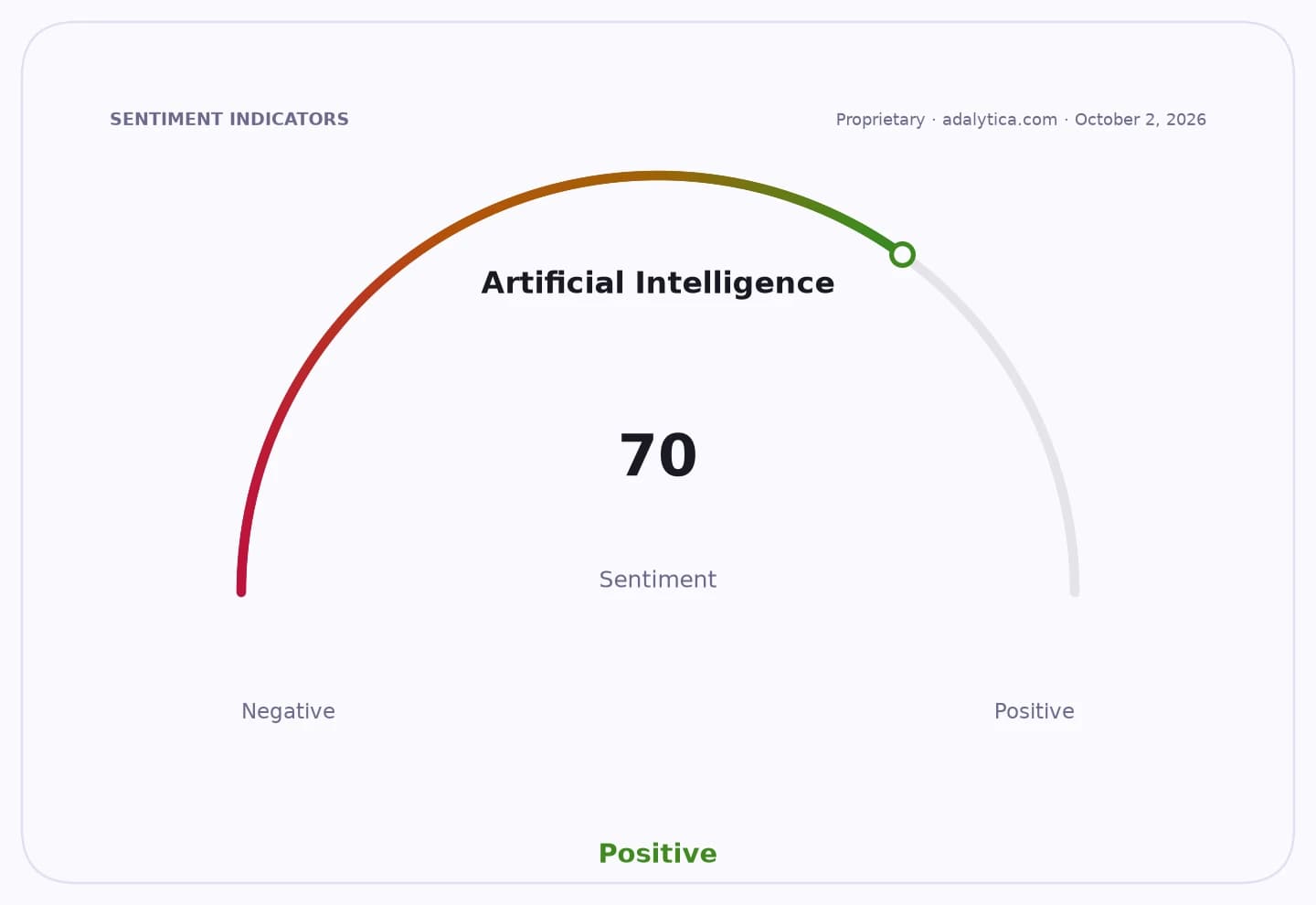
Sentiment IndicatorsⓘProprietary · adalytica.com · October 2, 2026
This is a snapshot — live sentiment, awareness and momentum for 130+ markets update continuously in the dashboard.Open AlphaPulse
That makes the cloud providers’ competition in healthcare infrastructure more than a defensive growth story. Microsoft closed at $512.80 on Oct. 1, well above its 50-day moving average of $484.66 and 200-day average of $431.23, but with RSI at 60.4 and MACD flattening, suggesting the stock has regained momentum even as the market watches whether AI capital intensity can be converted into durable margin expansion. Amazon ended at $248.23, below its 50-day average of $256.19 and only modestly above its 200-day average of $241.22, while Alphabet finished at $338.24, just under its 50-day average of $343.71 and above its 200-day average of $338.36. The setup points to investors still rewarding AI platform exposure, but with less tolerance for execution missteps than earlier in the year.
For Microsoft, the healthcare angle matters because its cloud business and AI stack are increasingly interlinked. The company has framed Azure as a broad platform for secure, enterprise deployment, and that positioning fits the needs of community health providers that want personalization without building their own infrastructure. A successful edge-cloud offering would reinforce Azure consumption, strengthen customer retention and deepen Microsoft’s role in regulated industries where trust, compliance and uptime matter as much as model quality.
Amazon has a different path: its cloud scale and broader healthcare footprint could make it the strongest infrastructure provider if community health networks prioritize cost efficiency and operational simplicity. Yet the stock’s recent pullback shows the market is not assuming every AI use case will translate into immediate returns. Investors will want evidence that healthcare workloads can support higher utilization and sticky contracts rather than just incremental experimentation.
Alphabet is the third leg of the race. Google Cloud’s AI and TPU strategy gives it a credible angle in model deployment, but healthcare remains a highly scrutinized vertical where execution, privacy controls and interoperability determine adoption. Alphabet’s shares have held near record territory, but the recent fade from above 380 in May to the mid-330s suggests investors are still testing whether enterprise AI demand can broaden beyond ad-driven strength.
The larger narrative is that community health care is becoming a proving ground for the economics of personalized AI. If edge-cloud systems can deliver faster decisions, better local tailoring and lower operating overhead, they could unlock a new class of recurring workloads for the hyperscalers and help providers stretch limited staffing and budgets. If the technology proves too complex or too costly to deploy at scale, the market may conclude that healthcare AI is still more pilot project than profit pool.
For investors, the key question is not whether AI will enter community health care, but which platform can make it economical enough to become embedded infrastructure. The company that combines secure deployment, low-latency inference and practical personalization could win a durable share of one of the most operationally sensitive corners of the cloud market.
| Entity | Gains | Losses |
|---|---|---|
| Microsoft | ▲Azure healthcare demand | ▼Investors if AI margins lag |
| Amazon Web Services | ▲Scale in distributed care workloads | ▼Rivals in cloud healthcare |
| Alphabet | ▲TPU-led AI deployment opportunities | ▼Providers if adoption stays slow |
| Community health systems | ▲Faster, tailored AI tools | ▼Legacy centralized workflows |