Microsoft, Apple and Salesforce are no longer competing on cost, scale or adaptability alone — and that is exactly why the next winning edge in technology and in emerging markets may come from who sets the rules, not who merely follows them.
Microsoft, Apple, Salesforce Gain on Standards Shift

The market is beginning to price a more durable kind of competitiveness, one built on standards, ecosystems and execution, rather than incremental efficiency. That matters because when basic advantages in labor, manufacturing scale or even speed of adoption stop being enough, the companies and countries that can turn standards into operating systems for growth tend to capture the highest margins, the stickiest customers and the longest cycles of capital.
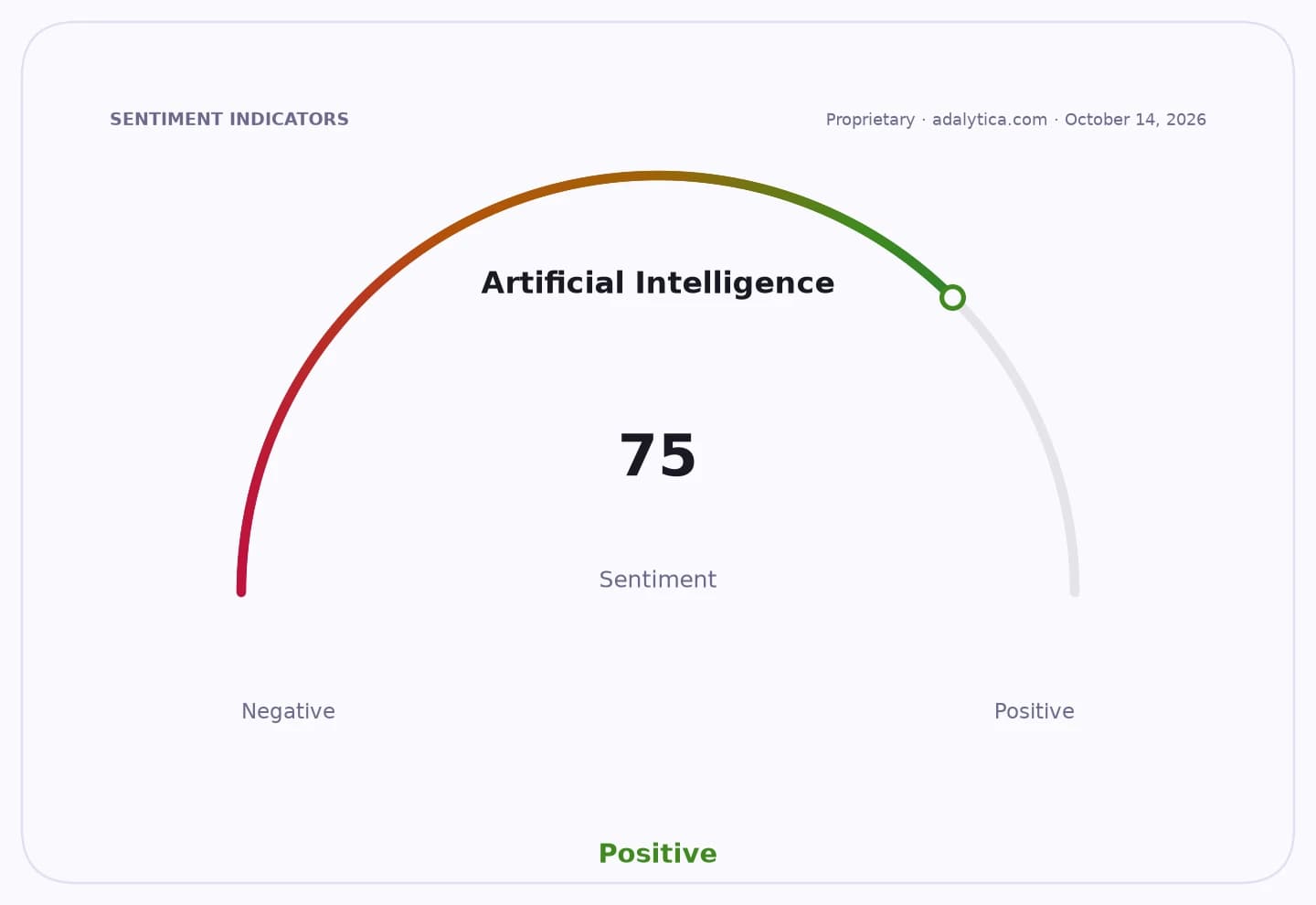
Sentiment IndicatorsⓘProprietary · adalytica.com · October 14, 2026
This is a snapshot — live sentiment, awareness and momentum for 130+ markets update continuously in the dashboard.Open AlphaPulse

That is the same economic logic running through Vietnam Innovation Summit 2026, where the conversation has shifted from meeting international benchmarks to creating them. In a world where carbon accounting, ESG disclosure, supply-chain traceability and technical compliance are becoming the price of entry, the real prize is not certification itself but the ability to embed standards into products, supply chains and institutions. For investors, that is a powerful signal: the next phase of competition will favor businesses that can convert compliance into capability and capability into pricing power.
The implications go well beyond Vietnam. As global capital becomes more selective and trade increasingly rewards trusted, auditable and scalable systems, the countries that can standardize quality across entire ecosystems will become more attractive destinations for investment, production and partnerships. That is especially relevant in Asia, where manufacturers and developers have long competed on cost. The winners in the new regime will be those that can also deliver transparency, resilience and operational discipline at scale.
That is why the 3A framework highlighted around the summit — Adapt, Align, Author — matters economically. Adaptation gets companies into the market. Alignment keeps them in it. But authorship, the ability to create a referable standard, is where competitive advantage becomes structural. Once a practice becomes the benchmark others must follow, it stops being a cost center and starts becoming a moat.
For investors, this is an investable thesis across multiple layers. In the U.S., the strongest software and platform companies are those with ecosystem power and network effects, not just product breadth. Microsoft’s latest trading pattern shows investors still reward that model despite recent volatility, with the stock rebounding to $535.23 after trading as low as $352.17 earlier this year, while Apple has climbed back to $341.88. Salesforce, too, has recovered sharply from a spring trough near $164 to $236.09, underscoring how quickly the market re-rates firms that can restore growth and prove platform resilience.
The same lens applies to the picks-and-shovels behind global standardization: cloud infrastructure, AI tooling, compliance software, industrial software, advanced logistics and data verification. These are the businesses that profit when a market moves from ad hoc competition to rule-based competition. They are also the businesses most likely to benefit if more governments and enterprises adopt carbon tracking, digital traceability and interoperable systems as mandatory infrastructure.
The broader macro backdrop is still favorable to this theme. Adalytica’s Industrial Production Sentiment is at 97, or “Extreme Greed,” suggesting manufacturing and output expectations remain strong, while PMI recession sentiment remains deeply pessimistic at 14, reflecting a market still nervous about growth. That split is exactly where opportunity often emerges: investors are underestimating how much value can be created when industrial activity, policy and innovation all move toward higher standards rather than lower costs.
The takeaway is straightforward. The market is missing the second-order winners of the standards race. I believe the most asymmetric opportunities now sit with companies and markets that can turn compliance into capability, and capability into a repeatable system. In practice, that means looking beyond headline growth names and toward the infrastructure, software and industrial enablers that help entire ecosystems upgrade. The next big winners will not just compete better — they will define what better looks like.
| Entity | Gains | Losses |
|---|---|---|
| Microsoft | ▲Ecosystem pricing power | ▼Pure cost competitors |
| Apple | ▲Premium brand moat | ▼Hardware commoditizers |
| Salesforce | ▲Platform stickiness | ▼Fragmented point solutions |
| Vietnam ecosystem builders | ▲Capital inflows, higher-value FDI | ▼Low-cost assembly model |