Microsoft is winning over investors with a more disciplined AI spending plan even as it pours more than $50 billion a quarter into infrastructure, helped by Azure growth that is still running far ahead of supply.
Microsoft Azure Growth Supports Heavy AI Spending
The software giant’s fiscal first-quarter results on Oct. 28 showed why the stock has held up despite a year of volatility in the broader AI trade. Revenue rose 19% to $92.3 billion and adjusted earnings climbed 18% to $4.89 a share, both above Wall Street estimates, while Azure sales jumped 48% to $33.17 billion and the company guided for even faster 49% to 50% constant-currency growth in the current quarter.
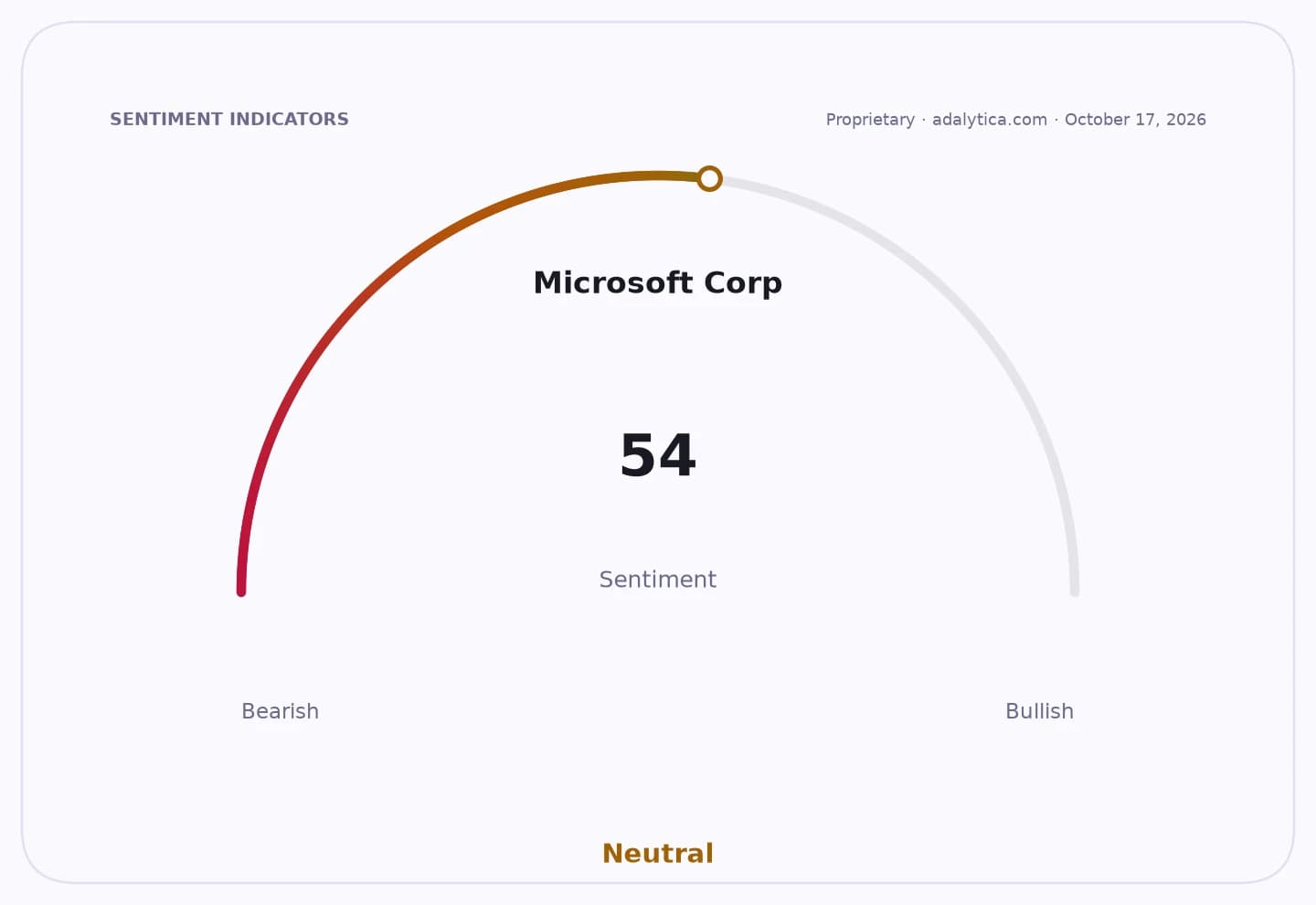
Sentiment Indicators
The bigger story for investors is that Microsoft is pairing that growth with unusually strong visibility. Remaining performance obligations surged 73% from a year earlier to $677 billion, with about 30% expected to convert to revenue over the next 12 months, even as bookings fell 12% and management said demand still outpaces available capacity.
That balance matters in an industry where hyperscalers are racing to build out AI infrastructure and many investors are increasingly wary of overspending. Microsoft spent $45.2 billion on capital expenditures in the quarter and generated $18.6 billion in free cash flow, with about 75% of the outlay tied to short-lived assets such as GPUs and CPUs rather than long-lived facilities, a mix that suggests the company is trying to preserve flexibility.
The company’s newest reporting structure underscores where the growth is coming from. The agents & infrastructure segment, which houses much of the cloud and AI activity, increased revenue 25% to $76.8 billion, while devices & consumer revenue slipped 3% to $15.5 billion.
Copilot is becoming a more meaningful revenue driver, too. Microsoft said Microsoft 365 cloud revenue rose 17% to $27.8 billion, led by an eightfold increase in Copilot customers to more than 50,000 seats, while GitHub agentic AI credit consumption has more than doubled after the company shifted to a consumption-based pricing model.
The spending trajectory remains aggressive. Microsoft said it expects to spend more than $50 billion on capex in fiscal second quarter and about $170 billion for the full year, but investors appear to be rewarding the company’s ability to keep cash generation intact while scaling AI more cautiously than some rivals.
That has made Microsoft look less like a pure AI hardware race beneficiary and more like a software platform that can monetize AI without sacrificing margins as quickly as some peers. At about 22 times fiscal 2028 earnings estimates, the stock still screens as reasonable for a company growing revenue at a high-teens pace with massive cloud backlogs and expanding AI usage.
The next test is whether Microsoft can keep Azure demand ahead of its infrastructure buildout without letting capacity constraints crimp growth or capital intensity pressure future returns.
| Entity | Gains | Losses |
|---|---|---|
| Microsoft | ▲Faster Azure growth; strong cash flow | ▼Higher capex burden |
| Investors | ▲Clearer AI monetization path | ▼Near-term spending risk |
| Cloud rivals | ▲— | ▼Pressure to match Microsoft discipline |
| AI chip suppliers | ▲Continued demand for GPUs/CPUs | ▼— |