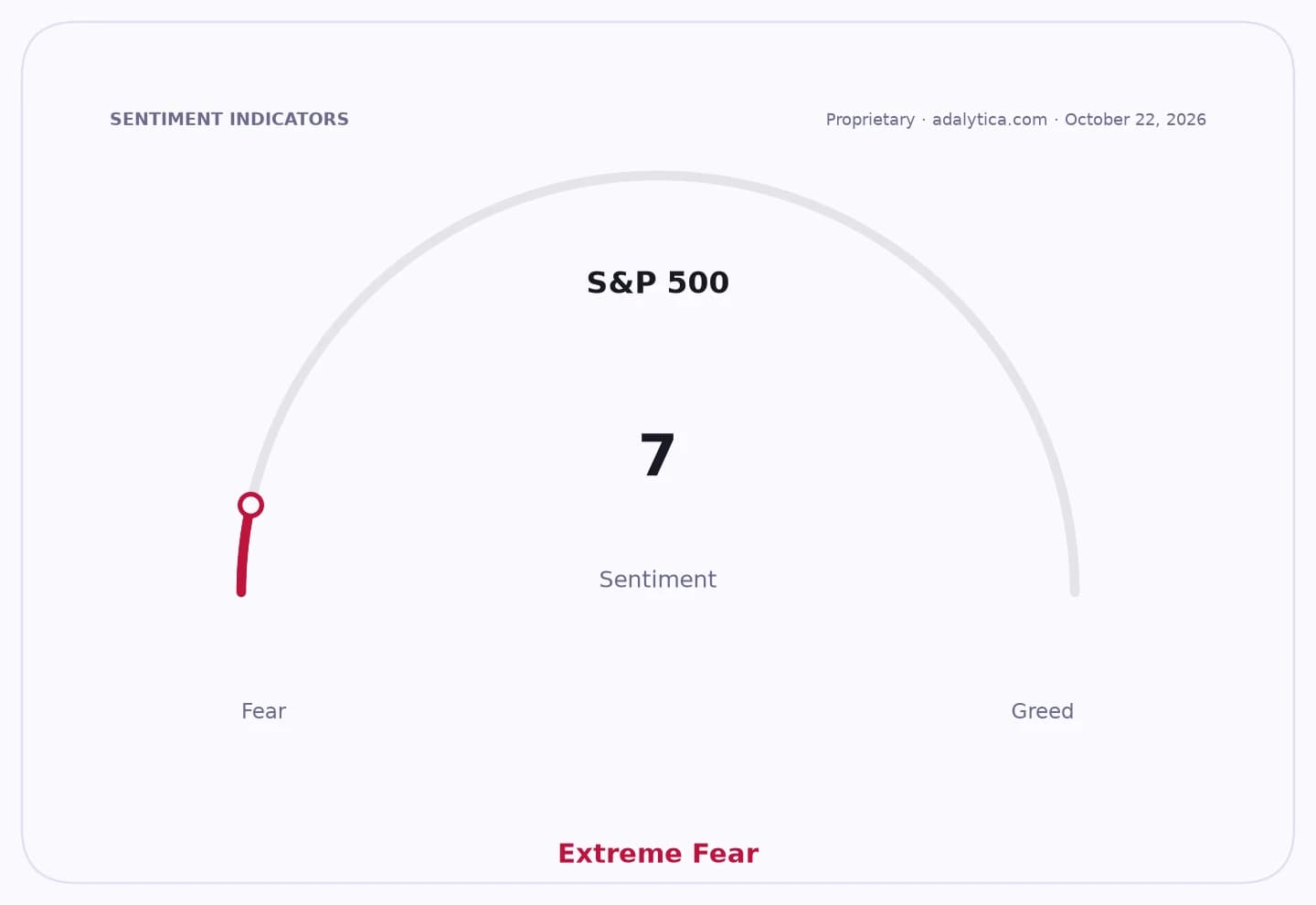
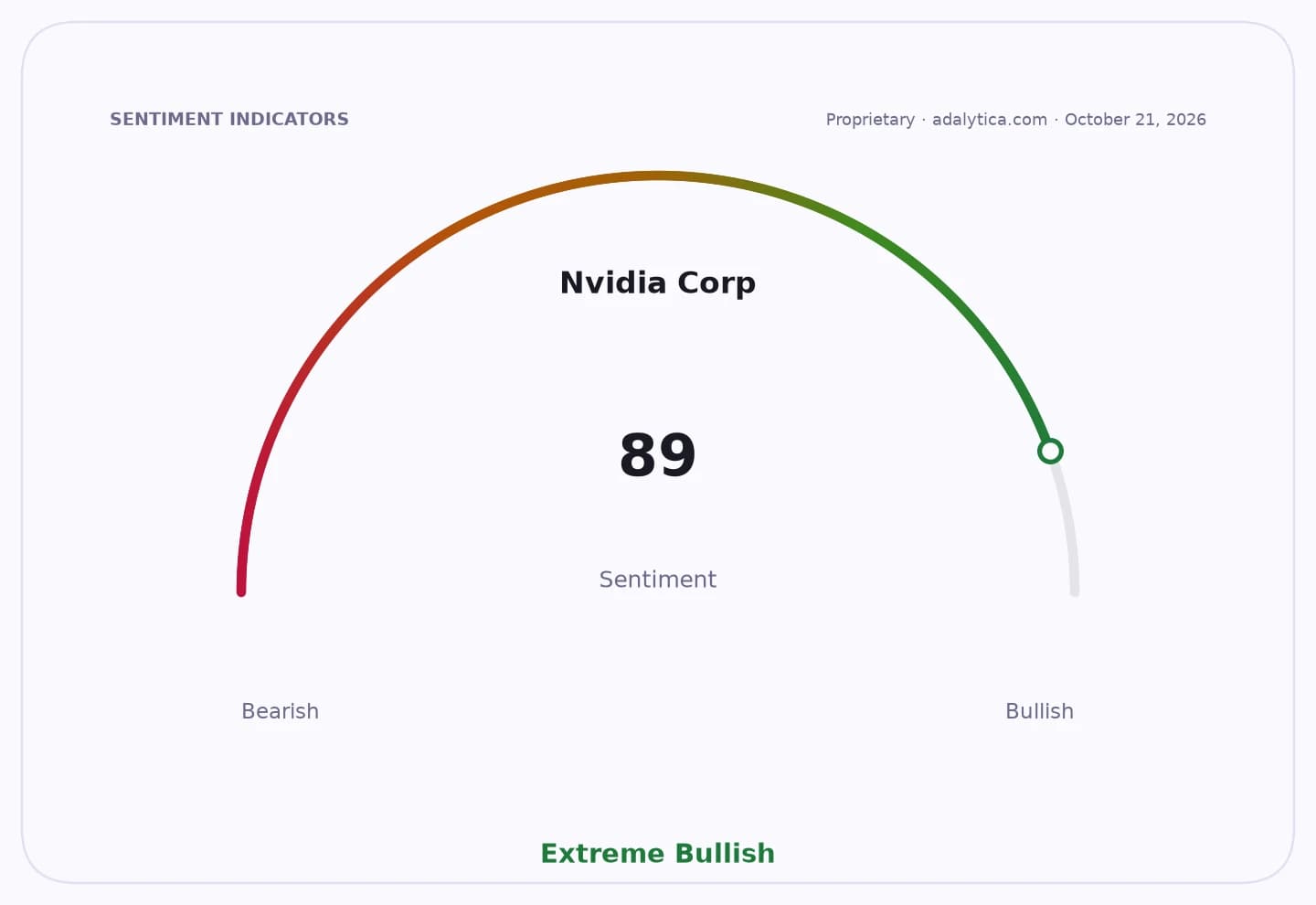
Microsoft has walked away from a planned Nscale data center in the U.K. after the local grid operator warned that enough power may not be available until the early-to-mid 2030s, underlining how electricity constraints are now the main bottleneck in the AI infrastructure race.
Microsoft drops Nscale UK data center plan
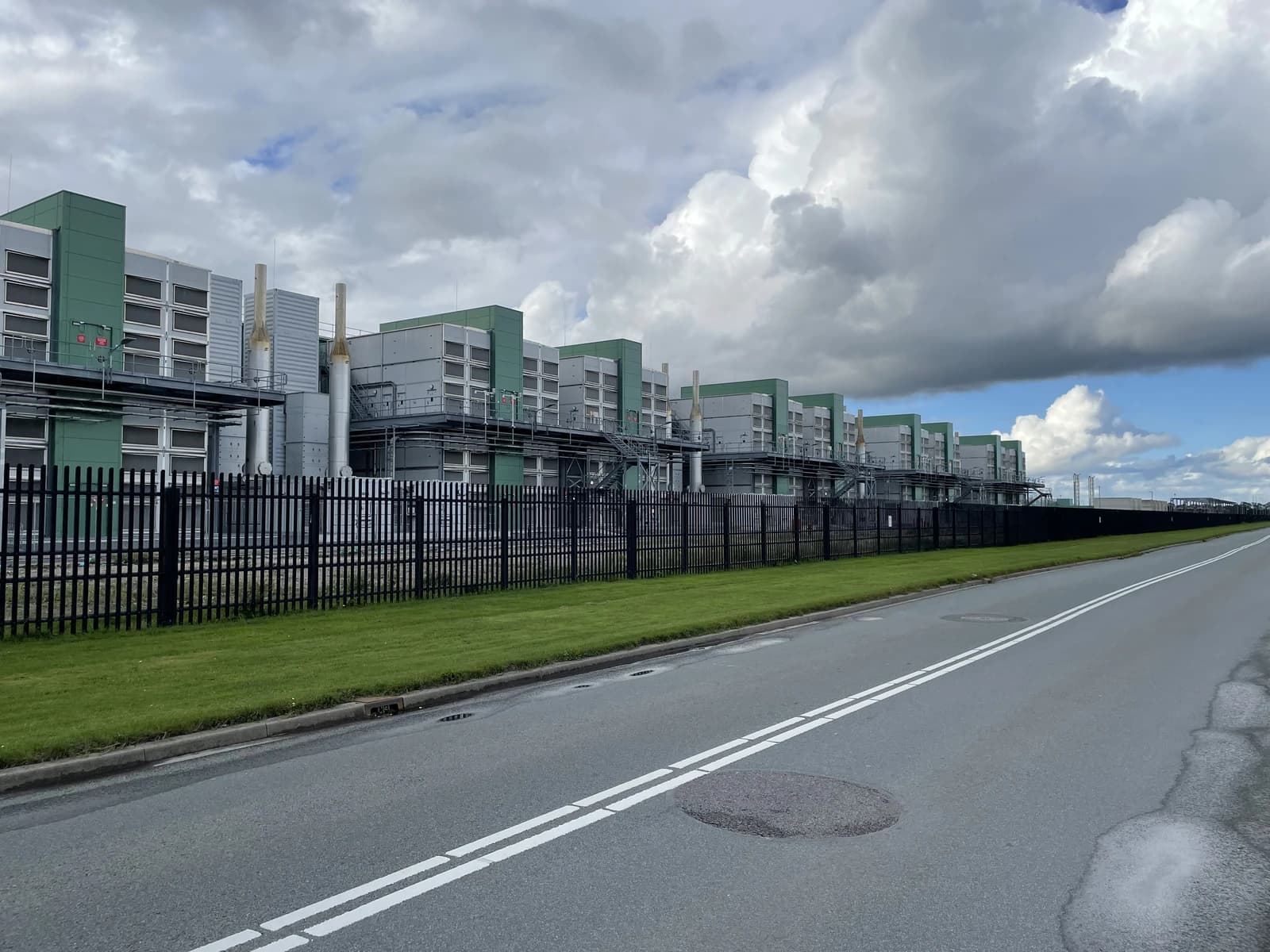
The decision strips Nscale of a marquee customer before the site ever came online and exposes the economics of the bitcoin-mining-to-AI pivot that has swept much of the listed mining sector. The Loughton, Essex project was supposed to deliver 50 megawatts of capacity for Microsoft’s Azure cloud by early 2027, powered by 23,040 Nvidia chips. Instead, UK Power Networks said the connection may not be ready for years, forcing a rethink that could leave the site idle and the financing model strained.
Sentiment IndicatorsⓘProprietary · adalytica.com · October 23, 2026
This is a snapshot — live sentiment, awareness and momentum for 130+ markets update continuously in the dashboard.Open AlphaPulse
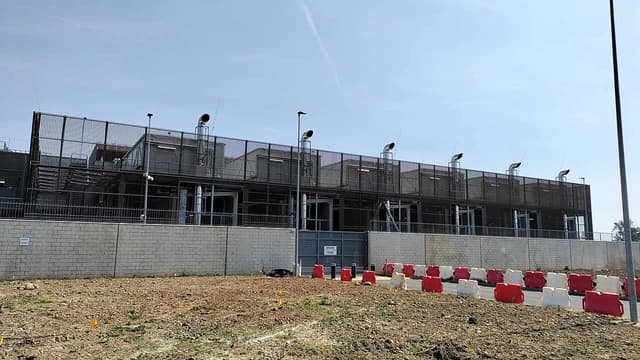
That matters because power access, not chip supply, is increasingly determining who can capture AI demand. Bitcoin miners have been trying to monetise their access to land and electricity by repurposing sites for AI and high-performance computing, but those projects are vastly more capital intensive. Industry estimates cited in the context put an AI-ready facility at about $8 million to $15 million per megawatt, versus roughly $700,000 to $1 million for bitcoin mining, with customers expecting near-continuous uptime. That pushes builders to secure both long-duration contracts and cheap financing, a combination that becomes harder when grid hookups slip by a decade.
The broader market is already showing the strain. CoinDesk said public miners had announced more than $70 billion of AI and HPC contracts, but fund manager CoinShares estimated only about 550 megawatts of the more than 4 gigawatts under contract were actually billing customers. That gap between headline bookings and revenue is exactly where execution risk sits. If a project cannot secure power, the contract pipeline becomes little more than optionality.
For Microsoft, the move is also consistent with a wider pattern in cloud computing: the biggest buyers can shift between sites and partners, but they still need physical capacity in the right jurisdictions, on the right timetable. Microsoft’s own filings have flagged limits in power availability and delays in obtaining grid connections as a material operating risk. For Nscale, which grew out of Arkon Energy and is backed by Nvidia, the loss of the deal is a reminder that AI infrastructure is not just a software or silicon story but a utility and permitting story.
The U.K. is proving a particularly difficult market. Energy regulator Ofgem says data center projects have requested connections totaling about 73 gigawatts, forcing it to consider tighter rules because some applicants may never build while others wait behind them. That congestion makes the queue itself a competitive moat for established operators and a barrier for miners trying to graduate into AI infrastructure. It also suggests that the strongest players will be those able to bring their own power, lock in financing and secure sites in markets where grid access is already de-risked.
For investors, the immediate read-through is mixed. AI infrastructure remains a compelling end market, but the path from bitcoin mining to recurring AI revenue is slower, more capital intensive and more exposed to utility bottlenecks than the market narrative often assumes. Companies that can control land, power and financing may still win. Those that cannot may find that a promised AI transformation is delayed before it ever becomes a revenue stream.
| Entity | Gains | Losses |
|---|---|---|
| Microsoft | ▲Preserves flexibility | ▼Loses a U.K. capacity option |
| Nscale | ▲None immediately | ▼Loses marquee customer and project momentum |
| Bitcoin miners pivoting to AI | ▲Narrative spotlight on transition | ▼Harder financing and slower monetisation |
| U.K. data center applicants | ▲Potential tougher queue rules | ▼Longer grid delays and stranded projects |