University students are treating the AI boom less as a threat to their careers than as a market signal, and that matters because the same hype that is shaping course choices is still driving capital spending, valuations and hiring across the technology sector.
Microsoft and Nvidia Trade Above Key Averages

The clearest investors’ takeaway is that AI demand remains self-reinforcing: students are moving toward AI skills because they expect employers to keep paying up for them, while companies such as Microsoft and Nvidia continue to sit at the center of that demand. Microsoft shares were trading around $495.63 on Friday, above both the 50-day moving average of $453.12 and the 200-day average of $429.65, while Nvidia closed at $218.29, also above its 50-day and 200-day averages. That positioning suggests markets are still willing to price in a long runway for AI-related earnings, even after recent volatility.
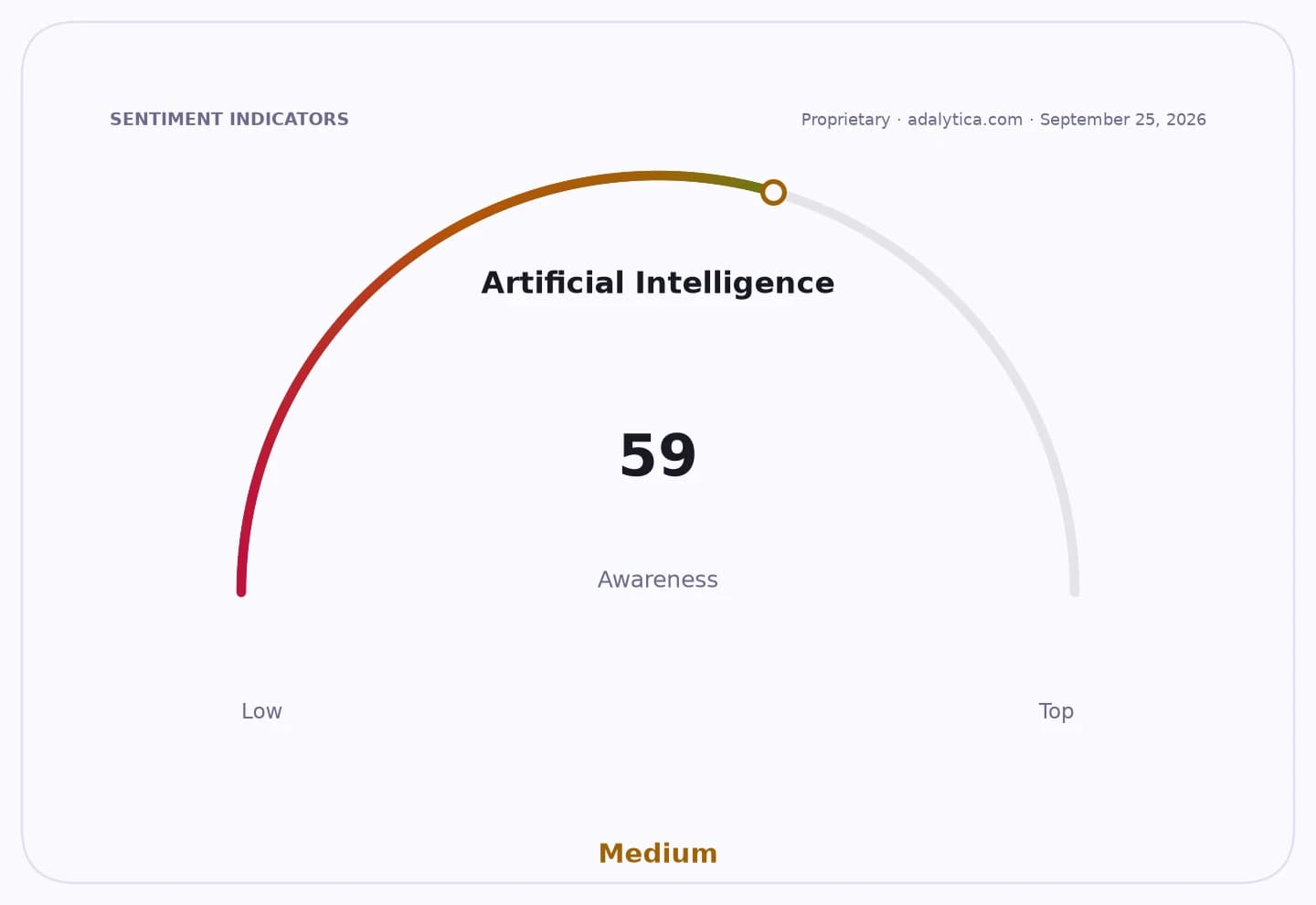
Sentiment IndicatorsⓘProprietary · adalytica.com · September 14, 2026
This is a snapshot — live sentiment, awareness and momentum for 130+ markets update continuously in the dashboard.Open AlphaPulse
The education angle is not just a soft-sentiment story. It is a labor-market signal about where wage premiums and job creation are expected to persist. If students believe “the bigger the hype, the better” their job prospects, they are responding to a real allocation of corporate budgets toward AI infrastructure, software and services. Microsoft has made AI a core part of its cloud and productivity franchise, while Nvidia remains the key hardware supplier to the buildout. For investors, that means the bullish case is intact as long as enterprise adoption continues to translate into spending on models, compute and deployment tools.
But the same narrative carries a valuation risk. AI enthusiasm can pull forward demand and stretch expectations faster than actual monetization arrives. Microsoft’s earnings sentiment on Adalytica stood at 100, with awareness at 4, underscoring how crowded investor attention has become around the stock. Nvidia’s earnings sentiment remained elevated at 78, but its awareness measure was only 4, suggesting the market is still focused on fundamentals rather than broad public positioning. The danger is that if hiring, training and productivity gains fail to keep pace with the hype, the labor-market optimism now encouraging students could eventually collide with a slower earnings conversion.
That is why AI education policy matters economically, not just socially. Suriname’s plan to expand AI in schools, train teachers and protect exam security reflects a broader shift: governments are trying to prepare workers for a market where AI literacy is increasingly a baseline skill. That supports the thesis that AI is moving from a niche technology story into a structural labor issue, with implications for curriculum design, productivity and long-term competitiveness.
For investors, the immediate implication is to watch whether the AI boom broadens from chips and cloud budgets into durable enterprise use cases and measurable labor-market demand. If it does, Nvidia, Microsoft and their suppliers can keep compounding. If it does not, today’s student optimism may prove to be a lagging indicator of a cycle that has already priced in too much future growth.
| Entity | Gains | Losses |
|---|---|---|
| Students/AI learners | ▲Higher job odds | ▼Lower appeal of non-AI paths |
| Microsoft | ▲Cloud and AI revenue | ▼Margin pressure from heavy AI spending |
| Nvidia | ▲Demand for AI chips | ▼Exposure to any capex slowdown |
| Employers without AI skills | ▲Talent shortage | ▼Wage pressure and slower adoption |