A more than 12-hour Microsoft outage that knocked out Outlook, Teams and other core services has turned a routine software failure into a broader warning: the global economy has become dangerously reliant on a handful of private platforms that are now effectively systemic infrastructure.
Microsoft outage raises cloud reliability concerns
Microsoft Corp
The immediate economic damage is not just the disruption itself, but the scale of the choke point. Microsoft said the incident affected Exchange Online and related cloud services used by more than 430 million people worldwide, freezing email, scheduling and internal communications for businesses and governments. The company has already acknowledged that contractual penalties could reach as high as US$800 million a day for services it failed to deliver, underscoring how outages are no longer an IT nuisance but a direct financial and legal risk.
Sentiment Indicators
For investors, the episode reinforces a growing asymmetry in the big-tech model. Microsoft, Amazon, Google and a small number of peers have concentrated enormous portions of enterprise and public-sector operations onto cloud-based software sold under recurring contracts. That has lifted margins and made revenues more predictable, but it has also created single points of failure. When those systems go dark, the economic damage is widely dispersed while the revenue concentration risk remains with the provider.
The market implications extend beyond Microsoft. The outage strengthens the case for so-called digital sovereignty, especially in Europe and other jurisdictions worried about strategic dependence on U.S. platforms. It also raises the likelihood of stricter procurement rules, more redundancy spending and more scrutiny of service-level guarantees across the cloud and enterprise software sector. That could mean higher compliance and resilience costs for providers, but also new demand for backup systems, decentralized infrastructure and regional cloud alternatives.
Microsoft Corp — 30-day sentimentadalytica.com
Explore this data interactively — full history, time series and cross-market comparisons.
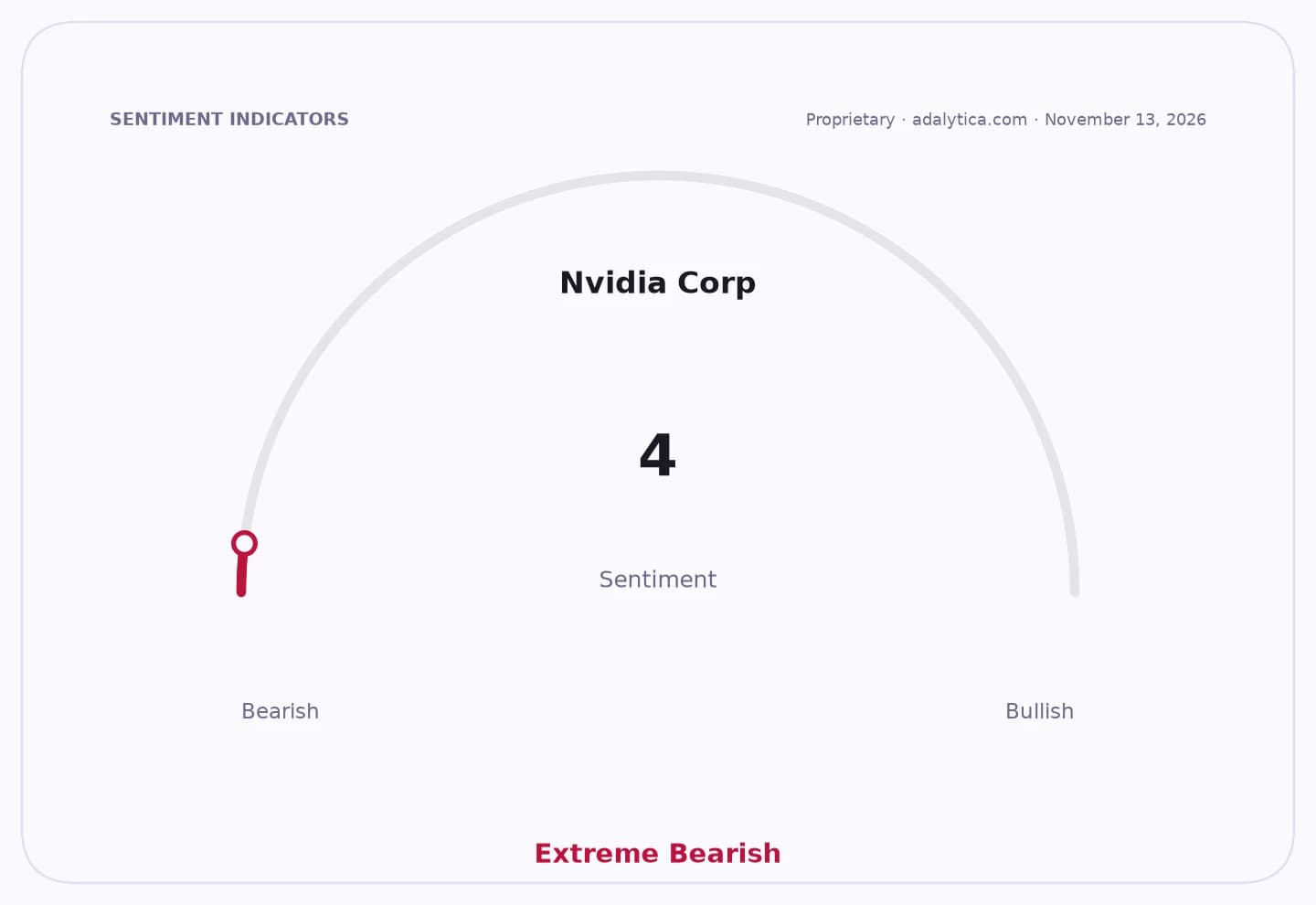
Microsoft shares have been more resilient than the reputational damage implied by the outage, but the episode lands at a time when investors are already weighing the costs of AI and cloud capex against the durability of returns. Technical indicators on the stock remain constructive overall, with the shares still above the 200-day moving average, but momentum has eased and the recent selloff has left the stock vulnerable to any further operational misstep. Adalytica’s Microsoft earnings sentiment gauge has plunged to “Extreme Fear,” reflecting how quickly confidence can swing when reliability is questioned.
The larger narrative is that big tech is increasingly performing a quasi-public function without the regulatory framework that typically comes with systemic importance. That may not lead to an immediate policy overhaul, but it is likely to shape boardroom and government thinking on resilience, diversification and procurement over the coming quarters. For investors, the key question is no longer whether these platforms are indispensable, but how much extra capital, redundancy and oversight will be required to keep them that way.
| Entity | Gains | Losses |
|---|---|---|
| Microsoft rivals | ▲Trust-sensitive customers | ▼Microsoft share of mind |
| Government and enterprise buyers | ▲Resilience planning | ▼Operational continuity |
| Cloud backup and regional providers | ▲Demand for redundancy | ▼Big-platform lock-in |
| Microsoft | ▲None immediately | ▼Reputation, penalties, pricing power |