Iran’s reported plan to receive 400 portable missile launchers from China is another sign that the Middle East’s security shock is becoming a longer-lasting economic story, not just a headline risk. For investors, that matters because the more the region militarizes, the more governments are pushed to spend on air defenses, missiles, sensors and munitions — a mix that tends to benefit large U.S. defense contractors over the years, even as it raises geopolitical risk in the near term.
Middle East militarization supports defense stocks
The economic significance goes beyond one weapons transfer. Portable launchers are a force-multiplier in a conflict zone because they make missile inventories easier to disperse, hide and deploy. That complicates interception efforts and can force nearby states and the United States to keep spending heavily on layered defenses, stockpiles and readiness. In other words, instability itself becomes a budget driver.
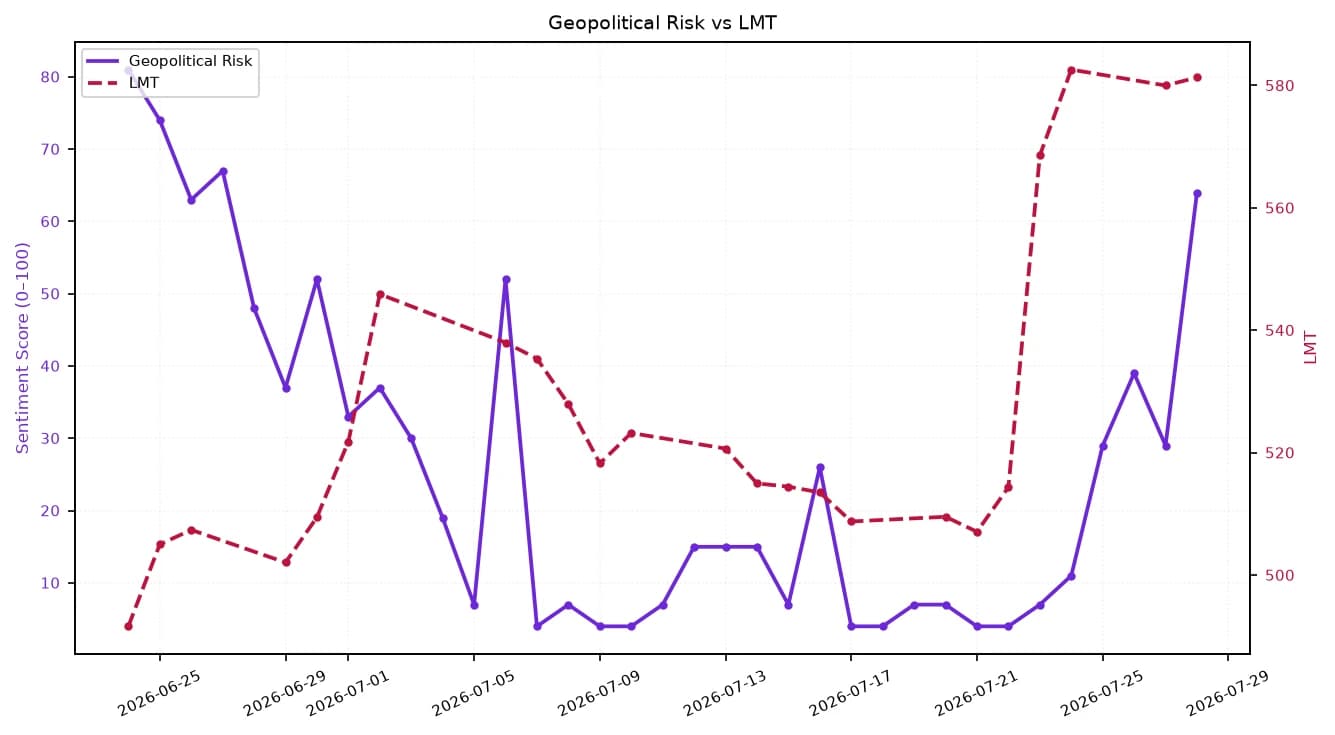
Sentiment IndicatorsⓘProprietary · adalytica.com · July 29, 2026
This is a snapshot — live sentiment, awareness and momentum for 130+ markets update continuously in the dashboard.Open AlphaPulse
That’s exactly the kind of backdrop defense investors have been watching. Lockheed Martin, Northrop Grumman and RTX have all traded with the market’s expectation that elevated global tensions will support long-cycle demand for missiles, interceptors, command-and-control systems and related electronics. The price action backs that up. Lockheed shares have climbed well above both their 50-day and 200-day moving averages, while Northrop has staged a sharp recovery after a deep spring selloff. RTX has also pushed to fresh highs, with momentum readings flashing strong demand. Those aren’t guarantees of future returns, but they do show investors are paying up for companies tied to replenishment and deterrence.
The broader investment case is simple: every new escalation increases the probability that governments keep funding the tools of modern warfare. The U.S. and its allies are already drawing lessons from conflicts in Ukraine and the Middle East, where missile defense capacity, precision strike systems and supply-chain depth have become strategic necessities. If Iran gets more mobile launch capability, the perceived need for countermeasures in Israel, the Gulf and by U.S. forces only rises.
For long-term investors, that can be a powerful tailwind — but not a reason to chase any single stock blindly. Defense remains a cyclical business layered on top of a secular need for national security, and execution still matters. Programs can slip, margins can wobble and governments can delay spending. Still, the larger trend is hard to ignore: a more dangerous world usually means a larger defense bill.
If you’re building wealth over the next three to 10 years, this is the kind of development that reinforces the case for owning high-quality defense names as part of a diversified portfolio. The conflict risk is unsettling, but the spending response can be durable. For investors, that makes the defense group worth watching — and, for patient buyers, potentially worth holding for the long term.
| Entity | Gains | Losses |
|---|---|---|
| Lockheed Martin, Northrop Grumman, RTX | ▲More missile-defense demand | ▼Margin pressure from program risk |
| U.S. and allied militaries | ▲Larger deterrence budgets | ▼Higher procurement and readiness costs |
| Iran | ▲Greater battlefield flexibility | ▼More sanctions and retaliation risk |
| Regional civilians and businesses | ▲None | ▼Higher conflict and disruption risk |