Higher bond yields are changing the math for companies, banks and governments across the region, and that is the most important investment story here.
Middle East investors face higher bond yields

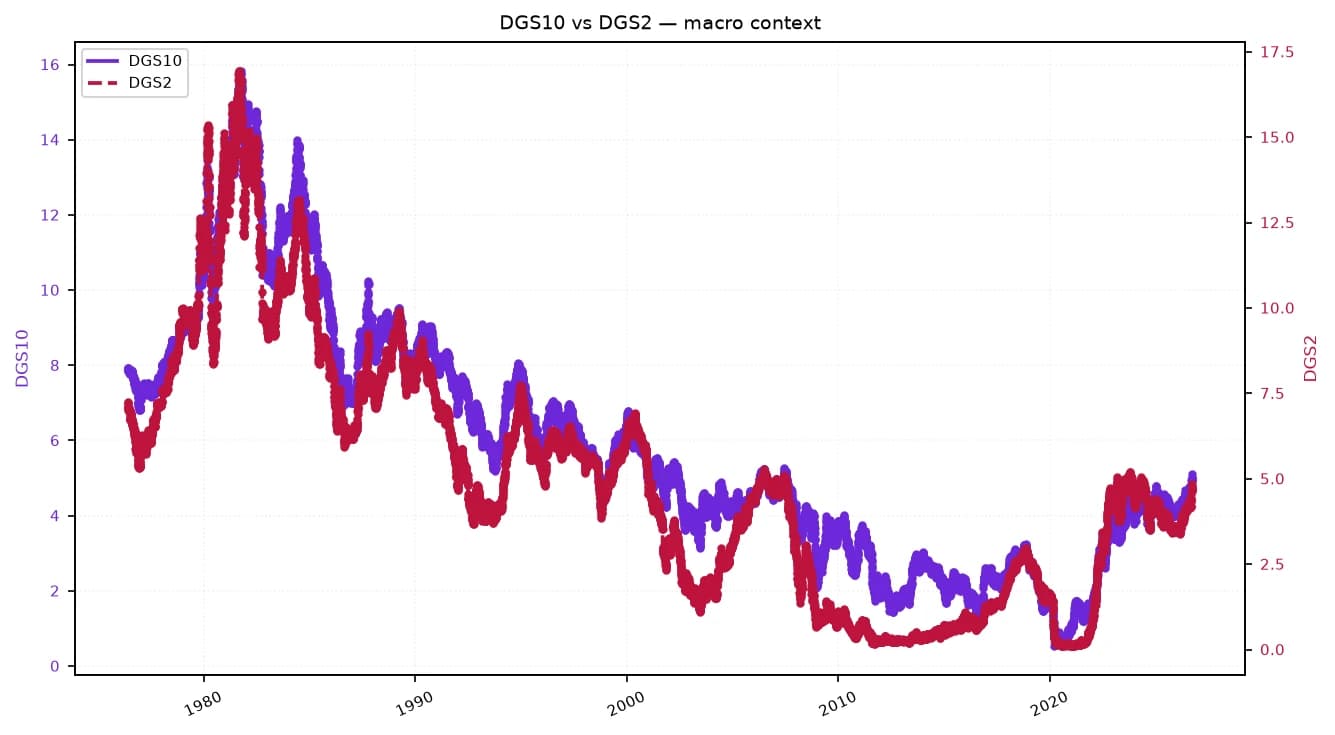
Nomura told Asharq Al-Awsat that rising yields are reshaping the cost of capital in the Middle East, a shift that matters because every tick higher in borrowing costs eventually filters through to project finance, sovereign funding, corporate investment and bank valuations. With the U.S. 10-year Treasury yield now around 4.82% and the two-year near 4.45%, the global backdrop is no longer one of easy money. It is one of tighter financial conditions, and investors in the region cannot ignore that.
Sentiment IndicatorsⓘProprietary · adalytica.com · September 3, 2026
This is a snapshot — live sentiment, awareness and momentum for 130+ markets update continuously in the dashboard.Open AlphaPulse
That matters economically because the cost of capital is the discount rate behind almost every investment decision. When yields rise, governments face more expensive financing for deficits and infrastructure, developers see thinner returns on long-duration projects, and leveraged businesses have less room to grow. In a region where capital spending, diversification plans and large-scale development programs are central to the growth story, a more demanding bond market can slow dealmaking and force a sharper focus on balance sheet strength.
For investors, the immediate takeaway is that higher yields tend to reward companies with real cash flow and punish those that rely on cheap refinancing. That is why banks and financially disciplined lenders often hold up better than highly geared sectors when rates move up. In the equity market, Nomura’s own shares have climbed to around 10.57, well above their 50-day and 200-day moving averages, while JPMorgan and HSBC have also traded firmly, reflecting the appeal of lenders that can benefit from wider spreads and stronger interest income.
The bond market itself is sending a clear warning. Treasury prices have come under pressure as investors demand more compensation for inflation, debt issuance and geopolitical risk. Adalytica’s US Treasury Bonds Trade Signals show extreme fear, even as market attention remains high, underscoring how unsettled fixed income sentiment has become. That unease is important for the Gulf and the broader region because local funding costs are still heavily influenced by global rates, especially for dollar-linked borrowers.
The narrative is straightforward: the era of cheap capital is not fully gone, but it is clearly behind us. For long-term investors, that argues for more selectivity, less leverage and greater respect for companies that can fund growth from internal cash generation. In a higher-yield world, the best businesses are the ones that do not need to beg the market for money. Worth watching, and worth owning only where the balance sheet can carry the weight.
| Entity | Gains | Losses |
|---|---|---|
| Banks with strong deposit franchises | ▲Wider lending spreads | ▼Funding-sensitive borrowers |
| Cash-rich companies | ▲Lower refinancing risk | ▼Highly leveraged firms |
| Investors in short-duration bonds | ▲Better yield income | ▼Existing bondholders |
| Middle East governments and developers | ▲Incentive for disciplined spending | ▼Cheap-project-finance era |