Mirvac is feeling the sharp end of Australia’s housing downturn, with home sales down 30% as weaker buyer confidence, tighter borrowing capacity and rising default risk ripple through the market.
Mirvac Sales Fall 30% Amid Housing Downturn
That matters because the slump is no longer just an affordability story — it is now hitting developers’ cash flows, land-banking economics and project pipelines. When customers pull back, builders and developers have to discount, delay or absorb more risk, and that pressure spreads across the residential property chain from contractors to lenders and landlords.
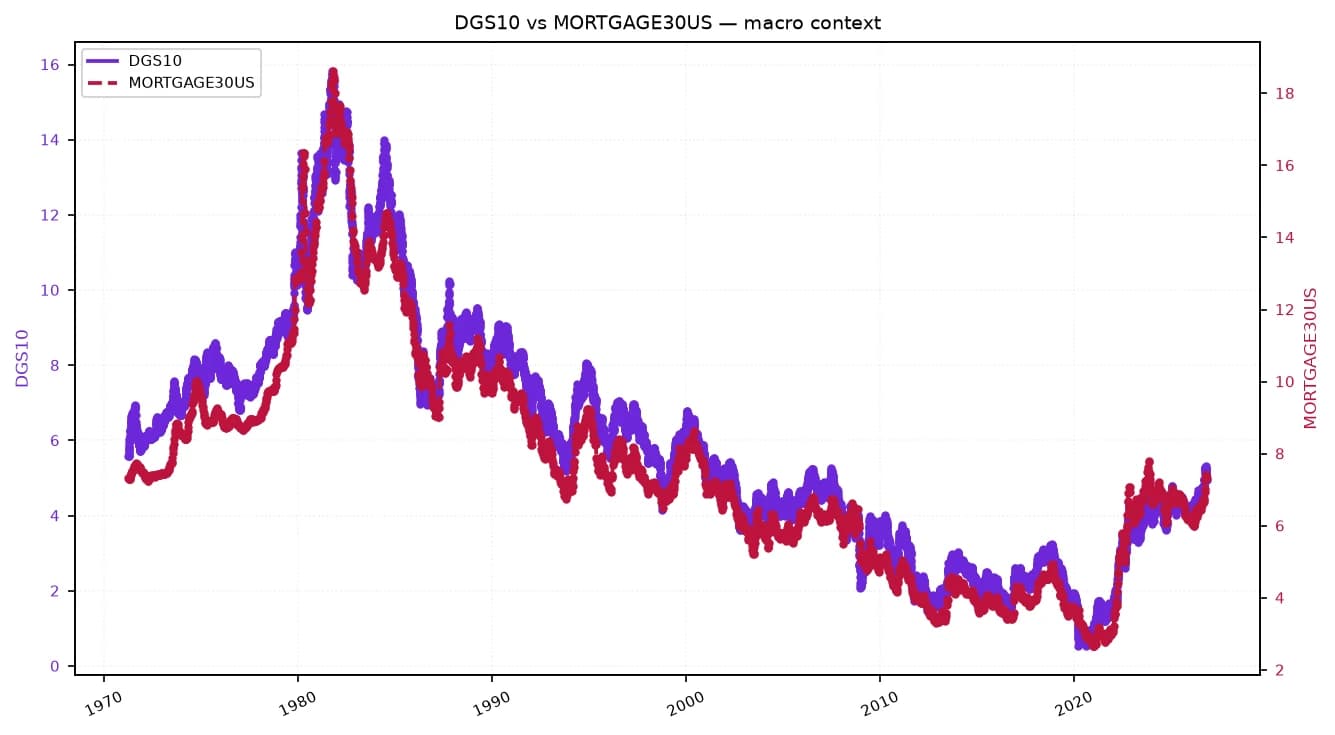
The macro backdrop is clearly turning against housing. Australia’s unemployment rate is forecast around 4.09% for October, close to the recent 4.2% reading, while 10-year government bond yields are still near 4.93% to 5%, keeping mortgage costs elevated. At the same time, housing starts have been sliding, with the latest monthly pace at 1,221 and only a modest rebound forecast next month. That combination leaves little room for a quick recovery in demand.
For Mirvac, the market is now pricing in that pain. The stock closed at A$15.41, below its 200-day moving average of A$18.42 and only just above the 50-day average of A$15.52, a sign of a battered chart rather than a clean turnaround. Standard technical indicators also show a market still looking for conviction: RSI remains mid-range at 37.8, while the MACD is negative. In plain terms, investors have not yet embraced the idea that the worst is over.
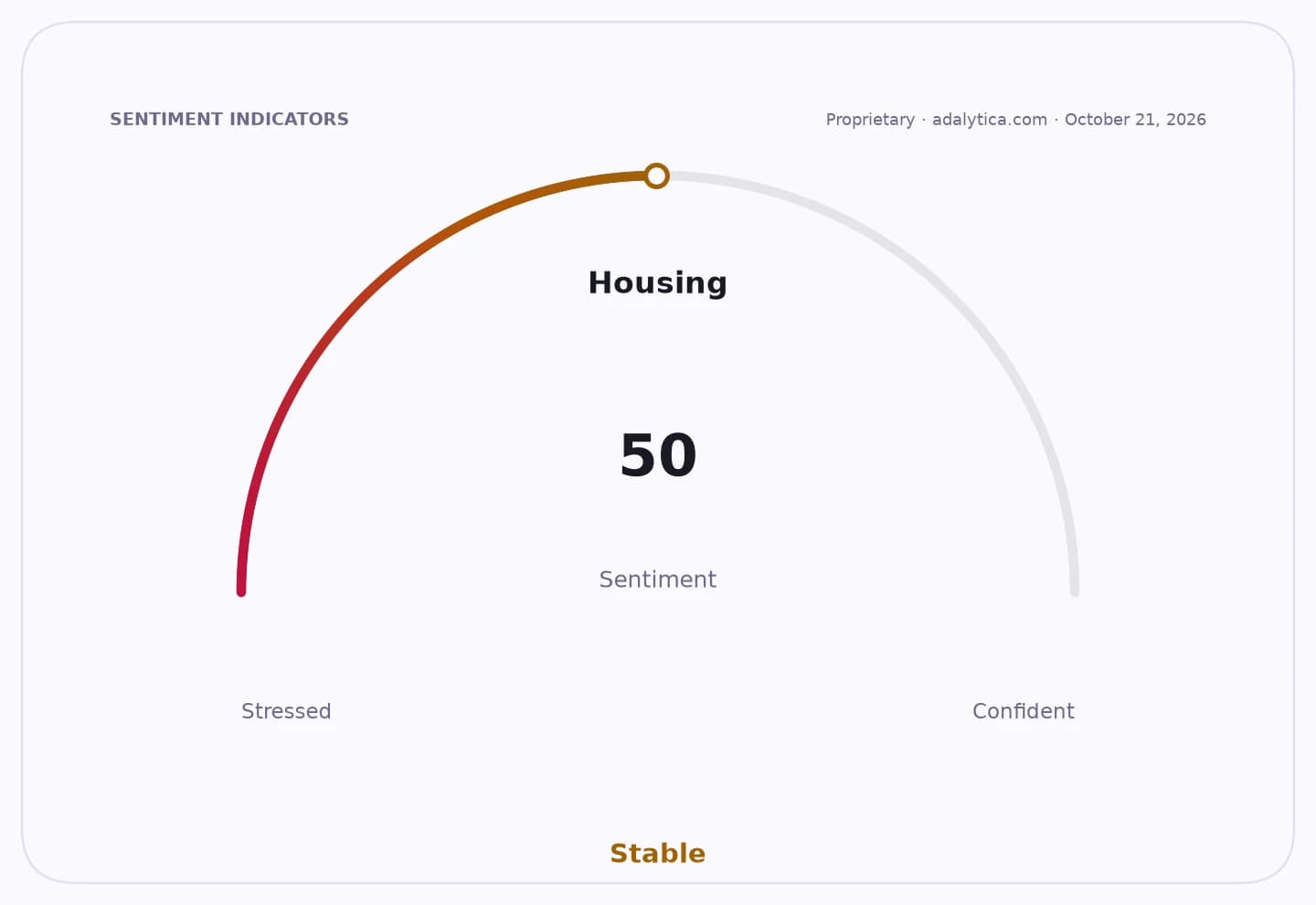
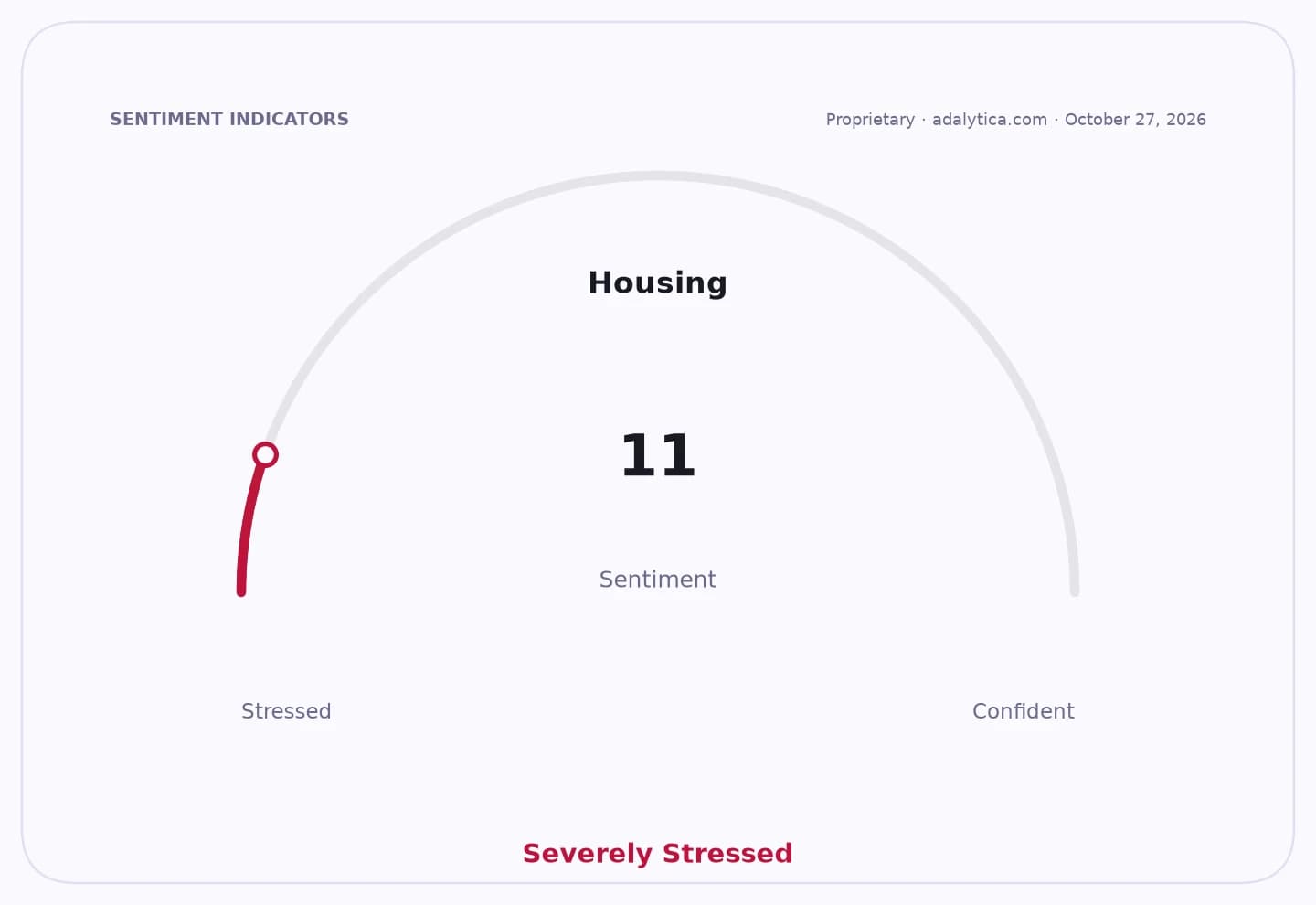
The bigger opportunity is in what comes next. Housing downturns rarely end neatly, but they do create asymmetry. If affordability improves and rates ease, developers with strong balance sheets and land in supply-constrained markets can rebound fast. The current fear around housing — captured by Adalytica’s Housing and Rent Inflation sentiment gauge at “Extreme Fear” — suggests the sector is still being priced for weakness, not recovery.
That is why this matters for investors: the immediate losers are residential developers and leveraged buyers, but the eventual winners are likely to be the firms with the best sites, the most flexible capital structures and the patience to wait for the cycle to turn. The market is underestimating how quickly Australian housing can reprice once borrowing conditions improve.
For now, Mirvac remains a cautionary trade on a soft housing market. But for long-term investors, the deeper lesson is that the current slump may be laying the groundwork for the next powerful upcycle — and the best entries usually come when sales are falling, not when headlines turn cheerful.
| Entity | Gains | Losses |
|---|---|---|
| Mirvac | ▲Future recovery optionality | ▼Near-term sales and margins |
| Homebuyers | ▲Better bargaining power | ▼Higher financing stress |
| Lenders | ▲Caution on risk pricing | ▼Rising default exposure |
| Housing suppliers/builders | ▲Eventual rebound in activity | ▼Current project slowdown |