Moonshot AI’s new Kimi credit card is less a consumer banking product than a test of whether everyday card spending can be turned into a distribution channel for artificial intelligence — and whether that model can be made to pay.
Moonshot AI Kimi launches credit card in China

The company, which runs the Kimi chatbot, has teamed up with Agricultural Bank of China and American Express on what it calls the world’s first “AI native credit card.” The pitch is straightforward: spend enough on the card and customers unlock limited access to Kimi’s premium AI services, including agent usage quotas and coding tools. The economics are more revealing. On the premium platinum version, cardholders must spend at least 5,888 yuan, or about $830, in a month to receive two months of Kimi Pro, a membership that normally costs 199 yuan a month.
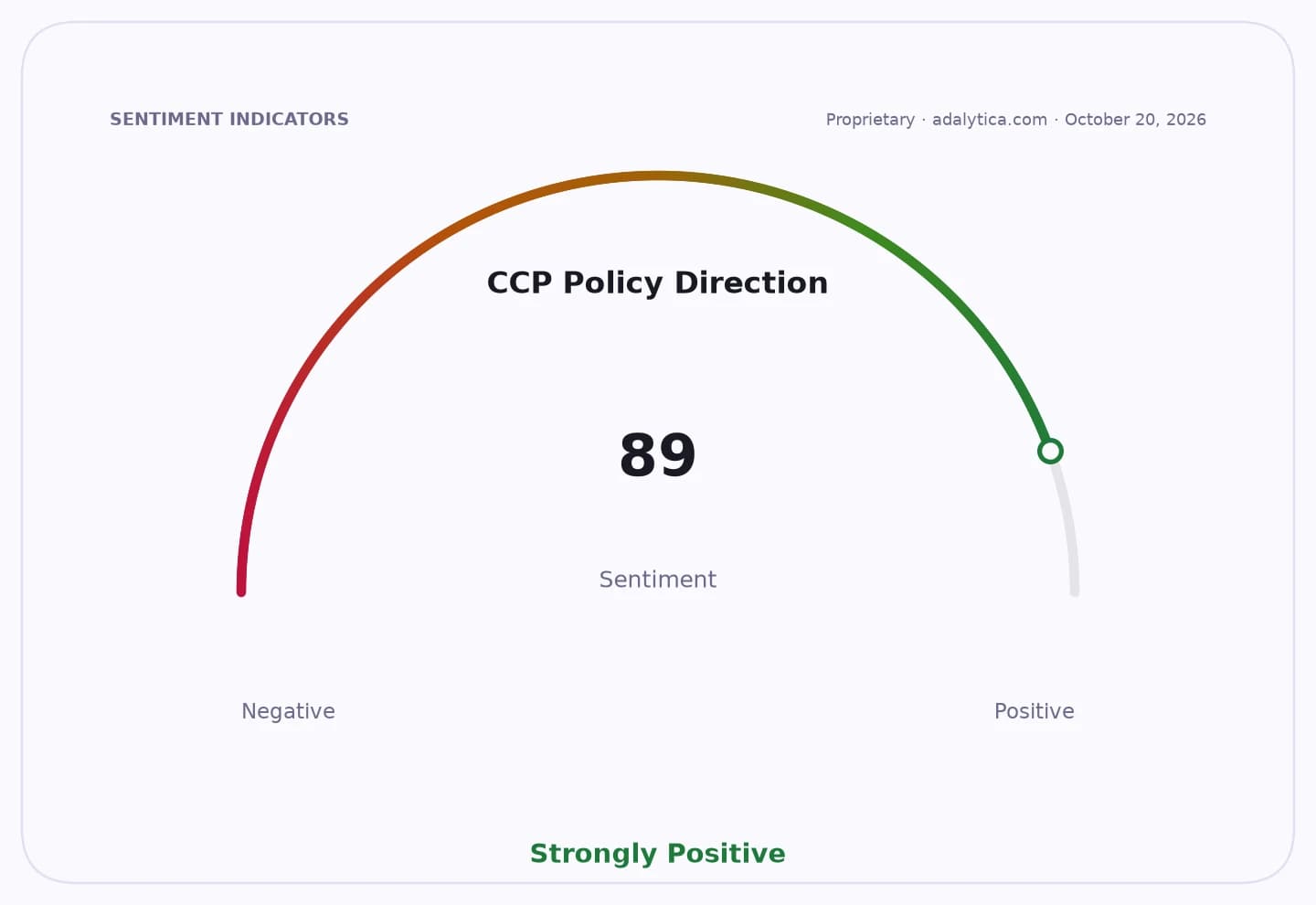
Sentiment IndicatorsⓘProprietary · adalytica.com · October 20, 2026
This is a snapshot — live sentiment, awareness and momentum for 130+ markets update continuously in the dashboard.Open AlphaPulse
That threshold matters because it turns AI access into a rewards mechanic rather than a standalone subscription sale. For Moonshot, the card is a customer-acquisition tool that could widen Kimi’s reach in a crowded Chinese AI market without relying entirely on direct consumer payments. For the banks and card network, it is an attempt to make an AI brand part of the payments habit — an area where interchange, revolving balances and merchant spending patterns can still produce recurring economics if adoption is broad enough.
But the structure also exposes the limits of the model. The reward is capped, the membership is temporary and the spend hurdle is high enough that only relatively active card users are likely to qualify. That suggests the product is aimed more at affluent early adopters and heavy spenders than at mass-market conversion. It also means the AI benefit is being subsidized through a financial product whose value depends on whether customers keep using the card once the novelty wears off.
For investors, the significance is broader than one novelty card. It shows how Chinese AI start-ups are looking for alternative monetization routes at a time when consumer willingness to pay for chatbot services remains uncertain. It also underscores a wider fintech trend: payments firms and card issuers are increasingly using lifestyle perks and software access to drive spending, retention and data collection. If the model works, it could create a new channel for AI distribution; if it fails, it will look like another expensive incentive program with limited user stickiness.
The card’s launch also highlights the competitive pressure on AI companies to move beyond app downloads and subscriptions into products that meet customers where they already spend money. That may help Moonshot defend Kimi’s relevance, but it does not solve the harder question of whether AI services can generate durable unit economics when bundled into rewards and loyalty schemes.
| Entity | Gains | Losses |
|---|---|---|
| Moonshot AI / Kimi | ▲Wider user reach | ▼Direct subscription revenue |
| Agricultural Bank of China / American Express | ▲Card spending, customer engagement | ▼Reward costs, product complexity |
| Active cardholders | ▲Temporary AI access | ▼High spend hurdle |
| Rival AI startups | ▲Pressure to innovate distribution | ▼Standalone monetization model |